The ten greatest treasures of the Wuhan Natural History Museum are each stunning, and there are also two major secrets
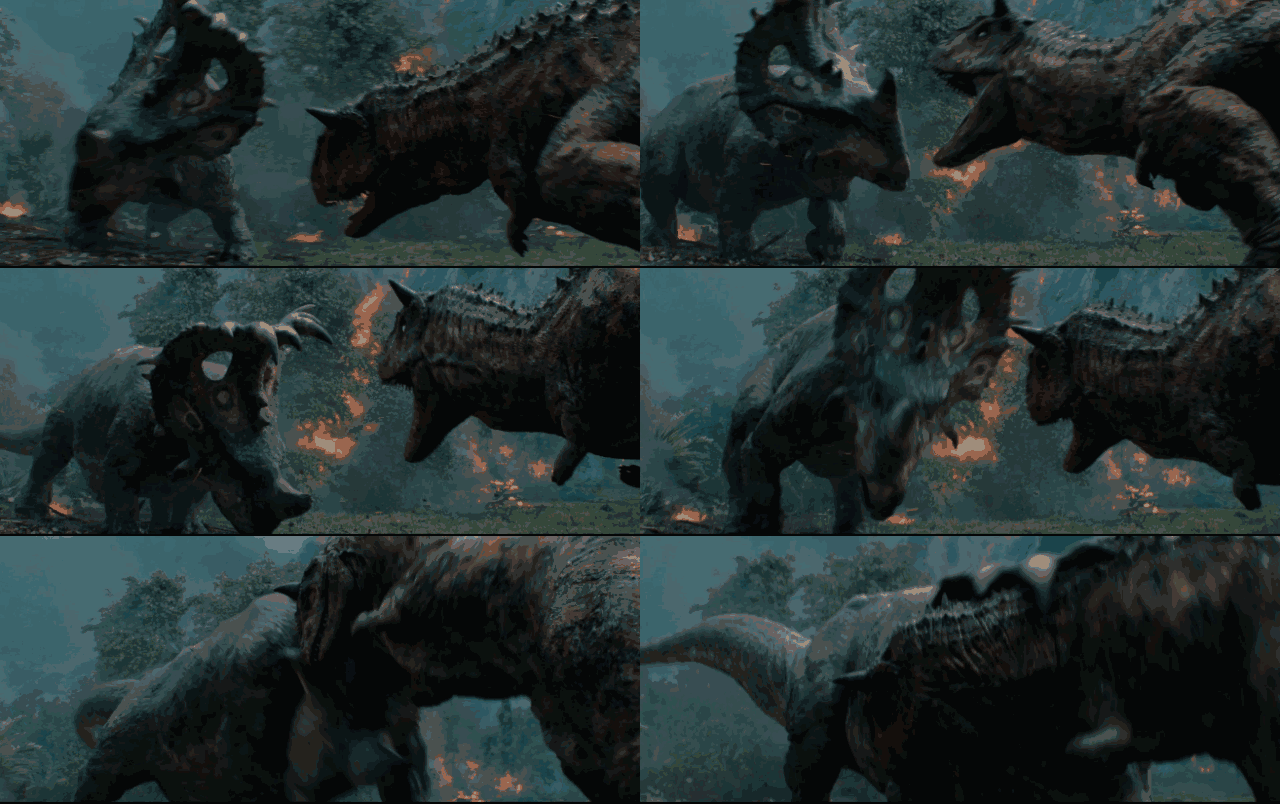
Go to the cinema to see Jurassic World: Fallen Kingdom?
How can CGI dinosaurs compare with getting up close to real dinosaurs!
Go see Li Yifeng's Animal World?
The Wuhan Natural History Museum has more than 3,000 animal specimens!
Go to East Africa next month to see the great animal migration?
No need, the Wuhan Natural History Museum presents the great East African animal migration in a life-size display!
The first installment of our "Reading Nature" column began with reading the book One Flower, One World - The Beautiful Life of Garden Families, and since its launch, we have received responses from quite a few "readers aloud."
The read-aloud of One Flower, One World is still continuing,To respond to the enthusiasm of the "readers aloud," the "Reading Nature" column will go into the Wuhan Natural History Museum.Readers aloud can not only showcase their voices in the Green Life Pai mini program, but also go into the Wuhan Natural History Museum to truly experience the changes of great rivers and the charm of nature...
Looking for readers aloud ing
"Send your read-aloud audio to Xiao Qi, and it is not only a chance forfree admissionbut also a stage for you who love nature and love reading aloud, and even more a special parent-child time!"
↓Private message Xiao Qi to sign up for the activity, and more surprises await you
As the world's first museum with great rivers as its theme, what treasure does the Wuhan Natural History Museum have?
No exaggeration, it will blow your mind: the Wuhan Natural History Museum not only wins by its looks, but is also full of "talent." Let's go take a look~
Visit
Play
Guide
south
Ahem, after entering the park, walk for 15 minutes (about 1500 m) to reach the Behring Hall (next door to the Yangtze River Civilization Museum).
The Behring Hall has three floors in total; the main exhibition halls are on the first and second floors, and the third floor is a temporary exhibition hall.
The current visiting route order is:
Vicissitudes of Great Rivers - Rare Creatures of Great Rivers - Reflections on Great Rivers - Exploration of Great Rivers - Science Popularization Space. All themes are developed around "great rivers."
The introductory hall at the entrance begins with an introduction to the world-famous philanthropistMr. Kenneth Eugene Behring(the donor). Born into a poor family, he began doing odd jobs at the age of 6 and bought his first car at 15... His extraordinary life experience is simply the best "inspirational model" for children.
Next, it is time to look for the museum's treasures -
Museum
Treasures
1. The largest dinosaur footprint fossil wall
The dinosaur footprint fossil slab in the Wuhan Natural History Museum - Behring Great Rivers Life Hall is 15.3 m long and 8 m wide, with an area of 120 sq m, rarely seen in China.
"Dinosaur" is the general term used in paleontology for reptiles including dinosaurs. Footprint fossils are "close-up shots" recorded by nature's natural video camera of vertebrate activity, and the conditions for their formation and preservation are extremely strict. But the traces seem to recreate scenes of animals chasing and fighting 2 billion years ago, with "dinosaurs" walking by the lake, fish swimming in shallow water, and arthropods crawling, making it important material for deciphering vertebrate evolution in the Late Triassic.
Museum
Treasures
2. The longest petrified wood
The petrified wood in the Wuhan Natural History Museum - Behring Great Rivers Life Hall was unearthed in Qitai County, Xinjiang, and was formed from large Jurassic trees that turned to stone. The tree form is well preserved, the wood structure is clear, the total length is about 37 m, and the maximum diameter at the root is 2.7 m. It is extremely spectacular and is the longest petrified wood exhibited in a Chinese museum.
Petrified wood is the general term for fossilized trees, most of which formed in the Jurassic about 130 million years ago. After ancient trees such as pines, cypresses, and ginkgoes were buried by sediment, through a long petrification process, they were filled and replaced by minerals such as silica or calcium carbonate and iron sulfide, forming petrified wood.
Museum
Treasures
3. Indricotherium fossil skeleton
The mounted indricotherium skeleton specimen in the Wuhan Natural History Museum - Behring Great Rivers Life Hall is 8.8 m long and 4.2 m high, may have weighed more than 20 tons in life, and consists of more than 90% real fossil bone. It is the most complete and the largest restored and mounted indricotherium fossil skeleton on record to date.
Indricotherium was a large mammal that lived 20 million years ago and is also a rhinoceros group unique to Asia. The indricotherium bone fragments came from a private collection in the Ningxia Hui Autonomous Region and were organized, restored, and mounted by the Tianyan Museum.
Museum
Treasures
4. The tiger-cat that is not quite a tiger
The ocelot is a very beautiful wild cat belonging to the order Carnivora, family Felidae, genus Leopardus, mainly distributed in Central America and South America.
Although it looks like an ordinary wild cat, it has been rated by biologists as one of the "most difficult cats to describe," because the markings on an ocelot are simply too complex and varied: it has tiger stripes, leopard rosettes, and the solid spots of a cheetah.
The ocelot specimen in the Wuhan Natural History Museum - Behring Great Rivers Life Hall is displayed in the Amazon River section.
5. Atlantic puffin
The Atlantic puffin is a species in the order Charadriiformes, family Alcidae, genus Fratercula. Its beak is brightly colored and shaped like a parrot's beak, its body size is similar to a duck's, and it waddles when it walks, earning it the name "clown of the sea." They live in the North Atlantic, like to eat fish, and come ashore during the breeding season.
The Atlantic puffin's mating system is monogamy. They often dig burrows on grassy slopes or under rock crevices to build nests, and both partners are loyal to their own nest, returning to the same place to breed each year. They breed only once a year, each time laying only one egg weighing as much as 60 grams.
The Atlantic puffin specimen in the Wuhan Natural History Museum - Behring Great Rivers Life Hall is displayed in the Yenisei River section.
6. The largest carnivorous marsupial
The Tasmanian devil is the only extant species in the order Dasyuromorphia, family Dasyuridae, genus Sarcophilus, and is also the world's largest carnivorous marsupial, found only on the island of Tasmania in Australia. Its fur is black, with irregular white patches on the chest and rump. The average body length is 65 cm, and the body weight is 8 kg. It rests in thickets or burrows during the day and hunts at night, and its hearing, smell, and vision are all very keen. Female Tasmanian devils have a pouch that opens downward, unlike kangaroos.
The Tasmanian devil specimen in the Wuhan Natural History Museum - Behring Great Rivers Life Hall is displayed in the Murray River section.
7. The white lion that is not good at camouflage
The white lion, that is, a lion that is white all over, is not a special species or subspecies, but another color morph of the African lion. It belongs to the order Carnivora, family Felidae, genus Panthera, and mainly lives in Africa south of the Sahara Desert. There are very few in the wild, and because their color is too conspicuous and not convenient for camouflage, survival is not easy.
The white lion family in the Wuhan Natural History Museum - Behring Great Rivers Life Hall is displayed in the Nile River section.
8. The largest elephant
The African bush elephant is a species in the order Proboscidea, family Elephantidae, genus Loxodonta, and is the world's largest elephant, with an average height of 3.2 m and a body weight of 6 tons. It is distributed in Africa south of the Sahara Desert, feeds on plants, can eat an entire large tree, and plays an important role in dispersing plant seeds.
The African bush elephant in the Wuhan Natural History Museum - Behring Great Rivers Life Hall has a body length of 5.35 m and a height of 3.3 m, and the specimen is displayed in the Nile River exhibition area.
9. Gorilla
The western lowland gorilla in the Wuhan Natural History Museum - Behring Great Rivers Life Hall is a subspecies of the western gorilla, belonging to the order Primates, family Hominidae, genus Gorilla, mainly living in forest environments in west-central Africa, and is critically endangered.The specimen is displayed in the Nile River - Mara River section.
Gorilla is the common name for the great apes of the genus Gorilla, and it is the largest living primate, strong and powerful, reaching a standing height of up to 1.8 m and a body weight of up to 270 kg.
After male gorillas reach adulthood, the hair on their backs turns silver-gray, so gorillas are also called silverback gorillas. They often move on the ground and are mainly vegetarian. They have a relatively long lifespan and can live to about 40 years in the wild. Their reproductive rate is extremely low: a female gorilla can successfully raise only one offspring on average every 6-8 years.
10. The critically endangered Indochinese tiger
The Indochinese tiger is a subspecies of tiger belonging to the order Carnivora, family Felidae, genus Panthera. It is the tiger subspecies with the fastest population decline and is currently critically endangered. The Indochinese tiger mainly lives in broad-leaved forests in South Asia and Southeast Asia, is solitary, and feeds on medium to large ungulates such as wild boar, deer, and water buffalo. It is smaller than other tigers, with a body length of 2.55 m-2.85 m and a body weight of 150-195 kg. Due to habitat destruction, most wild populations face a serious survival crisis.
The Indochinese tiger specimen in the Wuhan Natural History Museum - Behring Great Rivers Life Hall is displayed in the Mekong River section.
In addition to these 10 museum treasures, the Wuhan Natural History Museum also differs from other natural history museums across the country in its operating model. It also has"two major secrets"……
Secret one:
It is composed of three parts: the Yangtze River Civilization Museum, the Wuhan Natural History Museum - Behring Great Rivers Life Hall, and the 213.77-hectare natural landscape of the Wuhan Garden Expo Park. The "one park, two museums" model of operating a natural history museum is rarely seen.Secret two:
The Wuhan Natural History Museum - Behring Great Rivers Life Hall takes great rivers and life as its exhibition theme and is divided into several major sections: "Vicissitudes of Great Rivers," "Rare Creatures of Great Rivers," "Reflections on Great Rivers," and "Science Popularization Space." It uses the Yangtze River to dialogue with the world's great rivers, including the Amazon River, Mississippi River, Yenisei River, Ganges River, Lancang River-Mekong River, Murray River, Danube River, and Mara River-Nile River. It not only displays the biodiversity of the world's major river basins, but also properly resolves the relationship between the Yangtze River Civilization Museum and the Wuhan Natural History Museum - Behring Great Rivers Life Hall, allowing the permanent exhibition "Song of the Yangtze River, Journey of Civilization" and "Song of Great Rivers, Journey of Life" to complement and enhance each other.
△ When you encounter a docent, you can listen in from the side
The Wuhan Natural History Museum is a good place worth visiting
Take children there, and learn through entertainment
Go with family, and feel the beauty and preciousness of life
Go with your loved one, and realize that in a life like a speck of dust
meeting you is so very hard
……
Want to get an on-site admission ticket?
Become a reader aloud and you can!