When to sow Chinese toon? Included high-yield planting and management techniques
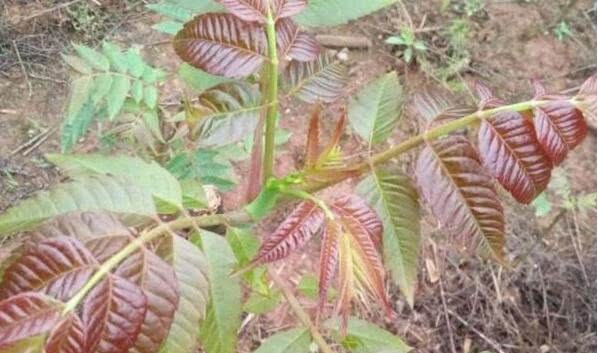
How can Chinese toon cultivation achieve high yields? Chinese toon can be considered one of the wild vegetable varieties that have become increasingly popular in recent years. Chinese toon is rich in nutrients, which fits well with people's current pursuit of health and wellness awareness, and it also has dietary therapeutic effects. Below let us briefly learn about Chinese toon cultivation techniques together.
I. Chinese toon propagation techniques
There are seed seedling raising, stem cutting, root cutting, and root sucker propagation.
1.1 Seed seedling raising
Chinese toon seeds are small, with a hard seed coat and membranous long wings, so direct sowing does not easily absorb water and germination is difficult. To obtain uniform emergence, the seeds need to be pre-treated for germination before sowing.
The methods are:
Soaking seeds in warm water.
In early March, soak the seeds in warm water at 30-40°C for one day and night. After the seeds have absorbed enough water, remove them and place them in a cattail bag, then keep them at 20-25°C for germination. Water once each morning and evening, turning them evenly. When more than 50% of the seeds have sprouted white, they can be sown.
Germination acceleration
Mix the seeds with river sand at a ratio of 1:2, and sprinkle in an appropriate amount of clean water. The moisture level should be such that it forms a ball when squeezed in the hand and breaks apart when released. Pile the sand-mixed seeds together in a steamed bun shape, water a little each day, and turn them evenly from time to time. When 70% of the seeds have sprouted white, they can be sown.
1.2 Stem cutting
From after leaf fall in autumn to April-May of the following year, select 1-2 year old branches, cut them into 20 cm long cuttings, and insert them into a prepared seedbed at a row spacing of 25 x 15 cm, with one third exposed above ground.
1.3 Root cutting propagation
When transplanting and planting, cut off the overly long main and lateral roots of the plant, cut them into 15-20 cm small sections, and in a prepared seedbed open furrows about 7 cm deep at a row spacing of 25 cm. Place the roots horizontally in the furrows at a spacing of 10 cm, cover with soil and press firm, water, and when the seedlings are 10 cm tall, remove suckers in time, and pay attention to intertillage and weeding.
1.4 Root sucker propagation
The root system of Chinese toon has many adventitious buds. Under natural conditions, some young seedlings often sprout around the tree crown, and these can be dug out and transplanted to cultivate new plants. However, natural suckering is limited, so artificial root cutting and suckering can be used for propagation. The method: after the soil thaws in early spring and before budding, dig a 50-60 cm trench at the outer edge of the tree crown, cut off the root tips, and fill the trench with soil. This can stimulate the root tips to form a large number of sucker seedlings and sprout new plants, which can be transplanted the following year.
1.5 Seedbed preparation
Choose flat terrain, fertile soil, and well-drained sandy loam as the seedbed. Apply sufficient organic fertilizer at 4000 kg, spread evenly and plow, then work the soil fine and level, and make beds 1.2 m wide with deep furrows and high ridges. For seed sowing, open shallow furrows 5 cm deep at a row spacing of 20 cm, water thoroughly in the furrows, and after the water infiltrates, evenly broadcast the germinated seeds in the furrows. Use 1.5-2 kg of dry seed per mu, cover with 2-3 cm of soil, then cover the bed surface with plastic film, covering tightly and pressing firm, so as to raise soil temperature and promote earlier emergence.
1.6 Seedling stage management
After the seeds are sown and seedlings emerge, immediately remove the plastic film in the evening, water lightly once, and take care to keep the bed surface moist.
Thin and even the seedlings in time, remove the overly dense, merged, weak, and diseased seedlings, keep a plant spacing of 3-5 cm, combine with pulling out weeds in the field, apply diammonium phosphate at 10 kg per mu as a top dressing, water thoroughly once, and shallowly loosen the soil, taking care not to damage the roots.
Thinning and transplanting. From late May to early June, when the seedlings have 4-6 true leaves and are 8-10 cm tall, in order to improve the light and soil nutrient conditions of the seedlings, thinning and transplanting are needed, with spacing of 10-15 cm, following the principle of keeping the strong and removing the weak, keeping the sturdy and removing the thin. Water the bed surface thoroughly one day before thinning so that pulling the seedlings damages the roots as little as possible. Transplant the strong seedlings removed by thinning at a row spacing of 25 x 15 cm in time into a prepared seedbed, water to settle the roots, and promote survival.
After transplanting and survival, and after cutting propagation has produced young plants, apply fertilizer and water in time, carry out intertillage and weeding, and promote seedling growth. Later, control plant height, adjust plant shape, increase nutrient reserves in the seedlings, and promote the formation of plump terminal buds through measures such as pinching, spraying paclobutrazol, or fertilizer and water management.
II. Chinese toon field planting
Planting can be carried out after leaf fall until before budding in early spring of the following year. Before planting, apply decomposed organic fertilizer at 4000 kg per mu to the field, spread evenly and plow deeply, make beds 2-2.5 m wide, and plant at a row spacing of 60-70 x 15-20 cm (dwarf dense planting), with 6000-8000 plants per mu, up to more than ten thousand plants at the highest. After planting, water thoroughly in time to settle the roots and promote survival.
III. Field management
3.1 Fertilizer and water
After planting and survival, apply fertilizer and water in time, combined with intertillage and weeding, to promote rapid growth of the seedlings.
3.2 Pest and disease control
The pests of Chinese toon include Chinese toon caterpillars, nettle caterpillars, cloud-banded longhorn beetles, and others. During the larval stage, they can be sprayed and killed with 800 times trichlorfon solution, and during the adult stage, they can be controlled with 1500 times dimethoate. Diseases include leaf rust and powdery mildew, which can be controlled with 500 times triadimefon. Clean the field in winter to reduce the overwintering base of pests and diseases.
3.3 Pruning
Each spring after the harvest of Chinese toon buds is finished, from mid-to-late June to early July, prune the main trunk at a height of 20 cm above the ground (behead), to promote lateral buds to sprout into new branches. From late July to early August, top according to the growth vigor of the new branches. Those with strong growth can be topped earlier; on the contrary, topping can be delayed, and combined with fertilizer and water management, this promotes the formation of plump terminal buds. The growth period of Chinese toon buds is short, so they should be eaten early, fresh, and tender. There is a saying: "Chinese toon buds before the rain are as tender as silk; Chinese toon buds after the rain are like wood."
The harvest standard is preferably buds with a purple-red color and a length of 10-15 cm. When harvesting, pick the terminal buds first and then the lateral buds. If the terminal buds are not harvested, the lateral buds below are difficult to grow or grow poorly. When picking buds, gently twist them off by hand at the base of the leaf stalk, tie them into small bundles of 100-200 grams, put them in plastic bags and seal them to prevent water loss and wilting, and improve market quality. Each year, Chinese toon buds can be harvested 3-4 times, with a yield of 400-500 kg.
IV. Overwintering protection measures for Chinese toon
Using plastic greenhouses to protect Chinese toon for overwintering cultivation: after leaf fall in autumn, dig out the transplanted Chinese toon plants together with their roots, bundle every 50 plants into 1 bundle, pour mud slurry on the roots, and heel them in in a shady place. The method: in mid-to-late November, dig a trench 50-60 cm deep and 50 cm wide behind a house, stand the bundled plants in the trench at an angle, fill the roots level with soil, water thoroughly once, to the extent that it infiltrates to the bottom of the trench, and afterward keep it moist. After about 15 days of low temperature, they pass through the dormant period. Then plant them in a prepared greenhouse (row and plant spacing the same as above). Inside the greenhouse, keep the daytime temperature at 18-24°C and the nighttime temperature at 12-14°C. After 40-50 days, the first batch of Chinese toon buds can be harvested and marketed. Protected cultivation should strengthen fertilizer and water management to increase the yield of Chinese toon buds.
V. Processing, pickling, and storage
After processing and pickling, Chinese toon buds can be stored for a long time and transported at any time. The method is simple and easy to carry out. Clean freshly harvested Chinese toon buds with water. After drying in the shade, add 20 kg of salt per 100 kg, placing one layer of Chinese toon buds and one layer of salt in the jar, with less salt in the lower layers and more in the upper layers. After 3-4 hours, turn the contents of the jar, and after another 5-6 hours, turn them a second time. Turn 5-6 times in total, and after about 20-30 days they are pickled. Take them out, spread them out to dry for 1-2 days, add a small amount of rice vinegar to increase gloss and crispness, then sun-dry until 50-60% dry, tie into small bundles of 100-150 grams each, put them into a small-mouthed jar, arrange tightly and press firm, seal the opening for storage, and preserve for 2-3 years.