Want a high yield from bitter gourd cultivation? You need to master these growing techniques
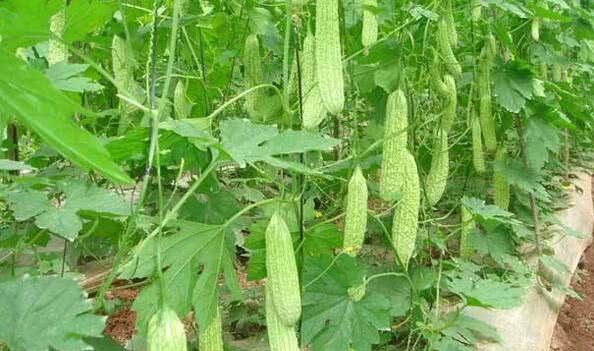
Generally speaking, if you want a high yield from bitter gourd, the fertilization step is crucial. Applying too much or too little will both affect the yield of bitter gourd, so fellow vegetable growers must master the key points of fertilizing bitter gourd. Below, let's take a quick look together at the six major fertilization points for bitter gourd.
1. Base fertilizer
Base fertilizer is the most basic condition for the growth of any plant, so the same applies when actually planting bitter gourd. For the base fertilizer, we mainly use farmyard manure as the foundation, then supplement it with appropriate amounts of nitrogen, phosphorus and potassium fertilizers. For planting bitter gourd, the farmyard manure needed per mu is about 5,000 kg, nitrogen fertilizer 40 kg, phosphorus fertilizer 50 kg and potassium fertilizer 30 kg. Be sure to mix it evenly, then plow it into the soil.
2. Seedling-promoting fertilizer
The seedling-promoting fertilizer is generally the first nutrient supply applied as a top dressing after bitter gourd is transplanted. At this time we usually apply it together with watering, which can increase the survival rate of the bitter gourd seedlings and also allow the nutrients to be fully absorbed by the seedlings, thereby promoting root growth. The amount of seedling-promoting fertilizer used is generally not large, mainly urea, with about 10 jin of urea needed per mu, and 4 to 5 jin of potassium fertilizer can be added, which can enhance the resistance of the bitter gourd seedlings.
3. Growth fertilizer
The growth fertilizer is applied when the bitter gourd seedlings have grown to about 30 to 40 cm. At this time, in order to speed up the growth of the seedlings, shorten their growing period, and thus make them flower and fruit faster, we still need to add an appropriate amount of nitrogen fertilizer, or use manure and urine water for irrigation. At the same time, about 5 jin of urea and 3 to 4 jin of potassium and phosphorus fertilizers can be added to the manure and urine water, which can prevent the seedlings from excessive vegetative growth.
4. Flower-promoting fertilizer
When bitter gourd has grown to a certain extent, it enters the flowering stage. Fertilization is generally carried out about one week before flowering or just as flowering begins, which can extend the flowering period of bitter gourd and thereby increase the fruit-setting rate. This fertilization is mainly based on phosphorus fertilizer and base fertilizer, and an appropriate amount of boron fertilizer can also be sprayed. The fertilizer is generally prepared in a ratio of 3:2:1.
5. Fruit-fattening fertilizer
As we all know, the fruit-fattening fertilizer is applied after fruit set, when the fruit has grown to the size of two fingers, to promote the enlargement of bitter gourd. The fruit-fattening fertilizer is still mainly phosphorus and potassium fertilizers, applied per mu at 10 jin of phosphorus fertilizer and 8 jin of potassium fertilizer. Next, during this period, an appropriate amount of foliar fertilizer can be sprayed, and some biological fertilizers specially used for fattening fruit can also be used, so that the yield is increased without affecting the quality of bitter gourd.
6. Post-harvest fertilizer for early gourds
The later-stage fertilizer mainly refers to the fertilizer applied after the first batch of bitter gourd is harvested; basically all of it belongs to later-stage fertilizer. Its main purpose is to prevent the bitter gourd vines from aging and thereby reducing the yield of bitter gourd. So after each harvest of bitter gourd, a maintenance fertilization is needed, mainly based on urea and compound fertilizer, about 20 jin per mu on average. At the same time, an appropriate amount of phosphorus and potassium fertilizers also needs to be used together for root-zone fertilization, which can effectively prevent premature aging of the plants.