What are the stylistic characteristics of Beijing-style bonsai
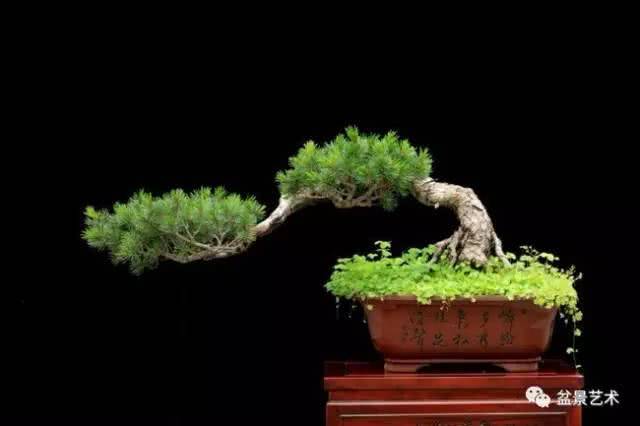
Although the Beijing bonsai school has not been established for long, it actually has a history of several hundred years. In the Ming dynasty, Wang Shihmao wrote in Xuepu Zashu: "In the capital there are many thousand-year-old families; among the bonsai one sees a green Caoyu Butterfly Plum, the finest of plums." The Qing dynasty Rixia Jiuwen Kao records: "In the capital, as early as the twelfth lunar month people buy peonies, plum blossoms, crimson peach, Tanchun and other flowers, all stored in warm rooms and forced with fire." Emperor Kangxi wrote two poems on bonsai: Ode to the Imperial Pomegranate Flower Bonsai and Ode to the Pine in a Pot. By the late Qing dynasty, on the basis of learning from bonsai-making elsewhere and combining local natural conditions with local customs, bonsai gradually developed into plum stump scenes, palace osmanthus, pomegranate bonsai, peony bonsai and so on. Even today, gardens such as Zhongshan Park and the Summer Palace still preserve some osmanthus and pomegranate stump scenes that are more than a hundred years old.
Constrained by various natural and social conditions, the development of Beijing bonsai remained slow. In 1980 the Beijing Bonsai Association was established, and especially after holding several national bonsai art exhibitions, Beijing bonsai made great progress and quickly formed its own shaping techniques and artistic characteristics.
In shaping, it absorbs the strengths of both the southern and northern schools, relying mainly on pruning and supplementing with wiring, combining pruning and wiring. In layout it adapts measures to the material, seeking simplicity within complexity, fineness within coarseness, and concealment within exposure, achieving a well-balanced irregularity, seeking change within unity and unity within change. Side branches mostly appear in the horizontal-branch style, and the canopy is mostly fan-shaped or semicircular, to display a majestic and vigorous momentum.
Beijing bonsai learns from and inherits the excellent traditions of the capital's classical garden art, and because it is influenced by Central Plains culture, its bonsai art style is expressed as sturdy and steady, antique and plain.
Commonly used tree species include: hornbeam, Chinese hackberry, Vitex, Huashan pine, buckthorn, maple, elm, hawthorn, Chinese juniper, spruce and more than 40 others.
Commonly used stones include: ax-cut stone, sand-accumulated stone, thousand-layer stone, stalactite, chicken-bone stone and so on.