A ruined town, Italy builds a top research institute to help the earthquake-stricken area shine through higher education
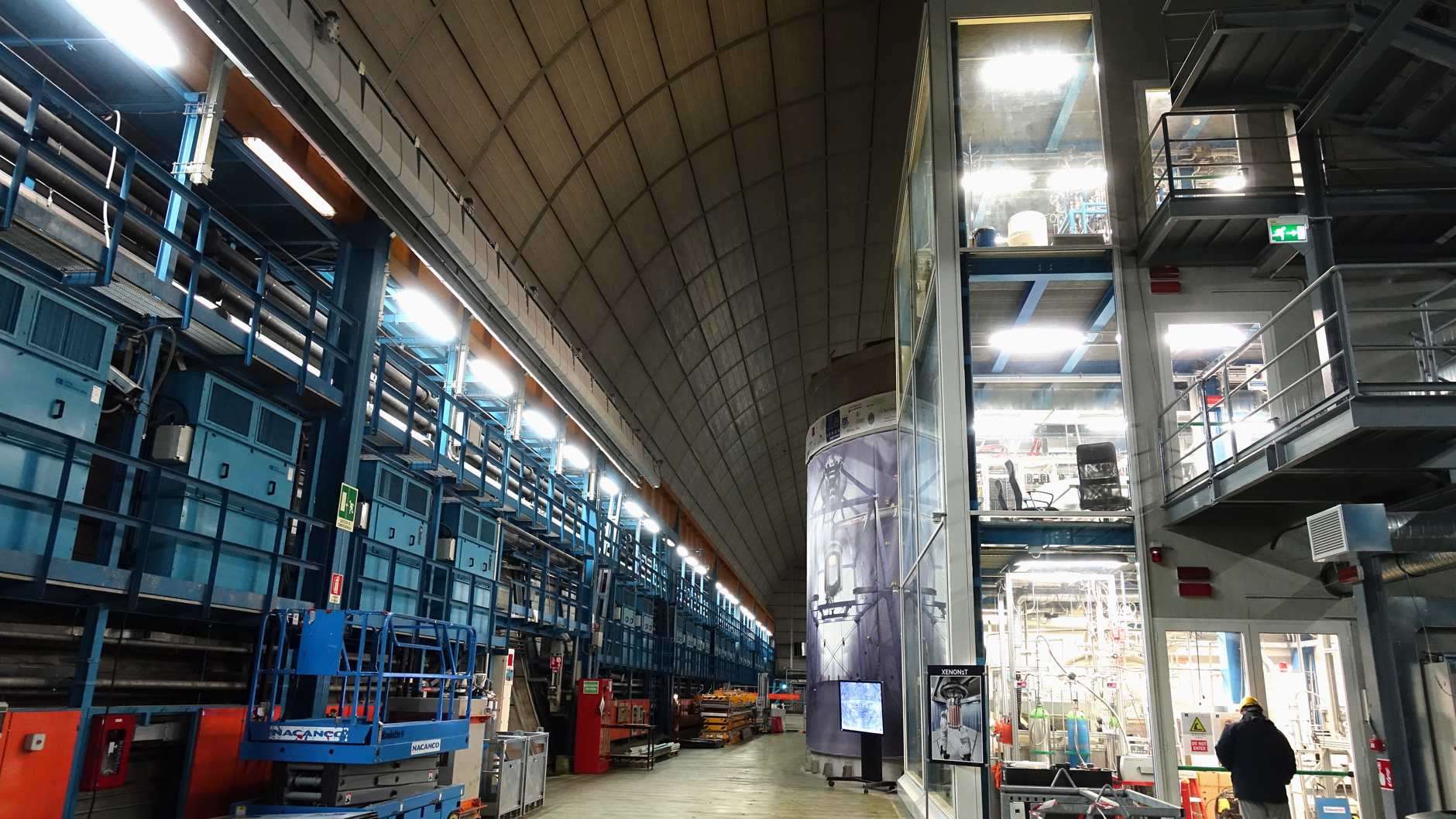
After passing through a tunnel 10 km long, there is no need to say "Open Sesame"; the thick, enormous metal door in the cave slides slowly open automatically. There is no Ali Baba treasure here, but there is a treasure trove of knowledge for exploring the origin of the universe and mysterious particles.
Scientists in the cave use the most advanced research to attract talent to the earthquake-stricken area
Italy's Gran Sasso National Laboratory (Laboratori Nazionali del Gran Sasso) is located deep in the Apennine Mountains, with a 1,400 m high peak covering it above, and is currently the world's largest underground nuclear physics laboratory. Wearing oversized "helmets" is to block interference from cosmic rays that fall on Earth like continuous heavy rain and natural radiation, making it possible to observe elusive neutrinos and dark matter.
The laboratory is located deep in the mountains as if within impregnable walls. During the 2009 central Italy earthquake, it was unharmed, while in nearby L'Aquila hundreds of buildings collapsed and more than three hundred people died, including 55 university students. Seeing the city turned into ruins and students dying young, Eugenio Coccia, then director of the Gran Sasso National Laboratory, was deeply worried that no one would ever again be willing to study or work in L'Aquila.
Coccia and his colleagues turned grief into strength and decided to use their expertise to help the disaster area be reborn: planning a higher research institute in the mountain city of L'Aquila, using the reputation of the Gran Sasso National Laboratory to attract first-class international scholars and train young scholars, not only to stop the outflow of population but also to bring in talent.