Grow These 9 Flowers Around National Day and They Will Bloom at Spring Festival, Filling Your Home with Festive Cheer
At Spring Festival, many flower lovers buy a few flowers to place at home for a festive touch. In fact, there are many flowers we can grow ourselves at home, and they can also bloom around Spring Festival. Let's take a look!
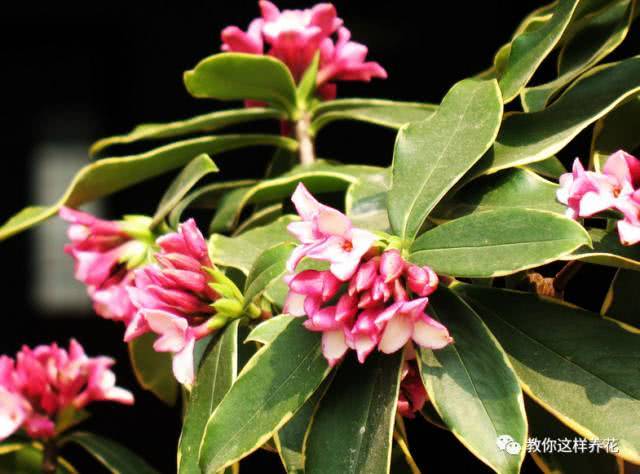
Daphne
Daphne odora 'Aureomarginata' is a variety of daphne, famous worldwide for its four excellences of "color, fragrance, form and charm," and is one of the three treasures of world horticulture. The Song dynasty work Qing Yi Lu records: "The daphne flower of Mount Lu was first encountered by a monk who, while sleeping on a large rock by day, smelled an intense floral fragrance in his dream; upon waking he sought it out and found it, hence it was named 'sleeping fragrance.' People everywhere marvelled at it and called it an auspicious flower, and so it was named ruixiang (daphne)."
Daphne odora 'Aureomarginata' has pale purple flowers and an intense fragrance, and is a treasure among daphnes. Potted Daphne odora 'Aureomarginata' is an excellent choice for table display at Spring Festival; the blooming daphne flowers are full of vitality, with a rich fragrance, quite distinctive. However, note that this flower should not be kept indoors for long periods, as its pollen or fragrance may cause discomfort in people with allergic constitutions.
- Care Methods -
Daphne odora 'Aureomarginata' likes a warm environment, fears blazing sun, prefers shade and is afraid of cold. In summer it needs shading and protection from rain and strong wind; in winter, place it indoors in a sunny, sheltered spot and keep the room temperature above 8°C. It likes loose, fertile, well-drained acidic soil (pH 6 to 6.5) and dislikes alkaline soil. When planting, choose a half-shaded, half-sunny site with deep topsoil and moist ground. To avoid direct sunlight while still catching sun in winter, it is often planted mixed with deciduous trees and shrubs. Transplanting can be done in both spring and autumn, but it is best done during the spring flowering period or the plum rain season. Mature trees do not tolerate transplanting, so be sure to take as much of the original soil as possible and prune heavily.
- Flowering Period Regulation -
Daphne odora 'Aureomarginata' has a graceful tree form, a rounded crown, supple branches and thick leaves, with spreading limbs, abundant fragrant flowers and auspicious meaning; it is best viewed during its early-spring February flowering period. If you need it to bloom earlier, raise the temperature of the water used for watering 1 month before flowering, which can advance blooming by half a month; withholding water during full bloom can extend the flowering period.
Cattleya
Cattleya, also called Cattleya orchid, is one of the most famous orchids internationally. It is native to Brazil, and its colors include white, yellow, green, red and purple. Cattleya flowers are large, opulent and magnificent, with delicate and changeable colors and a rich fragrance. Internationally it has the laudatory titles of "King of Foreign Orchids" and "Queen of Orchids," and is the national flower of countries such as Brazil, Argentina and Colombia.
- Care Methods -
Cattleya likes warmth, moisture and ample light. For overwintering temperatures, around 15°C at night and 20-25°C during the day; maintaining a large day-night temperature difference is crucial, and constant day-night temperature should be avoided, still less should night temperature be higher than day temperature. It requires a semi-shaded environment, and in spring, summer and autumn 50%-60% of light should be shaded. It is usually potted in fern roots, moss, bark chunks and the like. During the growing period it needs relatively high air humidity, appropriate fertilizer and ventilation.
- Blooming at Spring Festival -
To make Cattleya bloom at Spring Festival, the simplest way is to choose varieties with different flowering periods; you can use winter-flowering and early-spring varieties, such as 'Big Eye', 'Yanggang' and 'Red Rose', which can bloom from January to March.
Narcissus
The narcissus keeps its fragrance for more than a month; who can gaze upon it as an equal? The ancients often compared the narcissus to a fairy maiden, and the narcissus has a cultivation history of more than a thousand years in China. Through over a thousand years of selection and breeding, it has become a unique fine variety among the world's narcissus flowers, and is one of China's ten traditional famous flowers. Together with the orchid, chrysanthemum and acorus, it is called one of the Four Elegants.
- Habits of the Narcissus -
The narcissus likes ample sunlight, has strong vitality, tolerates partial shade but not cold. It grows in autumn and winter, blooms in early spring and goes dormant in summer. The narcissus likes light, water and fertilizer, and is suited to warm, moist climatic conditions and fertile sandy soil. In the early growth stage it likes coolness, in the middle stage it is slightly more cold-tolerant, and in the later stage it likes warmth. Therefore it requires a climate with no severe cold in winter, no extreme heat in summer, and plenty of rain in spring and autumn.
- Water Culture of the Narcissus -
Households generally rarely use soil culture; the simplest way to care for narcissus is water culture. Just place the sprouted narcissus upright in a shallow basin, adding water to cover one third of the bulb. Fix the bulb in the basin with quartz sand, pebbles and the like.
During care, give ample light: place it in a sunny spot during the day, and at night it is best placed under a lamp. This prevents the narcissus stems and leaves from growing leggy, making the leaves short, broad and thick, sturdy, with a deep green color and fragrant blooms.
For narcissus grown in water, fertilizer is generally not needed; plain clean water is enough. If conditions allow, apply a little quick-acting phosphorus fertilizer during the flowering period and the flowers will bloom even better.
- Flowering Period Control of the Narcissus -
If you want to delay the flowering period, you can lower the water temperature, or pour out all the water in the basin in the evening and add clean water the next day. If you want to force flowering, you can warm the water, with the water temperature preferably close to body temperature.
- After-Bloom Care of the Narcissus -
After the narcissus flowers fade, you can bury the narcissus bulb in sunny sandy soil, leaving the leaves naturally intact. After about a month, the leaves begin to wither and go dormant; then dig up the bulb, cut off the fibrous roots, trim away the withered yellow leaves, and bury the bulb again in soft soil, at a depth of about 10 cm.
Wait until early winter, then dig out the bulb buried in the soil; the old bulb will rot and become hollow, but by then some new bulbs will have grown. Select the bulbs that are large with many buds, wash off the soil, soak them in carbendazim, and then they can be carved for water culture. Smaller bulbs can be left to grow in the soil for another year, and dug up the following year once they have grown plump, for water culture.
Cyclamen
Cyclamen, also called radish begonia, Yipin crown and rabbit-ear flower, is a perennial herbaceous bulbous flower of the genus Cyclamen in the primrose family. Cyclamen has a sturdy, well-proportioned plant shape, a long flowering period, generally blooming from October to May of the following year, and distinctive flower shapes, some with a sweet fragrance, making it very popular.
- Cyclamen Care -
Cyclamen likes warmth and fears heat; it grows best in a cool environment and in fertile sandy loam rich in humus. It is relatively cold-tolerant and can withstand low temperatures of 0°C without freezing. Autumn to spring of the following year is its growing season, it is semi-dormant in summer, and the suitable growing temperature in winter is between 12-16°C; when promoting flowering it should not exceed 18-22°C. Above 0°C the plant will enter dormancy, and above 35°C the plant easily rots and dies. In winter it can tolerate low temperatures, but below 5°C growth is slow, flower color is dull and there is little blooming. Supplementing carbon dioxide gas in winter can promote growth and flowering. During the growing period it requires a humid air environment and ample sunlight.
- After-Bloom Care -
After cyclamen flowers fade, the above-ground parts gradually wither as temperatures rise, entering a summer dormancy state. During summer dormancy, place the whole pot on a cool, ventilated north-facing balcony or room, manage as usual, and when watering still water thoroughly to keep the bulb firm. Do not fertilize during dormancy. When the weather turns cool and autumn arrives, new shoots will sprout again, entering the next growing season.
Camellia
Camellia, also called camellia, is an evergreen shrub or small tree of the camellia family. It originated in our country and is one of our country's famous traditional flowers. Because of its graceful plant form, thick glossy green leaves and brilliant, colorful flowers, camellia is treasured by the world horticultural community and loved by many flower lovers.
Camellia has a relatively long flowering period, blooming from October to May of the following year, with the full bloom period usually from January to March.
- Camellia Care -
Camellia fears wind and likes sun, high, refreshing terrain, air circulation, warmth and moisture, good drainage, and loose fertile sandy loam, loess or humus soil. pH 5.5-6.5 is best. The suitable temperature is between 20-32°C; above 29°C it stops growing, and at 35°C the leaves will show scorching. It requires a certain temperature difference. Environmental humidity above 70%; most varieties can withstand -8°C low temperatures (natural overwintering; Yunnan camellia is slightly less cold-tolerant), and in areas south of the Huai River they can generally overwinter naturally. It likes acidic soil and requires good air permeability.
- Methods for More Blooming -
Camellia flower buds form on the current year's branches; when leaf buds sprout in March-April, remove spent flowers in time. Apply decomposed dilute liquid fertilizer mainly of nitrogen fertilizer, once about every 7 days, 3-4 times in total.
After May, new branches begin flower bud differentiation and gradually form flower buds. Apply phosphorus-potassium fertilizer once about every 10 days, 3-4 times in succession, which helps flower bud formation. At this time no more nitrogen fertilizer is needed, otherwise new branches will sprout and cause bud drop.
Kalanchoe
Kalanchoe, also called Shouxing flower, dwarf kalanchoe and Christmas kalanchoe, is a perennial evergreen succulent flowering plant of the Crassulaceae family. Kalanchoe usually begins blooming from late December and can continue until early May of the following year, hence the name "longevity flower." Kalanchoe has rich flower colors and an excellent ornamental effect; it not only beautifies the environment but also adds to the winter holiday atmosphere.
- Kalanchoe Care -
Kalanchoe likes a warm, slightly humid and sunny environment. It is not cold-tolerant; the suitable growing temperature is 15-25°C. In summer, when high temperatures exceed 30°C, growth is inhibited; in winter the indoor temperature needs to be 12-15°C. Below 5°C, the leaves turn red and the flowering period is delayed. It is drought-tolerant and not demanding about soil, preferring fertile sandy loam. Kalanchoe is a short-day plant and is relatively sensitive to photoperiod. For plants growing well, giving short-day treatment (8-9 hours of light per day) for 3-4 weeks will produce flower buds and blooming.
- Reasons for Not Blooming -
Kalanchoe likes light; long-term insufficient light will inhibit plant growth and also affect blooming. Let kalanchoe receive a certain amount of light each day, and you can also turn it regularly so the plant receives light evenly and blooms evenly.
Kalanchoe likes fertilizer relatively much; during the growing period nitrogen fertilizer should be the main type, to promote stem and leaf growth. Before flowering, phosphorus-potassium fertilizer can be the main type, to promote blooming. After flowering, a nitrogen-containing liquid fertilizer can be applied again to help it recover vigor. If no fertilizer is applied for a long time, the flowers will be small, the flowering period short, or it may not bloom at all.
Cymbidium
Cymbidium is a variety group bred through more than a hundred years of multi-generational artificial hybridization from large-flowered epiphytic species, small-flowered pendulous species and some terrestrial orchids in the genus Cymbidium. Cymbidium has long, emerald-green leaves and a bold, unrestrained and magnificent flower posture; it has the quiet elegance of Chinese orchids and the rich variety of foreign orchids, and is deeply loved by flower enthusiasts.
- Care Methods -
Cymbidium likes slightly acidic water and is relatively sensitive to calcium and magnesium ions in water; it has relatively high water quality requirements, and rainwater irrigation is most ideal. During the growing period it needs relatively high air humidity. If humidity is too low, the plant grows poorly, the root system grows slowly and becomes thin and small, the leaves become thick and narrow, and the leaf color turns yellowish. Overall, cymbidium fears dryness and not moisture.
Cymbidium dislikes direct sunlight and needs ample scattered light; under strong summer light it needs about 50% shading. In autumn, sunlight can be a little more, which helps flower bud formation and overwintering; in winter it can be placed in a bright spot in the greenhouse.
The suitable growing temperature is 25°C during the day and 10°C at night; if the night temperature is higher than 20°C, it will cause flower buds to wither or affect blooming. In winter the temperature cannot be lower than 5°C, but also cannot be higher than 15°C, otherwise the flower buds will suddenly elongate.
Cymbidium likes fertilizer relatively much; during the growing period, apply once a week a compound fertilizer with 0.1-0.2% concentration mainly of nitrogen fertilizer, or decomposed dilute cake fertilizer water. During the bud stage, apply additional quick-acting phosphorus and potassium fertilizer in advance.
- Flowering Period Management -
The most suitable temperature during the flowering period is 8°C to 15°C; it cannot be placed next to a high-temperature, dry radiator. During the flowering period, water once every 3 days. Prolonged low temperatures of 2°C to 3°C will cause freezing damage to the flowers, the buds turn yellow and cannot open. If the room temperature is too high, above 18°C, the buds easily turn yellow and drop, and the whole plant's flowering period is shortened. When its flowers are 70% faded, cut the flower stalk off from the base early to reduce unnecessary nutrient consumption within the plant.
Kumquat
At Spring Festival, kumquat is mainly grown for its fruit. "Ju" (tangerine) sounds like "ji" (auspicious), and "jin" means gold, so kumquat carries the meaning of auspiciousness and bringing wealth. A kumquat tree can be placed at home, and can also serve as a congratulatory gift; putting some kumquats in a fruit basket for New Year visits is a very good way to give blessings. Note that when choosing a potted kumquat you must pick one full of fruit, because sparse fruit carries the meaning of "more misfortune and little luck"; the fruit color should be ruddy, and the branches and leaves should be emerald green without yellow leaves.
Kumquat is slightly shade-tolerant, likes a warm, humid climate and is not cold-tolerant; when the temperature is below -7°C, freezing damage occurs. It is suited to deep, fertile, neutral to slightly acidic sandy loam. Potted kumquat likes a bright, ventilated environment and a sunny spot; such an environment is conducive to healthy growth of the kumquat, with a high flowering rate and plump, glossy fruit.
- Post-Spring Festival Management -
After Spring Festival, remember to change the soil of the New Year kumquat: remove half of the old soil, remove part of the fine lateral roots around the sides, and be sure not to damage the main root. Add some new soil, apply a multi-element chemical fertilizer around the inside of the pot, and press the soil firm. Remove all the fruit, prune part of the branches and leaves, cutting the height by about one third, cut off dead branches and withered leaves, keep strong branches and leaves, and let it grow new shoots.
Phalaenopsis
Phalaenopsis is a perennial evergreen epiphytic herbaceous flower of the genus Phalaenopsis in the orchid family. Because its flowers resemble butterflies and have butterfly-like beauty, it is called phalaenopsis (butterfly orchid). Phalaenopsis has many varieties, with flowers and colors full of variation, and a very beautiful flower posture, and is deeply loved by people.
Phalaenopsis has thick white aerial roots exposed around the leaves; besides absorbing nutrients from the air, they also carry out growth and photosynthesis. In the New Spring season, the phalaenopsis plant sends out long flower stalks from the leaf axils and opens flowers shaped like dancing butterflies, deeply favored by orchid fans, and it has long been known as the "Queen of Foreign Orchids."
Phalaenopsis likes a high-temperature, high-humidity, ventilated and semi-shaded environment, and dislikes waterlogging and stuffiness. The overwintering temperature should not be lower than 15°C. Because phalaenopsis originates in tropical rainforest regions, it is by nature warmth-loving and cold-fearing. The suitable growing temperature is 18-30°C; in winter, below 15°C it will stop growing, and below 10°C it easily dies.
- Flowering Period Management -
During the flowering period, keep the temperature at 10-15°C. Watering is best done at 10 a.m., with the water temperature controlled at 18-20°C. Avoid splashing water onto the flowers; drip irrigation or injection watering can be used. After watering, pay attention to ventilation so residual moisture disperses as soon as possible. Pay attention to supplementing air humidity and apply a small amount of fertilizer.
- After-Bloom Management -
After the flowers fade, cut off the faded flowers as early as possible. For relatively robust orchid plants, you can cut from the base at the 4th-5th node, and after 2-3 months they can bloom again. But this consumes too much of the plant's nutrients, which is not good for growth the following year. If you want good flowers again the following year, it is best to cut the flower stalk off from the base.
By Spring Festival, the prices of these flowers shoot right up
So why not grow a pot now!
Share it quickly with flower lovers who need it~