Essential Knowledge for Visiting the 2018 Wuhan Golden Autumn Chrysanthemum Show
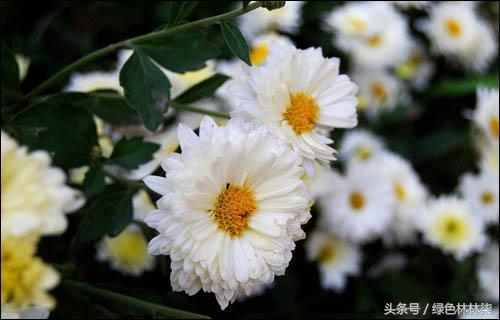
Summary: The chrysanthemum is one of China's top ten famous flowers. Nowadays, many people treat it as a flower of mourning, so what exactly does it symbolize?
The chrysanthemum is one of China's top ten famous flowers. Nowadays, many people treat it as a flower of mourning, so what exactly does it symbolize? If you know all this, then visiting the 2018 Wuhan Golden Autumn Chrysanthemum Show to admire the chrysanthemums will be a chance to appreciate both the flowers and their meanings at once, won't it?
The Symbolism of the Chrysanthemum in Ancient Times
As early as the Eastern Zhou period, there were records of "chrysanthemums blooming in glory in the ninth month," and China's great Romantic poet Qu Yuan was the first to compare himself to the chrysanthemum. In his Li Sao he put brush to paper, describing himself as one who "at evening dines on the fallen petals of autumn chrysanthemums," and who would "rather cling to fragrance and grow old on the branch than dance with the yellow leaves in the east wind." But the true founder of chrysanthemum culture was Tao Yuanming of the Jin Dynasty. This "friend of the chrysanthemum" kept company with the flower morning and night, so that even his dwelling had "autumn chrysanthemums filling the garden." No one, from ancient times to the present, has surpassed the depth of his understanding of the chrysanthemum's realm. His line "picking chrysanthemums by the eastern hedge, I gaze leisurely at the southern hills" made the chrysanthemum the hermit among flowers.
Meng Haoran of the Tang Dynasty depicted the rustic scene of chrysanthemum viewing with "When the Double Ninth Day comes, I shall return for the chrysanthemums"; and the line "the whole city clad in golden armor" by his contemporary Huang Chao has become a topic of conversation for people today. By the Song Dynasty, there was the grand Double Ninth scene in which "every wine house bound chrysanthemums into an archway." The Ming Dynasty poet Li Mengyang's "only in this autumn scene do I bear to come for the chrysanthemums" and Qing Emperor Qianlong's "maple leaves and green parasol trees fall, frost flowers pile on the white chrysanthemums" both show how the chrysanthemum's vogue grew even stronger during the Ming and Qing dynasties.
The many chrysanthemum poems in "Dream of the Red Chamber" are especially heart-wrenching works. From these allusions to the chrysanthemum, we can clearly see the ancient poets' love for the flower. With its proud spirit of blooming in the frost and not falling before the west wind, and its bearing of "once this flower blooms, no other flower remains," the chrysanthemum was endowed with the noble virtue of unyielding integrity, winning people's admiration and praise.
In Chinese history, the chrysanthemum also represented good fortune and longevity. Chrysanthemums bloom in the ninth month, and "nine" is the largest single-digit number, called the "ultimate number" and the "yang number." Thus the chrysanthemum, like the Double Ninth Festival with its doubling of the yang nines, was given the meaning of good fortune and longevity. "Picking chrysanthemums by the eastern hedge" was for partaking of the chrysanthemum's health benefits for well-being, while "gazing leisurely at the southern hills" also echoed the idea of "long life as the southern hills."
The Origins and Development of the Chrysanthemum's Modern Symbolism
In ancient times, the chrysanthemum was used to bless or praise the living. So why has the chrysanthemum now become a funeral flower, used to mourn the departed?
Using chrysanthemums to sweep tombs is like using roses to express love; in fact, it is mainly the result of "Western customs spreading eastward."
The word "chrysanthemum" appeared in European dictionaries around the end of the 17th century, after the Dutch introduced it from China in the course of trade. In the 18th century the chrysanthemum spread to France, and then in the mid-19th century it was introduced to Latin America... and so it spread throughout the world.
In Europe, the place where chrysanthemums are planted most is the cemetery, because traditional European culture regards the chrysanthemum as the flower of the graveyard. If you are a guest or giving a gift, this flower must never be brought along. In Latin America, the chrysanthemum is also known as the "devil's flower."
This shows its standing in the West. With the encroachment of Western culture, the chrysanthemum's meaning in the West was also introduced into China, and its mourning meaning gradually replaced its meaning as the hermit's flower, making it the graveyard flower that everyone knows today.