One net catches dozens of jin of wild catch; once thrown away, now 80 yuan per jin and very rare
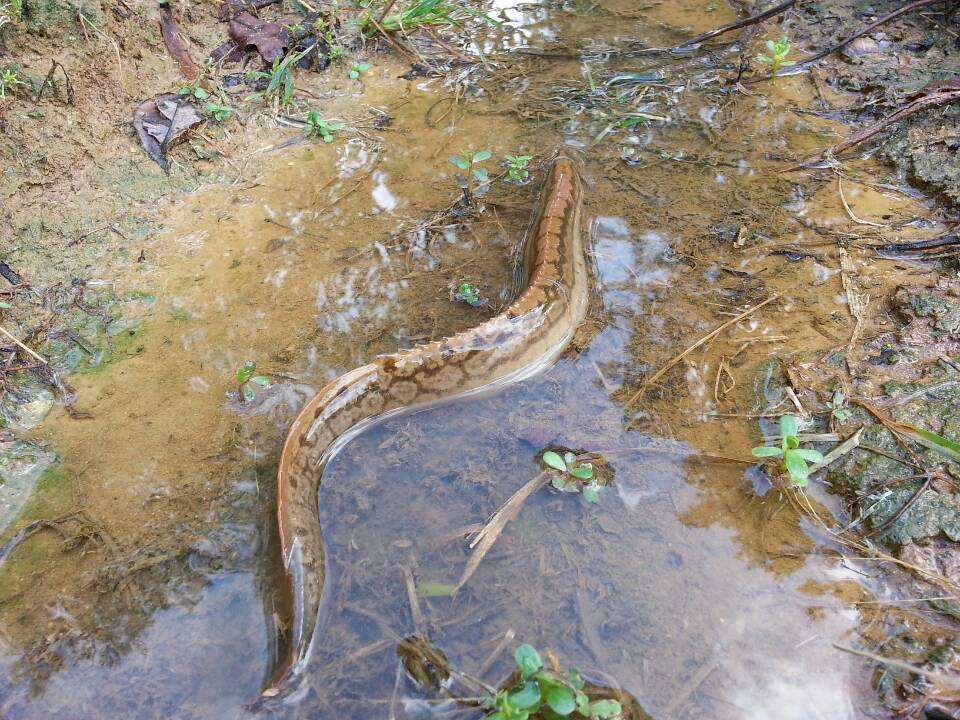
In the ponds and puddles of the countryside, there are many kinds of wild catch, and I did plenty of catching fish and shrimp as a kid. Back then, the popular ones were the big, fresh-tasting fish, such as snakehead and catfish, while the remaining small fish and shrimp were far too many and were basically all scooped up to feed the ducks. It is nothing like now, when people specifically eat the small fish and shrimp and turn their noses up at the big fish instead. Today's society really is baffling. I still remember there used to be a kind of wild catch that looked like a loach, and there were huge numbers of them. Back then, casting nets to fish was common, and one net could haul up dozens of jin, but nobody ate them and they were simply thrown away. Now it has become a very rare wild catch, and usually you cannot even buy it.
This wild catch is called the spiny loach; it has serrated edges on its back, and if you grab it with your hand it will leave a bloody scratch, so it also has another name, "steel loach." This creature is a social animal and often gathers in large groups in crevices between rocks. When fishing in the past, it was the thing I feared most, as it constantly took the hook and wasted bait. Although the steel loach looks quite large, its flesh is too firm and dense and carries a heavy muddy fishy smell (though it may also be that nobody knew how to cook steel loach back then), making it far less tasty than the common loach. So in the past nobody ate it, and when one was caught it was simply tossed onto the road to dry to death in the sun.
Times are different now. Many kinds of wild catch in the countryside have gradually disappeared, and even the steel loach, once so unwelcome, is rarely seen. They say things are precious when they are scarce, and now the price of steel loach has risen too: wild ones sell for 80 yuan per jin, and you can only find them at rural markets. Maybe cooking techniques have improved as well. The once unremarkable steel loach, after a chef's skillful handling, now tastes completely different, and its nutritional value has also been discovered. It is considered to contain high protein and low fat, as well as a variety of unsaturated fatty acids beneficial to the human body, so it has become a health food.
Nowadays, like the common loach, the steel loach is farmed by quite a few farmers, and it has another sales outlet: it can be kept in aquariums as an ornamental fish. That is because it looks much better than the common loach, and with its long, snake-like body, it is highly ornamental as a bottom-dwelling fish in the water. The decline of wild steel loach in the countryside is mainly because the ecological environment is not as good as it used to be, and destructive fishing methods such as poisoning fish and electrofishing are also an important reason for its decline. I hope everyone can take care of the environment and fish reasonably, so that the ecological environment can develop in a sustained and healthy way.