Why did she say a woman needs a room of her own?
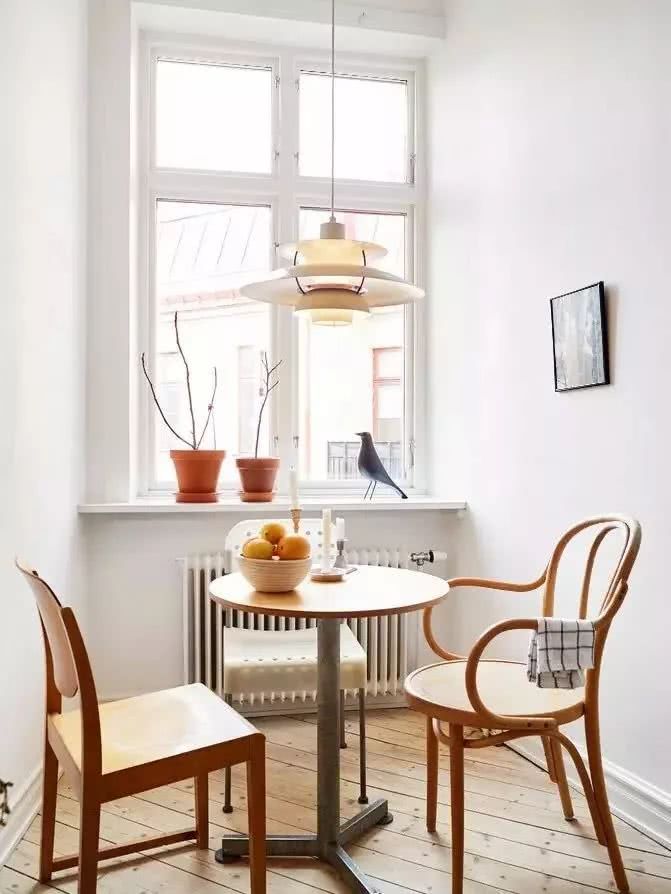
During the National Day holiday, wherever you go it is a sea of people, noisy and crowded, and even a trip to the mall gets stuck in traffic... At times like this, the most comfortable place is actually your own little nest.
Siyue likes to stay at home, playing her favorite music, curled up on the sofa reading a slow-paced novel. Warm sunlight falls on her body, and a whole afternoon slips by in a flash.
The world outside the window is noisy, but only this space enjoys its quiet.Siyue feels lucky to have a little room where she can temporarily escape the noise of the world, immerse herself in her own world, and enjoy a stolen stretch of leisurely time.
Today Siyue read an article on "Hao Hao Xu Du Shi Guang" about why women should have a room of their own. After reading it, she had many thoughts, and shares it with everyone here.
Big Jet Plane
Down The Way
Angus & Julia Stone
00:00/03:59
{Peony Girl Vol.897 }
x
A little world of one's own
In the summer of 2017, I owned my first home of my own. It is located by Erhai Lake in Dali, a small one-bedroom apartment.
I am probably a natural wanderer. For many years I never had much feeling about houses, nor any strong desire to own one.
Buying this house was also purely accidental -
When I met an interview subject for the first time, we talked about wanting to put the housing provident fund I had paid in Beijing for many years to use. The next day, he took me to see this small, fully furnished apartment.
I paid the deposit on the spot.So, for the first time, I owned a house of my own.
As the British woman writer Woolf said, "If you want to write, you must have five hundred pounds a year and a room with a lock."
Another of her remarks struck me even more deeply -
The freedom of the mind depends on material things.
And women have always been poor, not only for nearly two hundred years, but since the beginning of history.
As for the freedom of the mind, women are not even as well off as the children of Athenian slaves.
...This is why I so emphasize money and a room of one's own.
How true those words are.
Do you not see that in this era more and more girls earn their own money, buy their own homes, become independent property owners, and possess the confidence to live freely.
Since childhood, I have lived in many houses.
My parents left the countryside and went to the city to start a business. From initially renting to later endlessly buying and selling houses, I also lived a wandering life of moving from time to time.
After growing up, I calculated that the longest I had lived in one house was no more than five years. I never had a deep experience of so-called stable and settled life.
After graduating from university, I spent one year on the road, looking at the world without a fixed purpose, with no fixed residence. The 40-liter backpack on my shoulders was all I had for that year of life.
Later I decided to settle in Beijing and began to earn money independently. I had several places to live, living with friends and family, or living alone.
At that time, apart from paying rent, meeting basic living needs, and eating and drinking with friends, the rest of the money I earned was spent on travel. Domestic and overseas, the United States, Europe, Southeast Asia, many places I had long yearned for, I went to them all.
Later, when I read what Woolf wrote in "A Room of One's Own," I felt how difficult it was for me as a woman to have experienced and possessed everything I have.
Only a few decades or a hundred years ago, women were still bound by such vast and heavy constraints, unable to live freely.
Just look: whether the British women before the twentieth century recorded by Woolf, or the Chinese women a hundred years ago as we know them, most spent their lives mending clothes and socks, cooking and washing, and bearing and raising a large group of children.
Women's talent was considered superfluous. Receiving education, reading and writing were far beyond most women. And going out into society and taking up all kinds of professions was an even more unheard-of oddity.
But today, we can go to school, receive higher education, pursue the professions we like, and strive for achievements in our careers. We can travel freely and see scenery around the world.
My little house by Erhai Lake
The form Woolf hoped for has, to some extent, already been realized. She said:
It will be a beautiful golden age, when women will possess what has long been denied them - leisure, a sum of money, and a room of their own.
I hope you can do your utmost and find ways to earn enough money for yourselves, so you can travel, do nothing, think about the future or past of the world, read, dream, or wander the streets, letting the fishing line of thought sink deep into this stream.
I also suddenly understood a little: when I firmly chose to work and earn money in a big city rather than early retreat to a small town as I have today, what was the inner motive?
- To obtain the material foundation that can free the mind, and to possess the experience of watching the many facets of the world amid its bustling human scene, this is in any case a necessity. It gives life a solid foundation.
As Woolf also said:
The reason I ask you to earn money or have a room of your own is to make you live in reality. Whether or not I can depict it, it will be a vivid and vital life.
The benefits brought by earning money are obvious.
You can travel, or go a period without working and live on savings, and then have the chance to buy a house of your own.
In the process of buying a house, I experienced the subtle feelings brought by different values.
At present, in the vast third- and fourth-tier cities and rural areas, it is still not common for girls to buy houses themselves, nor is it widely accepted in terms of attitudes.
People still regard providing a house for a boy as a must. Without a house, it seems even difficult for a boy to want to get married.
I do not want to criticize this heavily. You should know that in vast areas of China, there are still many girls who cannot receive their parents' care and cannot get equal educational opportunities. Many of them marry and have children early, taking on the heavy burden of caring for a family and raising children.
They do not have the excellent conditions and educational opportunities that city girls have, let alone going out to strive for a career and earn a generous income.
And at the other end of this country, many city girls loved by their parents have received higher education and carved out a place for themselves in the workplace. Relying on their parents' financial support, or entirely on themselves, they buy a house of their own.
Around me, there are many such girls.
My little house by Erhai Lake
- Although, in the eyes of some men, girls with houses find it harder to marry. But what I see more is their more autonomous and more unhurried lives.
I more or less count myself among the lucky ones, possessing the excellent conditions that girls of this era can enjoy, able to live according to my own wishes, and choosing a city I like to stay in.
Dali itself gives me a strong sense of stability.
Whether before or after buying a house, and no matter how many villages and houses I have lived in, I have never felt adrift here. As long as Cangshan is before my eyes, as long as I see that intoxicating sunset glow, I feel attachment and belonging.
Sometimes when driving home in the evening, amid the heavy traffic of the urban area, I turn my head and see the tall, emerald, richly layered mountains not far away; or on the national highway I admire the dark blue clouds and serene mountains at dusk, and my heart instantly becomes gentle, and I truly realize:This is the plateau small city where I live, and I am truly connected to it.
Yes, buying a house in this small city brought inner changes I had not expected.
Looking back, I am not someone with a great desire for material consumption. From time to time I even quit my job without another lined up, do the things I want to do, or live freely on the road.
But in fact, I have never taken the matter of earning money lightly. Even quitting without a backup plan was done with a clear purpose, and happened on the premise that I had some savings and could live for a period without working.
Probably relying on intuition and reason, I understood deep in my heart the importance of material things and money, and understood its inseparable relationship with freedom, and I am someone who greatly needs freedom.
But I was still shaken when I saw another passage written by Woolf. She said:
A poetic attitude, to a large extent, still depends on a material foundation. One must have enough leisure, and also a little money. With money and leisure, only then is it possible to observe things with detachment and unhurried calm.
Over the past hundred years, which great poets have there been? Coleridge, Wordsworth, Byron, Shelley, Landor, Keats, Tennyson, Browning, Arnold, Morris, Rossetti, Swinburne - we can stop there.
Among these people, except for Keats, Browning, and Rossetti, all the others attended university. And among these three, only the short-lived Keats lived in hardship.
Perhaps saying this is somewhat cruel, but sadly, the solid facts tell us that the saying that poetic talent, whether rich or poor, will inevitably shine is actually nothing but empty talk.
For nearly two hundred years, poor poets have always had slim chances. Believe me - over ten years, I spent a great deal of time observing about three hundred and twenty elementary schools - the fact is that poor children in England do not have more opportunity to gain freedom of the mind than the children of Athenian slaves, and the birth of great works depends precisely on this.
And in China, there seems to have always been a tradition of praising poverty. Confucius said of Yan Hui, "A single bamboo bowl of rice, a single gourd of drink, living in a mean alley, others could not bear the sorrow, yet Hui did not change his joy. How worthy Hui was."
There are indeed artists who lived in poverty yet shone brilliantly, such as Van Gogh, Modigliani, and the Chinese essay writer Li Juan, all of whom had experiences of poverty.
But for most people, poverty does not bring freedom and creativity, does not bring happiness and joy, but only leads to embarrassment, illness, death...
That is why in the West there is often the saying that "one generation goes into industry and finance to make money, and the second and third generations can go into culture and art."
And that is why Woolf emphasized the importance of "money and a room" for women's creation.
I think,If girls possess property and money, then in any case it is a kind of freedom, a kind of confidence, a foundation on which they can live and create according to their own wishes.
I only wish that in this era when women have gained more freedom,
but are still bound by many constraints,
and are in a relatively more disadvantaged position,
more girls can be treated fairly,
and obtain the conditions for free living and creation.
Do you want to see the vast autumn colors of the desert?
Follow Peony Girl's Dunhuang study tour station!
"Dunhuang · Wild Growth" is now recruiting,
Click the blue link to sign up!
About the author
Hao Hao Xu Du Shi Guang: Focused on reporting the lifestyles of literary and artistic women beyond the nine-to-five, advocating doing useless things and spending a limited life. The ideal life is to face yourself honestly and properly waste time.
END