How can the rural development experiences of the EU, Japan and South Korea inspire Taiwan to build better villages?
The Taiwan Rural Sociological Association and the Department of Bio-Industry Communication and Development at National Taiwan University held a series of international academic seminars on the new farmer movement, inviting the UK, Japan and South Korea to share their rural reform experiences in order to promote exchanges on rural policy. Wang Chun-hao, chairman of the Taiwan Rural Sociological Association, said at the meeting on the 3rd that in order to think about how to promote rural development, he hopes to draw on EU rural development policy as well as Japanese and South Korean rural experience to open a new chapter for Taiwan's future rural development.
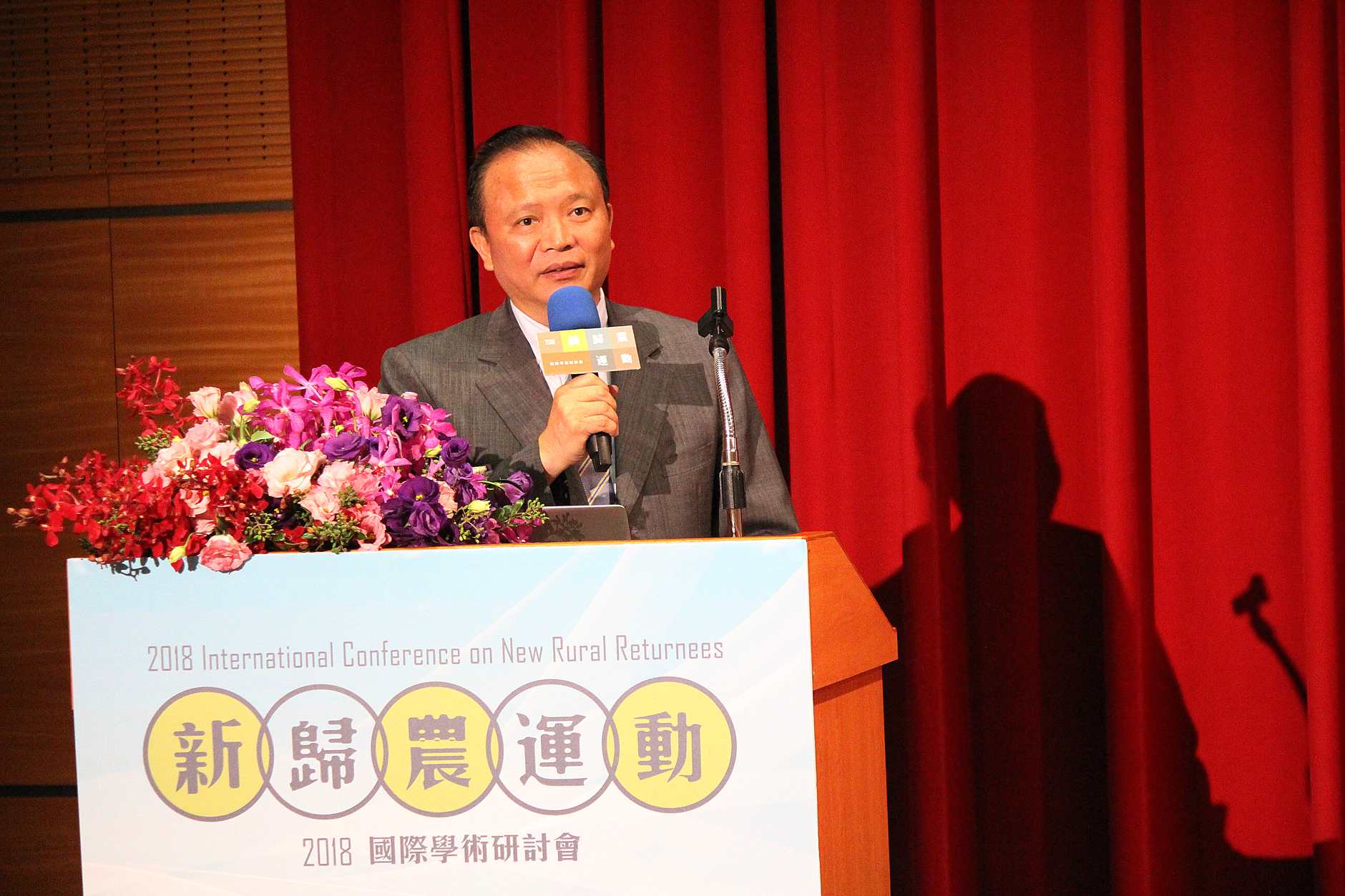
Lin Tsung-hsien, chairman of the Council of Agriculture, said that future policy positions will adopt thinking different from urban development to formulate more effective methods for rural development, and that a comprehensive rural social survey has already been launched, not only to conduct the survey but also to sort out the problems facing rural areas and formulate effective policies. "Are rural areas really a problem? That is a view based on past thinking about Taiwan's development. In the face of Taiwan's social changes, might rural areas instead be a good solution?" He stressed that as Taiwanese society transforms into a new generation's future, rural areas are an important piece, and he hopes all sectors will jointly portray the image of Taiwan's new countryside.
Chen Chieh-ting: We should not discuss rural areas only from the perspective of agriculture; we need to build a support system
"After returning to one's hometown, what exactly should one do in this place?" said Chen Chieh-ting, associate researcher at the Agricultural Policy Research Center of the Agricultural Technology Research Institute. He said that people returning to their hometowns are no longer considered only from the perspective of agriculture, and the demand for agricultural labor in rural areas is not as high as before. At this time, if returning to farming is encouraged, what exactly should these people do?
We should not discuss rural areas only from the perspective of agriculture. What are the needs of people inside and outside rural areas for rural life? Is it possible for them to be satisfied? Japan has consultation platforms that provide assistance, but what about Taiwan? He stressed that a support system must be given to practitioners returning to and entering their hometowns, including technical support on the industrial side; emotional support, so that those entering rural areas can integrate emotionally; and knowledge system support, so that those entering rural areas can come into contact with traditional grassroots knowledge.