Heavy penalties for illegal fishing! Jinchang No. 6 fined NT$11.4 million for supplementary killing of black sharks, internationally watched Fushen No. 11 fined NT$3.75 million, license revoked for 5 months
The Taiwanese fishing vessel Fushen No. 11 was accused of violating bans on catching protected fish species, finning and discarding carcasses, and abusing foreign fishermen and underpaying wages. The Fisheries Agency today (the 4th) announced the investigation results, confirming that the vessel was involved in failing to accurately report catch data, employing non-Taiwanese crew without permission, insufficient wages, excessive working hours, and early contract termination, with a total fine of NT$3.75 million and revocation of the vessel's fishing license for 5 months. Among these, for failing to pay foreign fishermen the statutory wage of USD 450, a separate fine of NT$250,000 was imposed and the license was revoked for three months, marking the first time Taiwan has issued a fine for this type of violation.
Previously, Jinchang No. 6 was confirmed to have illegally caught smooth hammerhead sharks (black sharks) and spotted ragged-tooth sharks (flower sharks), and the vessel owner and captain were fined a total of NT$11.4 million, with the fishing license revoked for 6 months and the captain's fishing vessel crew manual revoked for 6 months.
Did Taiwan deny it when the incident occurred? Fisheries Agency: Must investigate rigorously
When the Fushen No. 11 case first broke, the Fisheries Agency immediately issued a statement clarifying that there was no violation, but after reopening the investigation, it found problems such as catching protected fish species and violating fishermen's rights, a dramatic reversal. In response, Wang Mao-cheng explained that when Fushen No. 11 was detained in South Africa, inspections by South African authorities and Taiwanese officials did not find any protected fish species, because catching protected fish species constitutes a major violation with fines starting at NT$2 million, so the Fisheries Agency had to investigate more rigorously, and only reopened the investigation after the vessel returned to Taiwan.
Jinchang No. 6 violated the ban on catching protected fish species, fined NT$11.4 million
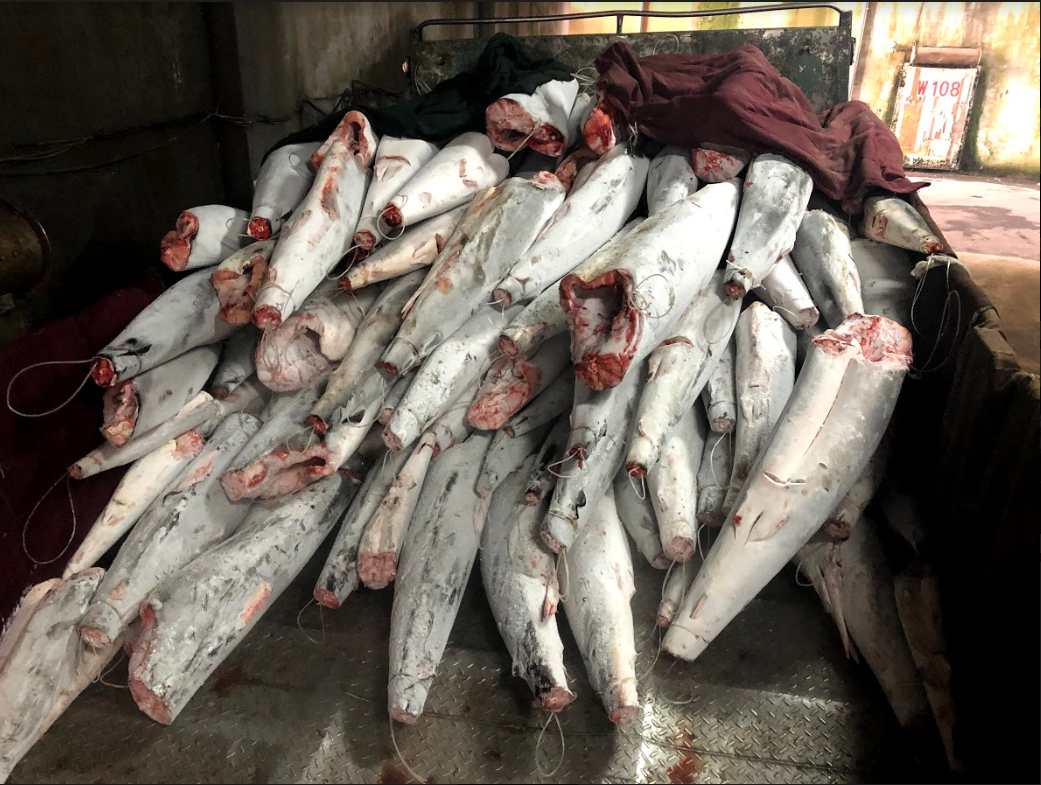
In addition, the Fisheries Agency also announced that evidence of Jinchang No. 6 illegally catching large quantities of black sharks and flower sharks was clear, with the total weight of protected black sharks and flower sharks exceeding 30 tonnes during the offloading inspection, all of which has been seized. For the vessel owner and captain, in accordance with Article 36 of the Distant Water Fisheries Act, the vessel operator was fined NT$9.5 million and the fishing license was revoked for 6 months, and the captain was fined NT$1.9 million and the fishing vessel crew manual was revoked for 6 months, and the illegal catch was destroyed.
Lifting the yellow card made worse? Chen Chi-chung: Penalties have nothing to do with lifting the yellow card
The public is concerned about whether these two cases will make it harder for Taiwan to have its yellow card lifted or will be more helpful. Council of Agriculture Deputy Minister Chen Chi-chung stressed that this action has nothing to do with whether the yellow card is lifted, but is for the sustainable development of fisheries. Publishing the enforcement process and strictly imposing penalties is equivalent to declaring the Fisheries Agency's determination to enforce regulations and prevent fishing vessels from breaking the law, especially regarding protected fish species.
Chen Chi-chung said that three years ago, after the EU issued a yellow card, Taiwan adjusted the legal framework, monitoring, and traceability for distant water fisheries. From last year's enforcement to the end of September this year, 123 penalties have been issued, totaling over NT$107 million. The Fisheries Agency has also continuously conducted education and outreach to distant water fishing vessel owners and fishermen, and subsequent violations will gradually decrease. For distant water fisheries to develop sustainably, it is not only about removing the EU yellow card, but also actively ensuring the rights of distant water fishery workers, including a minimum monthly wage of USD 450, complaint hotlines, this year's pilot intermediary evaluation, and working environment surveys.
Regarding outside discussion on whether distant water fishery workers should be the responsibility of the Fisheries Agency, or whether foreign fishermen should be included under the Labor Standards Act, comply with the International Labour Organization's Work in Fishing Convention (ILO188), or have a separate law enacted. Chen Chi-chung said this is still under discussion, but before the system is finalized, the Fisheries Agency will actively ensure human rights, which is the basic responsibility of a human rights country. "This has nothing to do with whether the yellow card is removed, but with the sustainable operation of distant water fisheries."
Huang Hung-yen also pointed out that it has been a year and a half since enforcement of the Distant Water Fisheries Act began, and violations have decreased significantly this year, though inevitably there will be a few violation cases. Today's announcement of inspection results and penalties is not for punishment, but to draw the industry's attention and prevent operators from unintentionally violating regulations.
Environmental Justice Foundation: Hope severe penalties serve as a warning to intermediaries
Regarding the Fisheries Agency's inspection report results, Chiu Shao-chi responded that she encourages the Fisheries Agency's willingness to investigate, but believes it is a great pity that "the investigation was only conducted after pressure from human rights groups." As for the fishermen's rights portion, the Fisheries Agency's investigation results match those of human rights groups, "we just hope more severe penalties can be imposed to warn other intermediary units." She also hopes the district prosecutors office can truly handle the investigation in accordance with the Human Trafficking Prevention Act.