These 4 types of spider plants stay evergreen all year and can even bloom. Do you grow any at home?
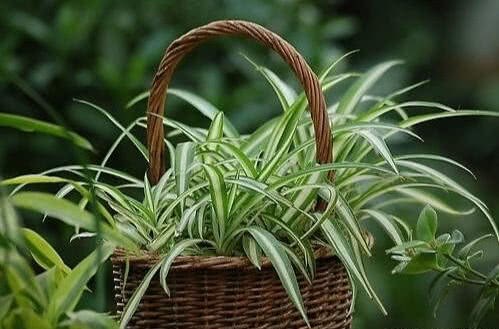
If you ask what the most commonly grown plant and flower varieties are in homes today, the answer will definitely be pothos and spider plants. Both of these green plants are evergreen all year round, and both are equally easy to keep alive. Every time you casually give them a little water and a little fertilizer, their stems and buds grow like crazy, and you cannot hold them back. No wonder people say that buying one pot of these two plants is like buying ten pots.
But today Huahua wants to focus on the varieties of spider plants. The spider plants in our homes today are generally mostly variegated spider plants with golden edges or golden centers, and these types of spider plants share one common feature: none of them bloom. Although green plants are beautiful too, not blooming always feels like it is missing just a little something. In fact, there are still many varieties of spider plants that do bloom, it is just that we do not know about them. Now let us take a look together!
1. Heartleaf ice plant (Aptenia cordifolia)
The most common blooming spider plant we know is probably the heartleaf ice plant. Its leaves are round and small, and paired with its blooming small pink flowers, it is very beautiful. Moreover, the heartleaf ice plant has fully inherited the easy-care temperament of traditional spider plants, so there is no need to worry too much about yellow leaves and root rot.
The heartleaf ice plant is a light-loving plant. Apart from needing shade in the height of summer, it can receive plenty of light at other times. It is rather strict about watering and cannot be watered too much, because it likes to grow in a dry environment. If you want the heartleaf ice plant to bloom abundantly and grow quickly, you can give it a little diluted fertilizer water or trim the branches once every half month, and the care results will be better.
2. Goldfish plant (Nematanthus gregarius)
Just from the name, you can tell that the goldfish plant is named because the shape of its flowers resembles a goldfish. Unlike the heartleaf ice plant, the goldfish plant's flowers are orange-yellow, and its flowering period is concentrated in autumn and winter. If you like it, now is a very good season to care for it.
The suitable growing temperature for the goldfish plant is around 20 degrees. It is relatively shade-tolerant and is not suited to growing in places with strong light sources; soft, scattered light is a good choice. During its spring and summer growing period, the goldfish plant has a higher water requirement, so try to keep the potting soil moist; in winter, after it enters dormancy, water needs to be gradually reduced. Before flowering, you can apply a little diluted fertilizer water, so that when the flowers bloom they will be even more brightly colored and eye-catching.
3. Lipstick plant (Aeschynanthus radicans)
The lipstick plant's flowers are a vivid red. The leaves of this spider plant are a bit larger than those of the other two, and seen from a distance, it looks as if the flowering branches are covered with lipsticks, very vivid. Its flowering period is concentrated in summer and autumn. Flower lovers who like it can try caring for one.
The lipstick plant is generally grown in sandy soil, because the slightly acidic components in the soil can help it grow more vigorously. It likes to grow in a semi-shaded environment; otherwise, strong light shining on the leaves will make them turn yellow and dull. During the period of more vigorous growth in summer and autumn, water should be replenished in time, and when necessary, misting is also needed to increase humidity.
4. String of pearls (Senecio rowleyanus)
The string of pearls can be considered a rather special one among the many spider plant varieties. It has no large or small leaves; instead, it looks like strings of green pearls spilling down from the flower pot. It is suitable for growing in a high place at home, and in winter it can even produce small flowers.
The string of pearls loves scattered light. If the light is too strong, it easily scorches the stems and leaves. When watering, special attention is needed: do not water until dry, and when you do water, water thoroughly. Do not always cause root rot because of watering too much. In spring and autumn, you can apply a little diluted fertilizer water, so the branches can grow more densely.
These 4 varieties of spider plants can all bloom. Compared with the traditional spider plants from before, they also add a bit more color. If any flower lovers like these spider plants, you can try caring for them, and they can also make your home more colorful.