A Complete Analysis of the TCM Causes and Pathogenesis of Lung Cancer
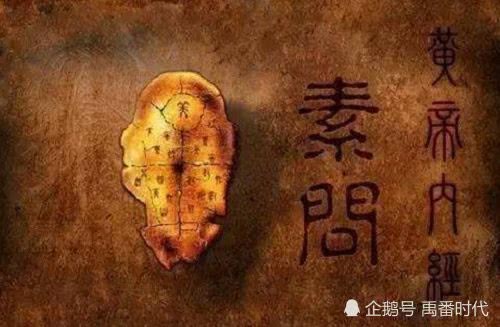
The previously shared and discussed works "TCM and Western Medicine Syndrome Differentiation and Treatment Methods for Lung Cancer," "Selection of TCM Strategies for Treating Lung Cancer," and the occurrence and development of common diseases all reflect how, because people's vital qi is insufficient, external pathogenic factors such as wind, cold, summer heat, dampness, dryness, and fire invade, forming endlessly changing disease characteristics. Insufficient vital qi is the internal factor in all diseases that people develop, and it is also the main factor; when the body is strong, pathogenic qi finds it difficult to invade. This was already pointed out in the Huangdi Neijing: Suwen.
Huangdi Neijing
The Huangdi Neijing: Suwen says: "When vital qi is preserved within, pathogenic qi cannot invade; where pathogenic qi gathers, its qi must be deficient." In just a few words, it reveals the causes and pathogenesis of all human diseases. The latter sentence, "where pathogenic qi gathers, its qi must be deficient," means that when pathogenic qi invades the human body and causes disease, over time the vital qi will naturally become deficient and decline. In TCM, vital qi and pathogenic qi are a unity of opposites: when vital qi is abundant, pathogenic qi declines; conversely, when vital qi is deficient and declining, pathogenic qi will flourish.
There are many theories in TCM, such as yin-yang theory, zangxiang theory, meridian theory, and the laws of disease development, all of which are interconnected, and all of these also show that whether the body's vital qi is abundant or deficient and declining is what is crucial. For example, cancers such as lung cancer generally have very long latent and formation periods, which to a certain extent are suppressed by vital qi. However, once a person falls ill, the development of cancer and other diseases accelerates, and at this point vital qi is already deficient while pathogenic qi is abundant.
TCM Zangxiang Theory
When a person's vital qi is deficient, yin and yang, qi and blood, and the zang-fu organs will become imbalanced, and in the strong development of pathogenic qi such as in lung cancer, the person actually enters a vicious cycle. Amid the rampant development of the disease, the human body becomes dominated by pathogenic qi, so the Yizong Bidu: Jiju says: "The formation of accumulations is due to insufficient vital qi, after which pathogenic qi takes hold." Therefore, only by protecting a person's vital qi and keeping it abundant at all times can pathogenic qi be kept outside for the long term.