Got a cold without a fever? It could be a sign of insufficient vital qi
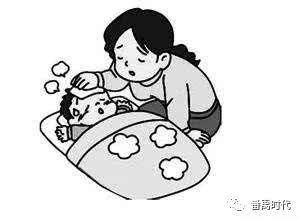
In a few days it will be Cold Dew, and the north has always had the climatic pattern of winds rising at Cold Dew. This year, even around White Dew, there has been one continuous "great winds rising, clouds flying and dancing." For healthy people, this brings a taste of coolness, while for the sub-healthy and for people who have long suffered from chronic respiratory diseases, it brings discomfort, and even repeated worsening of their existing illnesses. In fact, these are all cases of colds triggering ongoing flare-ups of the original diseases.
But for patients who are usually weak and suffer from chronic diseases, even if they live normally, just like healthy people, they will not have cold symptoms such as fever, headache, or runny nose. Instead, they directly show other systemic discomfort, or acute flare-up symptoms of their pre-existing chronic diseases. When they see a doctor, the doctor will tell them it is caused by a cold, and quite a few patients will argue confidently: I have no fever or headache; does not a cold start with fever and headache? In fact, this type of patient already has weak vital qi, with no strength to resist external pathogens.
The reason patients say they have no fever and no cold is that they do not understand what fever actually is. Fever is the manifestation of a fierce struggle between vital qi and pathogenic qi. The stronger the vital qi and the more abundant the wind-cold and other external pathogens, the more the two become locked in a stalemate. The stronger this state is, the more the high fever continues and climbs step by step. When vital qi is weak, an invasion by external pathogens will cause fever but not high fever; having no fever at all already means vital qi is faint and has no strength to resist, and once pathogenic qi invades, it sweeps through unchecked, continuously worsening the original condition and manifesting as chronic disease symptoms.
A person's body type and vital qi are generally in direct proportion during early childhood, adolescence, and youth. But once someone develops chronic diseases such as respiratory diseases, vital qi must constantly struggle against pathogenic qi, and over time vital qi is gradually depleted, while people do not feel it. The more a person dismisses chronic disease, the more vital qi will be depleted. Even if the chronic disease is not treated or not cured and shows no symptoms, vital qi is still constantly struggling against pathogenic qi internally. It is precisely because of this that there are no symptoms. But vital qi is continuously depleted in the struggle against pathogenic qi. Although the body type and a person's feelings do not change, in some cases vital qi is already faint. If it reaches the point of "great flesh sunken, great bones withered," and the body type changes, it is already a state of terminal illness.
Having said this, presumably everyone should understand how to treat their own body with care.