How to grow a flowering quince bonsai? Mastering these care tips is all you need
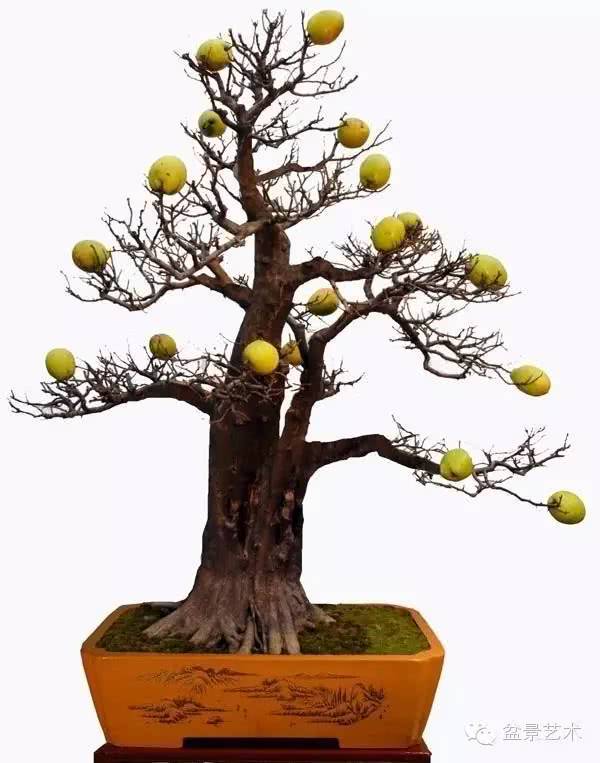
Flowering quince, also known as fragrant melon, is a deciduous shrub or small tree of the genus Chaenomeles in the rose family (Rosaceae). The bark is yellow-green and peels off in flakes. The branchlets are thornless, cylindrical, initially purplish-red, gradually turning purplish-brown or grayish-brown; the leaves are elliptical-ovate or oblong, 5 cm to 8 cm long, with an acute tip and sharply serrated edges. The flowers are borne singly in the leaf axils, with thick, short pedicels, 5 petals, 2.5 cm to 3 cm in diameter, white or pink, opening in April. The fruit is oblong-elliptical, initially green, turning dark yellow when ripe, with a smooth, lignified skin and a rich fragrance, ripening from September to October. After being picked, the fruit can be stored for about half a year without spoiling, provided it is not bruised. When grown in the ground, flowering quince has large leaves and large fruit, with fruits 10 cm to 15 cm long and weighing up to 1 kg, but after being potted, the leaves become small and dense, and the fruit is only the size of a duck egg, making it quite suitable for making stump bonsai.
The flowering quince has a tall, straight trunk, bright flowers and fragrant fruit, and deep green leaves. After the leaves fall in winter, the bare branches are sturdy and vigorous, showing a distinctly masculine beauty. It is often used to create large tree-style bonsai in various forms such as the formal upright style, slanting style, and double-trunk style. The flowering quince used for bonsai can be grown from young seedlings, commonly propagated by sowing, cuttings, air layering, and grafting; it can also be made from old trees discarded by landscaping departments, whose trunks are sawn to a certain height and then planted in clay pots or in the ground to "age the material," while new structural branches are cultivated and shaped through pruning, wiring, and pulling. Take care to properly refine larger wounds so they blend in naturally, achieving the artistic effect of "though man-made, it looks as if made by nature," and finally move it into a finer pot for display.
Transplanting and repotting of flowering quince should be done in early spring, keeping a soil ball and cutting the main root short while retaining as many lateral roots as possible. Plant it in neutral to slightly acidic, loose, fertile sandy soil, and apply decomposed cake fertilizer powder as a base fertilizer. After it takes root, place it outdoors in a sunny spot for care, and keep the potting soil moist but not waterlogged during the growing season. In early April, spray the leaves once with a 0.2% potassium dihydrogen phosphate solution to encourage sturdy flower buds and provide ample nutrition for later flowering and fruiting. Because potted soil is limited and nutrients are scarce, it should not bear too much fruit; generally, leaving 3 to 5 fruits per pot is enough, and the rest should be removed early to avoid consuming too many nutrients and affecting the plant's normal growth. Apply "alum fertilizer water" once a month to prevent the soil from becoming alkaline and to make the fruit large and fragrant. During care, frequently pinch off the growing tips to keep the plant's shape graceful. After the leaves fall in winter, prune and shape the plant once, cutting off dead branches, weak branches, and other branches that affect the shape, while keeping more strong branches, so that the following year brings abundant flowers and fruit. Flowering quince is cold-hardy and can be left outdoors in a wind-sheltered, sunny spot to overwinter; it is best to bury the pot in the ground, or it can be placed indoors above 0°C. If the temperature is too high, the plant will sprout early, which is instead detrimental to the next year's growth, so the maximum temperature should not exceed 10°C, allowing the plant to go fully dormant. Repot once every 1 to 2 years in early spring.