A Detailed Guide to Cultivating Five-Needle Pine Bonsai
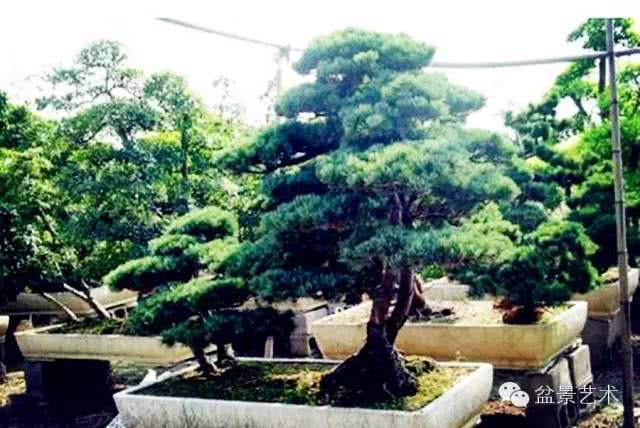
3 Five-Needle Pine Bonsai Cultivation Techniques
3.1 Seedling Selection
Five-needle pine bonsai are usually grown from one- to two-year-old small seedlings, which are then shaped. When choosing an ideal five-needle pine seedling, pay attention to the following points.
(1) The needles should be short: the needles of the five-needle pine range from 10 cm long to only 2 cm short; short five-needle bundles grow compactly and are more attractive than long ones.
(2) The needles should be green: emerald-green, vigorous needles can be distinguished from those of the Japanese black pine or the Huangshan pine. If the needles are yellow, missing, or spotted with color, these are all signs of damage and poor health.
(3) The rootstock should be thick: a thick, sturdy rootstock not only grows well but also looks aged and rustic, making it easy to form a bonsai specimen.
(4) The scion should be short, with many branches, and the graft union should be low: this is good for shaping and makes it easy to develop a short, sturdy, unusual tree form, enhancing its ornamental value.
(5) The graft interface should be firm, the root system well developed, and plenty of soil should be kept around the roots.
3.2 Planting Five-Needle Pine Bonsai and Choosing Pots
The best time to plant five-needle pine is from late February to early April; the exact timing varies from place to place depending on local temperatures. Five-needle pine likes acidic, sandy soil that drains well and is rich in humus. You can mix humus soil, mountain forest leaf mold, and sandy surface soil in a 4:4:2 ratio. If you only need a small amount for home use, you can buy clivia potting soil from a flower shop, add an appropriate amount of sandy surface soil, and mix well before use.
In general, five-needle pine bonsai should not be planted in too shallow a pot. Small and medium-sized formal upright, slanting, curved-trunk, and forest-style five-needle pine bonsai often use medium-depth rectangular or oval purple clay pots. If a single tree is grown in a formal upright style, the pot surface may look empty, so it can be decorated with stones or accessories. Cascade-style five-needle pine bonsai often use round or square tall cylindrical pots. If a rustic, natural cloud pot is used to grow a forest-style five-needle pine bonsai, it will look even more elegant. For large or giant five-needle pine bonsai, it is hard to buy a suitable purple clay pot, so you can carve a pot from marble or white jade; its style, size, and depth can be determined according to the tree shape, and 2 to 3 drainage holes should be carved according to the size of the pot so that excess water in the pot can drain out promptly.
When planting five-needle pine, keep a suitable amount of soil around the roots to help it survive. Before potting, cut off dead roots, rotten roots, and damaged roots, and also cut off any roots that interfere with shaping. After cutting, apply sulfonamide ointment to the cut surfaces to prevent pine resin from oozing out and bacteria from entering. Note that five-needle pine dislikes being repotted or turned out too frequently. For potted five-needle pines that are not very old, repot once every 2 to 3 years; for old specimens, turning out once every 3-4 years is enough. If you repot too frequently and do not choose the right time for repotting, it often causes the whole plant to die.
The five-needle pine is elegant and vigorous, with dark green foliage and a graceful, clear, and refined posture full of poetic charm; it is a tree species with high ornamental value. It likes sunlight, warmth, and a dry environment, and is slightly shade-tolerant, but fears low humidity and waterlogging, and grows best in loose, fertile, slightly acidic soil. Therefore, to grow five-needle pine well, you need to do a good job with soil, watering, fertilizing, and light.