Taiwan's wild bee extinction crisis has a solution! Natural selection breeds disease-tolerant bee species, and antiviral globulin is being developed to boost immunity
Text / Upstream and Downstream reporters Liu Yixin, Lai Yuwei
It has been nearly two years since a severe outbreak of "Acute Bee Paralysis Virus" (AcSBV) erupted in Taiwan's wild bee populations. Chen Yuwen, Distinguished Professor in the Department of Biotechnology and Animal Science at National Ilan University, was commissioned by the Bureau of Animal and Plant Health Inspection and Quarantine to launch a island-wide monitoring survey. The latest research results are out, showing that this year the average infection rate of Oriental bee colonies is 70%, while the infection rate of Western bee colonies has dropped to 2.2%. The Chinese sacbrood virus remains entrenched in domestic wild bee populations. How should the threat of Chinese sacbrood disease be faced? Two camps have emerged in the beekeeping community: "natural selection" and "medication to boost immunity."
Huang Yongsheng, president of a bee club with nearly ten years of breeding and observation experience, said the first pandemic period was terrifying. The bee colonies had never encountered this virus before, and when they did, there was only destruction and escape. Colony numbers fell rapidly, but over the past three years, through natural selection, bee species with high disease tolerance have been retained. "This is the wonder of nature, a rich gene pool, preserving the future of wild bee colonies."
Chen Yiling, a professor in the Department of Biotechnology and Animal Science at National Ilan University, has tried to develop globulin against Chinese sacbrood disease. It is currently provided to a small number of beekeepers for trial use, and when used in the early stages of the disease, it has shown clear results. However, because the production process is complicated, only a small amount can be produced at present. Whether it can be mass-produced in the future still faces many challenges.
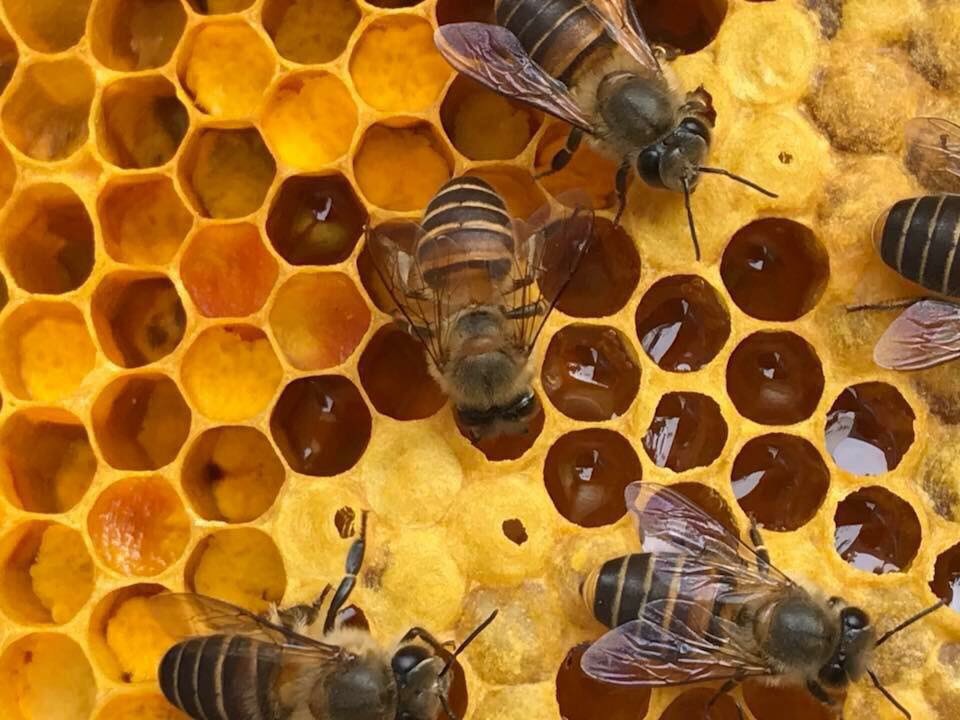
Regarding other beekeepers handling Chinese sacbrood disease by clearing the hive, Xie said, "If there are only one or two colonies, it is still possible to help remove infected wild bees, but if there are many colonies, it is simply impossible." Moreover, clearing the hive can only slow the situation down, and in the end the virus will still spread. At the beginning of this year, he tested one colony without spraying nutrient solution and handled it by clearing the hive, and in the end it was still completely wiped out.
Because the production process for anti-Chinese-sacbrood globulin is complicated, only a small amount can be produced at present, and it is offered free of charge to beekeepers with diseased colonies. Chen Yiling said that even though China had already experimentally developed globulin against larval sacbrood virus six years ago, there has still been no technology transfer or mass production to this day. "Because the market is too small, and the cost of globulin technology is high."
Does nutrient solution need to be regulated? The Bureau of Animal and Plant Health Inspection and Quarantine: There is flexibility
Although globulin that can fight Chinese sacbrood disease has now been developed, whether its use as a drug can be legal and whether it needs to be regulated still depends on the attitude of the Bureau of Animal and Plant Health Inspection and Quarantine. Chen Yiling said she has communicated with the bureau many times, and the bureau also hopes to find manufacturers to cooperate in developing products, "but now, because the wild bee market is small and the beekeeping community is not large, no manufacturer is willing to invest one or two million to pursue this market." Chen explained that it has been agreed with the bureau that after next year's spring breeding, once the anti-Chinese-sacbrood nutrient solution has been formally tested for two full years and its effectiveness is confirmed, it will be sent to the bureau for inspection, and further planning will be made for subsequent field trials and mass production of the product.
Xie Lianqin recalled the major outbreak of Chinese sacbrood disease at the end of 2016. "Before the disease struck, there were one hundred colonies, and in the end only a single-digit number remained, almost dropping to zero." He could not find a cure anywhere, and later asked Teacher Chen Yiling to research it, which led to the current remedy. Only then did the number of colonies slowly increase, growing to more than fifty colonies now. "The biggest problem now is that mass production is impossible. It is also impossible for the teacher to make so much, and many beekeepers who want to try it cannot."
Feng Haidong, Director-General of the Bureau of Animal and Plant Health Inspection and Quarantine, responded that it is necessary to actually examine the ingredients of the anti-Chinese-sacbrood nutrient solution, whether they are Chinese medicinal materials or chemical ingredients, and to understand what type of therapeutic effect it has on wild bees. "If there is no major harm, it does not necessarily all have to be strictly controlled. There is some flexibility." However, no sample of the anti-Chinese-sacbrood nutrient solution has been received yet, so the actual product information is still unknown. "Trials still must be made known to the competent authority. If we really speak from a legal perspective, using it now violates the regulations."
Virus invasion: Taiwan's wild bees face extinction-level death