What to do when chives grow thinner and thinner? Grow them this way to make chives thick and sturdy
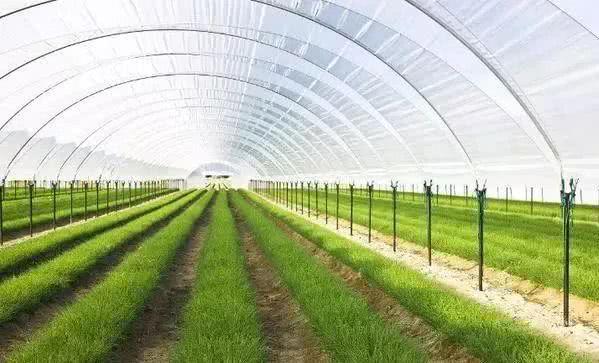
Summary: When chives grow thinner and thinner, how should you grow them to make them thick and sturdy?
If even the first crop of chives is very thin, this situation clearly indicates a lack of nutrients. However, if the second and third crops of chives are relatively thin, this situation actually cannot be solved even through fertilizer and water. Kexue Xingnong took a look at some other friends' views on chives not being thick and sturdy, and thinks their views are indeed a bit far-fetched. Let's talk about it below.
If the problem of weak chive growth is summed up, the root cause is insufficient nutrient supply, but if you get to the bottom of it, there are many factors that lead to insufficient nutrient supply, such as chive pests and diseases, excessive planting density, shortage of fertilizer and water, etc. No matter what the cause, it will lead to poor chive growth.
However, there is another situation, which is that the more chives are cut, the thinner they become. For this situation, Kexue Xingnong believes it is relatively normal; on the contrary, saying they get thicker the more they are cut would be unreasonable. After all, the nutrients accumulated in the early stage of chive growth are sufficient, and there can be enough nutrients for growth. However, after cutting several crops, the chive root system and so on have basically aged, and the ability of the root system to transport nutrients has already become much worse. Expecting the chives at this time to still be thick and sturdy seems a bit unrealistic.
Of course, at this time, aside from eliminating pest and disease factors, strengthening topdressing management can improve the growth vigor of chives, but even so, it is still hard to catch up with the first crop of chives. The best method is to implement a strategy of rest and recuperation, so that the chives can have enough growing space to reproduce again.
After the first crop of chives is cut, many new chives will develop again from the chive roots. At this time, the density of chives in the field will increase greatly, the photosynthetic utilization rate of individual chives is insufficient, and excessive spatial density prevents the chives from growing well. Therefore, a relatively good solution is to thin the seedlings in the field and reduce the density of chives in the field.
When entering the second or third crop, topdressing is needed at this time. People usually think that chives lack nitrogen fertilizer and that supplementing nitrogen fertilizer is enough, but this approach is obviously still not enough. Although nitrogen fertilizer can promote nutritional growth and promote dark green chive leaves, phosphorus and potassium fertilizer are equally indispensable. Supplementing phosphorus and potassium fertilizer helps strengthen the plant's root system and stems and improves the plant's resistance to diseases. For fertilizing chives, foliar spraying can be used for a faster effect. However, this can only be said to improve the growth condition of chives; expecting them to still be like the first crop of chives is still relatively difficult.