At 80 yuan per jin, no worries about theft; a single tree can bear hundreds of fruits, yet farmers are hesitant to grow it
In the past, farmers planted crops so their families would have grain to eat, so most of what they grew in the fields were staple crops, such as rice, corn and wheat. Now, as society progresses, everyone can eat their fill; as the saying goes, with grain in hand, the heart is at ease. On that foundation, pursuing a better life has become the driving force behind farming today. As a result, quite a few farmers have begun contracting mountain land and woodland to develop diversified planting, such as growing various fruit trees and cash crops suited to local conditions. This has not only fattened farmers' pockets but also energized the rural economy.
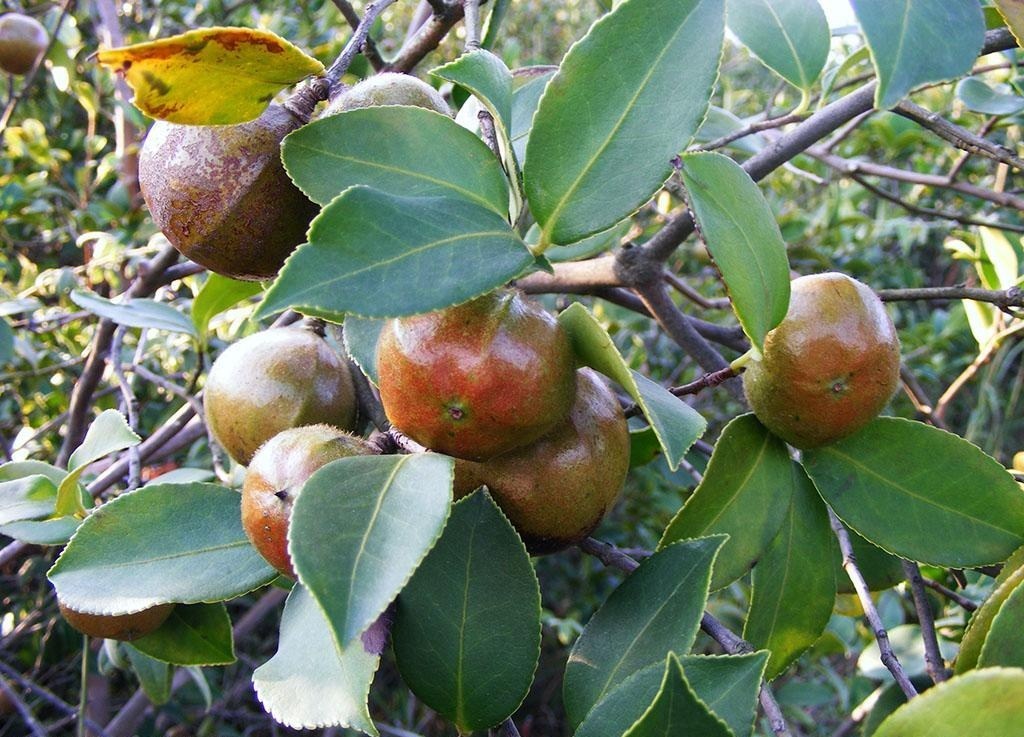
When it comes to growing fruit trees, the north and south differ. Most crops grown in the south are cold-sensitive, such as the oil tea tree (Camellia oleifera). Its fruit is small, a bit bigger than a jujube, but it cannot be eaten directly, so in rural areas people growing it do not worry about thieves, because the oil tea fruit really is inedible. Still, the oil tea fruit yields heavily: an old tree can bear hundreds of fruits, which counts as a very high yield. The oil tea fruit harvest season is almost here; it is usually picked after White Dew, when the oil yield is a little higher, reaching 30%. But that oil yield also depends on where it is grown; oil tea fruit grown on mountain land with a higher iron content usually yields more oil.
The oil pressed from oil tea fruit is tea seed oil. It is a cooking oil with a very long history in China, cultivated as early as the reign of Emperor Wu of Han. The ancients of China were truly wise: the south has many hills and mountains, where other crops cannot be grown, making these places perfectly suited to oil tea trees. As a result, China's tea seed oil output is the highest in the world, with 90% coming from China. Tea seed oil also enjoys a fine reputation internationally; foreigners call it "Oriental olive oil," and it is strongly recommended by the International Food and Agriculture Organization as a healthy cooking oil. Tea seed oil is not only highly nutritious but also has high medicinal value. According to the "Compendium of Materia Medica," tea seed oil is not only good for the stomach and intestines but can also improve eyesight, nourish the complexion, clear heat and remove toxins - truly precious.
So in rural areas, tea seed oil is a very popular and rare commodity; many older farmers have eaten tea seed oil their whole lives and are unwilling to eat any other cooking oil. Many farmers have old tea trees on their own mountains, but few farmers actually make a living growing oil tea trees. The main reason is that after planting, oil tea trees take six or seven years to enter their high-yield period; next, the picking, processing and pressing of oil tea fruit involve many steps, and four to five jin of dried tea seeds yield only one jin of oil. Although this tea oil sells for as much as 80 per jin, farmers do not dare to grow it and have no time to grow it, so there is not much of it on the market either.