Don't throw these things away - homemade flower fertilizer works really well
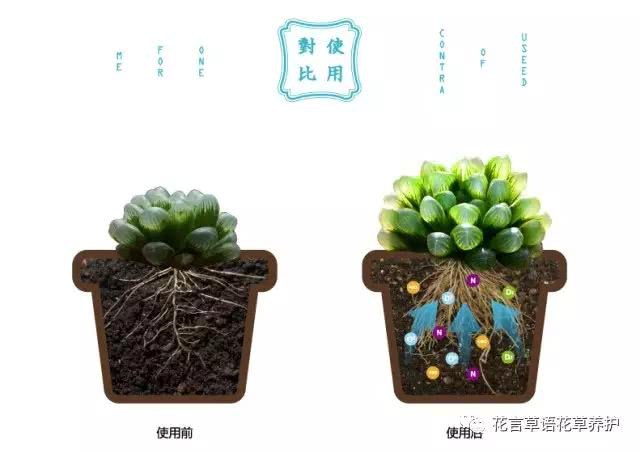
When you grow a lot of plants, you usually have to fertilize different plants. Commercial fertilizers are powerful, and for the average hobbyist, getting the dilution ratio right is quite difficult. One careless moment and the concentration is too high, burning the seedlings, while too low a concentration has no effect. So we generally use household waste to make flower fertilizer. The nutrient strength is moderate, and it also counts as reusing waste.
Household oilseed cake fertilizers
Sesame paste residue, soybean cake, peanut cake, cottonseed cake, rapeseed cakecontain large amounts of nitrogen, phosphorus and potassium. After composting they become acidic fertilizers, fairly suitable for acid-loving soil flowers. Applied dry, the nutrients are released slowly; applied with water, they can serve as a quick-acting fertilizer. Therefore they can be used both as a top dressing and as a base fertilizer, but oilseed cakes should not be used at sowing time, because as they decompose in the soil they produce various organic acids, which are harmful to seed germination and seedling growth.
They must be fully decomposed before use. You can compost them in sealed jars, pots, bottles, etc., but when composting in jars and bottles they must not be absolutely sealed, since the gas produced by composting may burst the jar or bottle, causing danger.
The composting time is 2-3 months,depending on the temperature. When applying, dilute the clear liquid on top with 20-30 times its volume of water and pour it on. After taking out the clear liquid, you can add more water and continue composting.
Chicken and duck manure
Chicken and duck manure and the droppings of other poultry are an important source of phosphorus fertilizer, and they also have a fairly high nitrogen content, making them quite suitable for fruit-ornamental flowers. They must also be piled and composted before use, for about two months, and are best used as a base fertilizer and top dressing.
Rice washing water
Rice washing water contains many nutrients essential for flower growth and development, such as phosphorus, nitrogen and trace elements, with phosphorus being especially abundant. Phosphorus promotes flower bud differentiation and helps flower bud formation.
Rice washing water cannot be applied directly, otherwise after application it will ferment in the soil, generating heat that burns the roots and breeding pests. When washing rice, first add a small amount of water so that the rice washing water is more concentrated, then put it into a sealed jar or pot,
and after 15-20 days of fermentation it is ready to use, diluted with a small amount of water when applying. After composting, rice washing water is acidic, making it especially suitable for flowers and trees native to tropical regions, such as camellia, gardenia, osmanthus and jasmine, because when such plants are grown in the north, the soil is mostly neutral or slightly alkaline, and the iron in the soil cannot be absorbed and used by the roots, which often causes the leaves to turn yellow. So regularly watering with rice washing water can effectively prevent iron deficiency.
Horse hoof pieces
Animal hooves and horns all belong to this category. They mainly contain nitrogen, phosphorus, potassium and other elements, and their fertilizing effect varies with the application method. They can be applied directly in the lower layer of the potting soil or near the edge of the flower pot, where the nutrients are released slowly and can last about a year. They can also be composted in sealed jars, pots, etc. to make a quick-acting organic fertilizer.
Animal innards
Animal innards can be treated by piling. Find an open piece of ground outdoors, dig a pit and bury them in the soil, add some insecticide, and after a few months they become a highly effective organic fertilizer, to be mixed with potting soil or used as a base fertilizer.
Bone meal
Bone meal fertilizer is rich in phosphorus. It is a slow-release fertilizer, and is best composted together with other organic fertilizers. It is generally used as a base fertilizer. It can increase the stem strength of flowers and improve flower quality.
Tips
When composting organic fertilizer, it inevitably gives off some unpleasant odor. You can put a few pieces of orange peel in the composting container to reduce the smell.
NowPlantsWordour Taobao enterprise store has opened. We create a dedicated lazy-person plant-growing life for you.
Search "Huayan Caoyu Enterprise Store" on Taobao and you can go straight into the store to buy.