How to make orchid potting mix? Remember 3 key points and stop making mistakes
Good orchid care starts with the potting mix, so as the question asks: how do you mix soil for orchids? Haoshe Farmer thinks orchid potting mix must meet several conditions: loose, breathable, moisture-retaining, free-draining, and nutritious
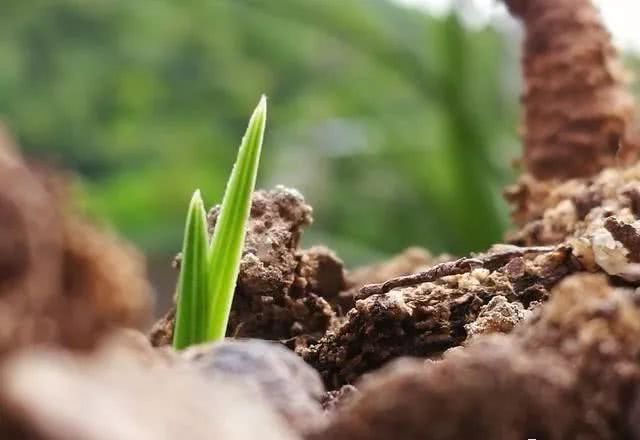
The picture above shows Cymbidium faberi 'Longdan' seedlings I grew with my own orchid soil. Grown from Longdan that had no roots and no leaves, the seedlings look quite sturdy. My potting mix formula has been shared with orchid friends many times in videos on Toutiao; it is all an open secret.
One: what is shown in the picture above is the fresh fruit husk of the hickory, a local specialty of Haoshe Farmer's hometown. After a year of composting and then drying in the sun, it is ready to use. Its role is to loosen the soil so it does not easily become compacted, and it has a certain mild toxicity that suppresses many kinds of pests.
Two: leaf mold from under broadleaf forest. Push aside the fallen leaves and scrape up that softest layer of leaf mold. Haoshe Farmer chooses leaf mold in mountain gullies; none is used from mountaintops or mountain slopes, because every rainy season the trace elements and fertility in the soil on the mountaintops and slopes are washed by rain into the gullies, so the soil in the gullies has the highest nutrient content.
Three: pine trees that have fallen and naturally rotted on the mountain for many years; both the bark and the heartwood are excellent potting mix for growing orchids. With pine trees that have naturally rotted for many years like this, the resinous components have already volatilized, so you can pick them up and use them directly to grow orchids; note that you need to sun them to kill insects. The advantage of pine bark is that its thick layers can absorb enough water, achieving a very good moisture-retaining effect, and their structure is relatively breathable and free-draining.
I mix them at a volume ratio of 1:1:1, because the specific gravity of each material differs and their dryness and wetness also differ. A weight ratio might not be accurate. After many years of practice, Haoshe Farmer thinks that potting mix mixed this way can be adapted to most places. If you are interested, you can also try mixing some orchid potting mix; just pay attention to the key points of orchid soil.