2 shade-loving flowers that are easy to grow and beautiful, they grow with just a little indirect light, and can be kept anywhere
"2 shade-loving flowers," easy to grow and beautiful, they "grow" with just a little indirect light, and can be kept anywhere!
By: Xiaohua
As people's living standards improve, more and more people like to keep a pot of flowers at home, to beautify the room and also purify the air. Growing flowers is truly an activity with many benefits, so friends, do you like growing flowers?
If you have not yet grown flowers, then start growing a pot from now on, there is so much fun in it, it is especially lovely. However, many people like flowers but do not know how to grow them or how to choose them. A few days ago, Xiaohua received a message from a flower friend, saying that the lighting in their home is not very good, and asking whether there are any flowers that can grow well even with little light, and also that the bathroom has a bit of a bad smell, and can growing flowers remove it?
Actually, there are many shade-tolerant flowers, and there are indeed some that can also remove odors. Today Xiaohua will share this with flower friends, let's take a look! (A gentle reminder: although some plants can absorb odors, it is impossible for them to improve things after just a few days of growing, and flower friends should still pay attention to household hygiene; only by doing both can good improvement be achieved.)
Today's sharing topic is:
"2 shade-loving flowers," easy to grow and beautiful, they "grow" with just a little indirect light, and can be kept anywhere!
(One)
Pothos
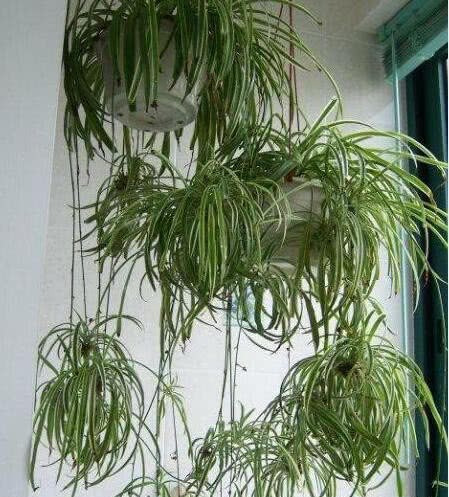
When it comes to shade-tolerant potted plants, Xiaohua feels that pothos and spider plant come first. These common potted plants are all especially shade-tolerant and simply cannot grow well under strong light, so keeping them in a room with poor lighting allows them to grow better. Moreover, neither pothos nor spider plant can be exposed to harsh sun or direct sunlight; generally, they can grow well with just a light fixture.
And their air-purifying ability is also super strong; they can absorb most harmful gases in the air as well as dust, impurities and odors.
Care is as follows:
1. Light
Pothos and spider plant do not need too much light. As mentioned above, they can grow well in a place with indirect light and good ventilation. Remember, they must not be in direct sunlight, otherwise their leaves will turn yellow, become smaller and thinner, and grow slowly.
2. Watering
They need a bit more water; generally, water once every 5-7 days. If you can mist their leaves every day, then their leaves will be emerald green and glossy, and they will grow especially fast.
3. Fertilizing
Pothos and spider plant do not like heavy fertilizer; watering them once or twice a month with fermented soybean water or rice-washing water is enough for them to grow well.
(Two)
Calla lily
The calla lily is similar to pothos and spider plant; with just a little indirect light it grows especially well. Moreover, the calla lily is a very beautiful potted plant. If you keep one at home, it can instantly elevate your home's taste, and its purifying ability is also superb. It is loved by many flower friends. If the light in your home is not too good, then keeping a pot of calla lily is just perfect.
Care is as follows:
1. Light
The calla lily does not need too much light. For home care, you can keep the calla lily by a window with indirect light and good ventilation.
2. Soil
The calla lily needs loose, fertile soil to grow. Flower friends are advised to use a soil mix of leaf mold, garden soil and coarse sand.
3. Watering
The calla lily likes water, but the pot must not become waterlogged. When half of the soil surface in the calla lily's pot has dried (flower friends can insert a small wooden stick to test it), then it can be watered, and water thoroughly when watering. Normally you can mist its leaves more often; while cleaning the leaf surface, it also makes the leaves even more emerald green.
4. Fertilizing
The calla lily does not like strong fertilizer; you can apply thin fertilizer frequently, generally twice a month. During the growing period, mainly use nitrogen fertilizer, and when it reaches the flowering period, increase the application of phosphorus fertilizer.
That's all for today's sharing. Thank you for reading and your support. See you next time!