The "urine-blocking dragon" insect often hides under rocks, and now it sells for a high price, so don't let it get away
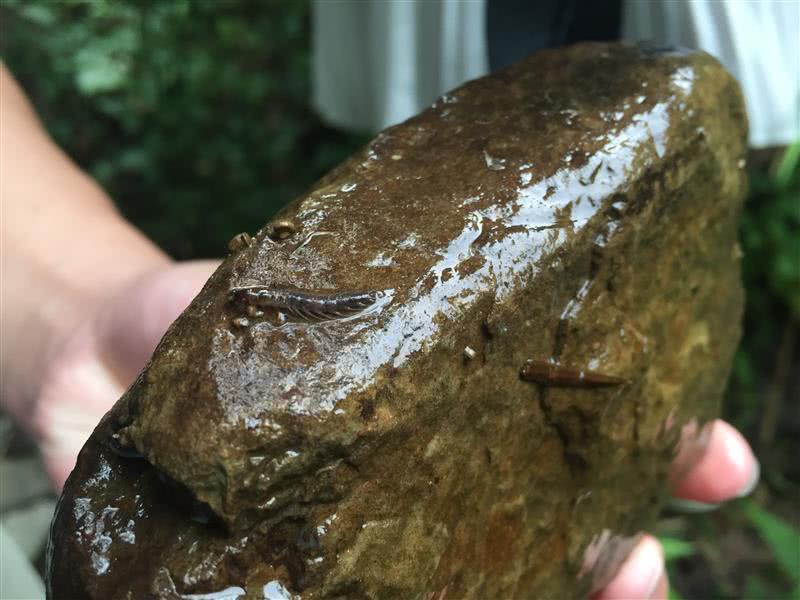
I grew up in the countryside as a child. Back then, there were no toys at home, just a black-and-white TV, and by Tuesday afternoon there still weren't any channels on it, so a few of us kids would run out to play, going up the mountains, going to the river... looking for all kinds of strange and curious things. That was the joy of our childhood. Today I'd like to introduce a kind of insect that lives under rocks in rivers: the sand crawler (caddisfly larva). When we went to the river to play as kids, this insect always scared us the most.
The sand crawler looks very ugly, and it also closely resembles a centipede, with many legs and many antennae, making people feel as if it might be poisonous. As children, whenever we flipped over rocks in the river, we could always see lots of sand crawlers. Back then we hated this insect the most, and we would only catch some fish and shrimp from the river to bring home. In fact, the sand crawler is highly nutritious. I heard old people say that the sand crawler is effective for treating bed-wetting; both children who wet the bed and elderly people who wet the bed can eat it. And the sand crawler also has a nickname, "urine-blocking dragon," meaning an insect that can block urine. Since "insect" doesn't sound good, "dragon" is used instead.
People's diets today are more and more diverse, and many are willing to try all sorts of things, especially in southern China where many "dark cuisine" dishes have appeared, and the sand crawler is one of them. Now the sand crawler has made its way onto people's dining tables. Not only in China, but in Japan too, the sand crawler has become a food that people love to eat. The Japanese call it "Magotaro insect," and it is a tonic medicinal ingredient. The sand crawler is extremely rich in nutritional value and has a powerful effect of nourishing yin and supplementing yang, so whether male or female, the sand crawler has tonic benefits. Moreover, the latest research shows that the sand crawler contains a variety of nutritional components, and eating it is also greatly beneficial to people's health. So now the sand crawler is becoming more and more popular.
In the past, there were a lot of sand crawlers, but people at the time didn't dare to eat them. Now people's dietary habits have changed and they have started eating sand crawlers, but they have found that sand crawlers are becoming fewer and fewer. Now catching a sand crawler in the river is as difficult as winning the lottery, and for something with such high nutritional value that is also so scarce, the price has now been raised by who knows how many times. Moreover, the cost of artificially farming sand crawlers is relatively high, so the price is very expensive. It usually sells for 200 yuan per jin, and if sold individually, one costs around 10 yuan, which can truly be called a high price. If you see one under a rock, don't let it get away.