Ixora (Chinese Ixora) Home Potted Cultivation Techniques and Care Methods
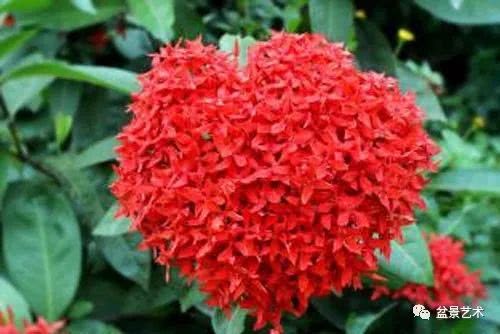
Ixora is an evergreen shrub or small tree of the genus Ixora in the family Rubiaceae. The leaves are elliptical and thinly leathery, with entire margins; the flowers are terminal, borne in umbel-like inflorescences, with 4 petals clustered together, in colors such as white, red and pink.
1. Potting soil
The growing medium should be a slightly acidic humus loam; leaf mold, garden soil and coarse river sand can be mixed in a 2:1:1 ratio and then sterilized before use.
2. Light and temperature
Ixora loves light but dislikes direct strong sunlight. In spring and autumn it should be placed in a wind-sheltered, sunny spot, and in summer it should be kept under a shade frame. In winter, since the light is softer, let it receive full sunlight. Ixora loves a warm environment; indoors in winter the temperature should be kept between 12°C and 18°C. It can only be moved outdoors at Qingming in spring, and in autumn when the temperature drops below 15°C it should be moved indoors promptly.
3. Watering and fertilizing
Ixora loves a moist environment but fears waterlogging. In spring and autumn, water thoroughly once every 3 days; in summer, water once each morning and evening. To maintain relatively high humidity, the leaves should also be misted frequently in summer; do not water on cloudy and rainy days. If it gets rained on, the water in the pot should be poured out promptly to prevent root rot from excess water. Water in the north is relatively alkaline, and long-term use makes the plant prone to chlorosis, so rainwater and snow water, or ferrous sulfate solution, can be used for watering. Ixora loves fertilizer but dislikes concentrated fertilizer and raw fertilizer. During the growing season, apply a liquid fertilizer once every half month, made by mixing nitrogen, phosphorus, potassium, ferrous sulfate and horse hoof pieces in a 1:1:1:2:3 ratio, adding water and fermenting until decomposed.
4. Repotting and pruning
Ixora is generally repotted once every 2 years, and early May is the best time for repotting. When repotting, the old roots of the plant should be appropriately trimmed; after making a drainage layer, add an appropriate amount of growing medium and apply some horse hoof pieces as a base fertilizer. Pruning of Ixora is generally done in spring after it is moved outdoors, mainly to thin out the branches appropriately to improve ventilation; if there are few branches, the main branches should be heavily pruned to encourage more side branches. Diseased and pest-damaged branches, dead branches and drooping branches should also be cut off promptly. In addition, appropriate pinching during the flowering period can make it produce more buds and flowers.
5. Pest and disease control
The main diseases are anthracnose and sooty mold; if they occur, in addition to strengthening ventilation and water and fertilizer management, carbendazim 800-fold solution can be sprayed for control. The pests include scale insects, red spider mites and aphids; if they occur, when the number is small they can be caught by hand, and when the number is large, 40% omethoate emulsifiable concentrate 1000-fold solution can be sprayed to kill them.
6. Propagation method
Ixora is best propagated by cuttings, which not only root easily but also bloom quickly once grown into plants. In March and April each year, select two-year-old lignified branches, cut them into 15 cm lengths, insert them into sterilized sandy soil, place them in a shaded spot, and cover with plastic sheeting to retain moisture. Mist once a day and keep humidity at around 70%; roots will form about 35 days after cutting. After the cuttings grow new shoots, let them gradually receive light; after 60 days they can be transplanted into pots and enter normal management.
In-depth reading
Related reading