This vegetable is impossible to dig out or eat to exhaustion, and it tastes best as a pickle. Plant a few and the whole family can eat for a year.
When I was a child in the countryside, the ingredients available in winter were extremely monotonous. Back then, every household ate cabbage all winter long, and even now I still do not really want to eat cabbage. This is probably because I ate too much of it as a child. Back then, before winter set in, my mother would always pickle a big vat of pickles. They would not spoil in winter and could add some flavor to our monotonous winter.
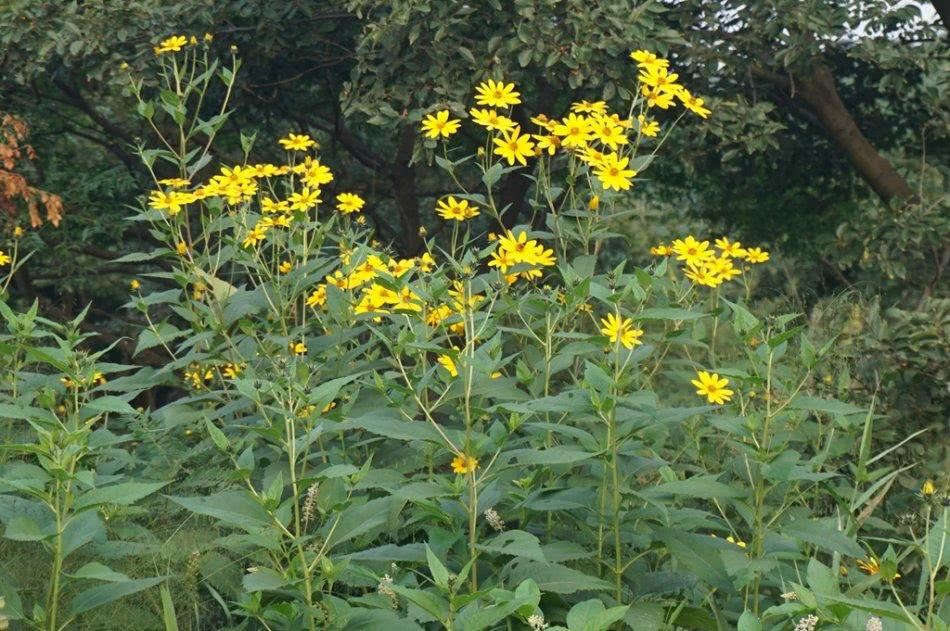
Today I want to introduce a vegetable: Jerusalem artichoke. The stems and leaves of the Jerusalem artichoke plant can grow very tall, easily reaching more than 1 m with little effort, and Jerusalem artichoke has very low requirements for its environment. As long as there is soil and water, Jerusalem artichoke can grow vigorously. In autumn, Jerusalem artichoke produces golden flowers, and the flowers look a bit like chrysanthemums. Moreover, once Jerusalem artichoke is planted in the first year, it does not need to be planted again. Every spring, Jerusalem artichoke grows on its own, and farmers only need to remember to dig it up when it matures. It is a species that cannot be dug out completely. By October, Jerusalem artichoke is ripe. In the past, my mother would always dig up Jerusalem artichoke during its ripening season, then wash these Jerusalem artichokes clean, and these Jerusalem artichokes could accompany us through the whole winter.
The most delicious way to eat Jerusalem artichoke, I think, is as a pickle. After being made into pickles, Jerusalem artichoke tastes very crisp and refreshing, and it also has the sweet-and-sour flavor of pickles. As children, we could always eat half a bowl of Jerusalem artichoke with a meal. Jerusalem artichoke has a very high yield. A small Jerusalem artichoke plant can produce a lot of tubers, and as long as you plant a few Jerusalem artichokes, it can be enough for a family to eat for a year. Especially when it is time to harvest Jerusalem artichoke, as long as you dig in the ground, it feels as if you can never finish digging. As long as you keep digging, you will keep finding Jerusalem artichoke.
Jerusalem artichoke also has certain medicinal value, especially a certain effect on lowering blood sugar, so Jerusalem artichoke is very suitable for people with diabetes to eat. Think about it: when we were children, we often ate coarse grains and wild vegetables, and the incidence of some diseases among people was still relatively low. Now people's living standards have improved, and what they eat is getting better and better, yet many diseases have started to come knocking. This shows that some of the coarse grains and wild vegetables from before were very good for people's health, so it is no wonder people are now starting to look for the foods they used to eat. This is a kind of Jerusalem artichoke that is very easy to grow. Did you eat it as a child? What other ways of eating Jerusalem artichoke do you know?