Flower cuttings take only three steps, and you can easily succeed with new shoots growing in a month
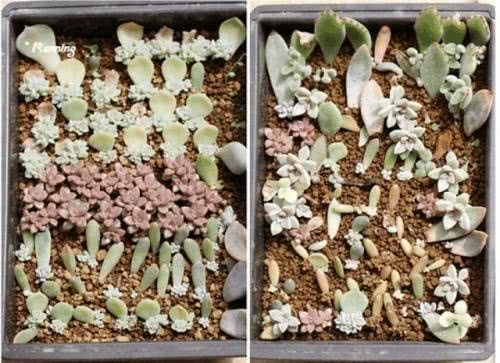
Everyone knows that succulents, which are perfect for lazy gardeners, are very easy to keep alive. Just twist off a leaf, place it on the soil, and within a few days you will be delighted to find that it has sprouted. Actually, this is not a propagation method unique to succulents; many flowering plants can be propagated this way too, such as snake plants (Sansevieria) and night-blooming cereus (Epiphyllum), which have thick, fleshy leaves. Today, the editor will share a few leaf-cutting propagation methods for several plants. Those interested can take advantage of the National Day holiday to practice their skills.
The first is the money tree (Zamioculcas zamiifolia). It is a green plant whose leaves look very much like copper coins, so it is called the money tree, and because of this name that symbolizes wealth, it is widely loved by everyone. Everyone wants to share in its good fortune, so it has become the mainstay of offices. The leaf-cutting method for the money tree is very simple. First, select a few leaves with petioles and soak them in carbendazim to disinfect them. Second, mix leaf mold, garden soil and river sand at a ratio of 2:2:1 to prepare the soil. Finally, insert the disinfected leaves directly into the soil, and all that is left is to wait. Do not let the soil get too dry; just keep a certain humidity, and after about two months new roots will grow and it will gradually sprout, becoming a new plant. Isn't it simple!
The second is Rieger begonia. Everyone knows that begonias like a warm and humid growing environment, but remember that they cannot be placed in direct sunlight; preferably a cool, ventilated spot. The propagation method for begonias is also relatively simple; you do not even need a flowerpot, a plastic bottle will do. First, use a clean blade to cut off a young leaf with a petiole. Next, cut a 1 cm wide slit in the body of the plastic bottle and fill it with water. Finally, simply insert the begonia leaf into the slit of the plastic bottle. Remember, it must be placed in a cool, ventilated place.
The third is the African violet. It is a short plant that blooms in all four seasons, and because it comes in rich colors and is easy to propagate, it is a great choice for a potted plant. For the leaf-cutting method of African violets, first choose a relatively plump leaf, then soak the leaf in a bottle filled with water. Next, when the leaf has grown some fine root filaments, pour out a little of the water so that the water level just covers the petiole. Finally, wait until the leaf grows small tender shoots, then transplant it into a flowerpot, and slowly a new African violet will grow.
The fourth is geranium. It is a plant very suitable for placing on a windowsill for decoration. Its propagation method is also very simple. First, insert the petiole of the leaf into a sponge, put the sponge in a plate with water, and let the sponge fully absorb the water in the plate. The most important thing is to place the plate in a cool, ventilated place, which can make the leaf grow faster. Second, mix soil, vermiculite and perlite in equal proportions to prepare a nutrient soil. Finally, after the leaf has rooted, simply transplant it into a flowerpot. During this period, just keep the soil somewhat moist. Once the leaf sprouts, before long it will become another potted plant.
The fifth is the night-blooming cereus. The night-blooming cereus is celebrated for its hard-to-come-by flowering season. Because it always blooms in the early morning and only for two or three hours, it is also called the "Beauty Under the Moon." Only the attentive can admire the beautiful sight of the night-blooming cereus flashing briefly into bloom. If you also want to see the night-blooming cereus in flower, then take this opportunity to plant one at home; it is very simple too. First, pick an old leaf that is more than two years old. Here is a secret: if you want the leaf to root faster, you can rub a little rooting powder on the base of the leaf. Second, make a few cuts in the leaf, because the larger the cuts, the easier it is to root and sprout. Next, insert the leaf into nutrient soil. Finally, just wait for the leaf to root, but during this period, remember not to pull the leaf out to check, otherwise it will affect the results of the cutting. Just see whether new shoots have grown around it to judge whether the cutting has succeeded.
Have you all learned the above propagation methods? As long as you follow these steps and add your careful care, you will definitely be able to propagate your beloved plants.