Eight taboos about eating crabs that you must know before eating
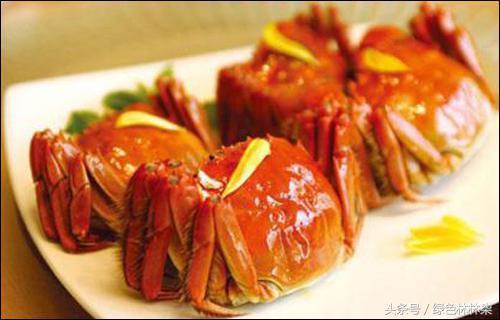
"When the autumn wind blows, crab legs itch." Once the autumn wind arrives, it is crab-eating season again.
For food lovers, eating crabs is the most grand event of autumn! However, recently a citizen in Wuhan landed himself in the hospital because he loved eating crabs too much... Mr. Wan, a resident of Wuhan, was famous among his friends for loving crabs. Recently, a classmate who worked in aquaculture gave him more than a dozen crabs to try, and he not only finished all the crabs but also drank a lot of baijiu. In the middle of the night, he went to the hospital because of unbearable abdominal pain.
After diagnosis, the doctor found that Mr. Wan had an attack of acute gastroenteritis. The culprit that triggered the gastroenteritis was the more than a dozen crabs and the baijiu he had consumed.
The doctor said that drinking alcohol damaged his gastric mucosa, and then he ate so many crabs. Crabs are cooling in nature to begin with, and his stomach simply could not take such a big shock all at once.
The doctor explained that every autumn, quite a few residents develop gastrointestinal discomfort and end up in the hospital because of climate change and irregular eating habits. After autumn arrives, the weather is on the cold side, and if people are not careful and eat too much cooling food, the body cannot accept it.
In addition, the doctor also reminded residents that young children and the elderly, because their digestive function is relatively weak, are not suitable for eating too many crabs; after eating crabs, their digestion and absorption are poorer, and diarrhea is likely. Pregnant women in particular should eat fewer crabs, because crabs are cooling in nature and also have the effect of invigorating blood and dissolving stasis; after eating them, pregnant women are prone to miscarriage.
Eight taboos about eating crabs that you must know
1 Crabs must be steamed and cooked thoroughly; do not eat raw crabs
River (lake) crabs feed on animal carcasses or humus, so all kinds of bacteria and mud are all over the crab's body surface, gills and gastrointestinal tract. Some people do not wash the crabs clean or steam and cook them thoroughly, or they eat drunken crabs or pickled crabs raw, and swallow the bacteria or parasites inside the crab. How could they not get sick? If you steam and cook them thoroughly before eating, there will be no such problem.
2 Crabs should be eaten fresh and alive; dead crabs are not suitable for eating
After a river crab dies, the stiff period and autolysis period are greatly shortened, and the bacteria inside the crab quickly multiply and spread into the crab meat, causing vomiting, abdominal pain and diarrhea in those who eat it. A fresh live crab has a bluish-black shell with luster, a plump navel and a white, clean abdomen. A dying crab, however, has a yellow shell, relatively soft legs, and difficulty turning itself right side up.
3 Steam and eat immediately; do not store leftovers
If you cannot finish them, the leftovers must be kept in a clean, cool and well-ventilated place, and when eaten they must be put back in the pot and cooked and steamed thoroughly again.
4 Do not chew crabs carelessly
When eating crabs, after opening the shell, pay attention to four things to remove: remove the crab stomach, which is the small triangular bony sac inside the crab shell. Eat the shell part first, scoop out the crab stomach part in the middle with a small spoon, and gently suck the crab roe wrapped around the outside clean.
Note: do not suck through and break the triangular cone-shaped crab stomach in the middle; it contains dirty sand and should be discarded. After finishing the crab shell, move on to the crab body. First use scissors to cut off the excess crab legs and crab mouth; use the handle of a spoon to pick out a hexagonal flake-like object in the middle of the crab body; that is the crab heart and should be discarded. There is also the crab intestine, namely the black line running from the crab stomach to the crab navel; and the crab gills, namely the two rows of soft, eyebrow-like things growing on the crab's abdomen. All of these should be removed.
5 Do not eat too much
Crab meat is cold in nature, and people with weak and cold spleen and stomach should especially pay attention, so as to avoid abdominal pain and diarrhea.
6 Do not eat it together with tea
Do not drink tea while eating crabs or within 1 hour after eating crabs. This is because boiling water dilutes stomach acid, and tea causes certain components of crab to coagulate, which is not good for digestion and absorption and may also cause abdominal pain and diarrhea.
7 Do not eat it together with persimmons
When crabs are fat, persimmons are also ripe, and you should take care not to eat these two things at the same time.
Components such as tannic acid in persimmons cause crab meat protein to coagulate, and the coagulated substance remaining in the intestinal tract for a long time will ferment and spoil, causing reactions such as vomiting, abdominal pain and diarrhea, and may also cause lithiasis and so on.
8 These categories of patients are not suitable for eating crabs
Patients suffering from colds, fever, stomach pain and diarrhea; people with chronic gastritis, duodenal ulcers, cholecystitis, gallstones, or active hepatitis; people with coronary heart disease, high blood pressure, arteriosclerosis or high blood lipids should eat less or not eat them, because crab roe is high in cholesterol.
People with allergic constitutions and people with weak and cold spleen and stomach are also not suitable for eating crabs.
PS: Crab meat is cold in nature, so when eating crabs it is best to dip them in a little ginger juice to dispel the cold.
Although crabs are delicious, do not be greedy and eat too many~
How do you choose crabs?
Choosing crabs can stump quite a few food lovers. When buying crabs, do not just listen to the seller's sales pitch; mastering more crab-selection skills is still the most useful:
1. Fresh crabs are heavier. At the same size, the heavier one means more meat and fuller crab roe. When choosing, find a crab of suitable size that is relatively heavy as a standard, then use this standard to pick ones of roughly similar weight.
2. Choose live and fresh crabs as the best quality. A crab's eyes are the most sensitive to external stimuli, so when choosing, first touch the crab's eyes; those with a relatively strong reaction are live and fresh. You can also turn it over with its belly facing up and see whether it can turn itself back over, to judge whether it is healthy and lively enough.
3. When choosing, the crab shell should be green and the crab abdomen should be white, not black; second, the crab's tail should be red or yellow and raised high, and the shell part and the base of the crab navel should be separated with a feeling of fullness, indicating that the crab roe is very full.
4. Look at male or female. In the eighth and ninth lunar months, choose female crabs; after the ninth month, choose male crabs, because female and male crabs mature in these two periods respectively, and the taste and nutrition are best then. A male crab's navel is triangular, while a female crab's navel is round. Press the navel hard; if it cannot be pinched, it means the crab is relatively fat and has meat; if it can be pinched immediately or feels relatively soft when pinched, it means the crab has little meat and an empty shell. A plump and beautiful crab's navel may even curl up slightly, indicating that it has already matured.
5. Place the crab in sunlight or under lamplight and observe it against the light. Through the sunlight, if the edge of the crab shell is opaque, it means the crab is plump; if bright gaps can be seen, the crab is relatively empty.