Cut the Christmas cactus once in autumn for longer life; a single plant can bloom in 5 colors and cascade into a waterfall of flowers
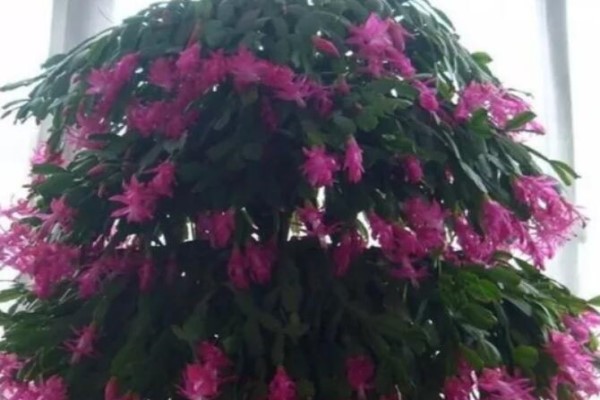
Graft the Christmas cactus this way, and it will bloom 100 flowers!
If you want your Christmas cactus to bloom abundantly with lots of flowers, it is best to graft it!
Steps:
1. For the rootstock for grafting the Christmas cactus, you can choose cactus, Pereskia, or dragon fruit. But for flower lovers in the north, if you use cactus for grafting, it is best to choose cold-hardy varieties, so they will not freeze to death in winter.
2. Use a sterilized knife to cut off the top stem segment of the cactus, then find a rust-free iron nail and, using the sterilized iron nail, push it down from the middle of the cactus cut. Remember to push the entire iron nail completely into the cactus. Finally, just take the iron nail out!
3. Choose the scion needed for grafting, which is the Christmas cactus leaf segment. It is best to choose plump and robust leaves, keeping 2-3 segments, as this can increase the survival rate.
4. Use a sterilized blade to remove the left and right sides of the lower stem segment of the Christmas cactus leaf, leaving a part about the same width as the iron nail.
5. Insert the prepared Christmas cactus stem directly into the opening made in the cactus with the iron nail. If you want the wound to heal faster, you can also seal the joint with wax. That means the grafting is successful!
6. After grafting is complete, place the Christmas cactus in a cool, ventilated place with plenty of scattered light, and do not rush to water. After about half a month, if the Christmas cactus has not wilted, the grafting has basically succeeded.
7. Christmas cactus grafted this way has a relatively small joint, reducing the chance of bacterial infection, and the grafting survival rate will greatly increase. As long as you take good care of it afterward and fertilize more, it will soon produce even more flowers!
Graft the kalanchoe this way, and it will never get black rot again!
When the kalanchoe at home does not grow well, a large part of the problem is caused by black rot! So why not use a jade plant to graft it? After grafting with a jade plant, the kalanchoe will hardly ever get black rot!
Steps:
1. Prepare the tools needed for grafting: a sharp knife, alcohol, plastic wrap, and small clips.
2. Find a jade plant for grafting. Why use a jade plant for grafting? Because the jade plant has plump leaves and stays green all year round, and is very drought tolerant. For kalanchoe, which is especially prone to black rot, it is an ideal grafting rootstock!
3. First sterilize the knife with alcohol, then find a non-lignified branch on the jade plant, cut off a section of the branch with the knife, then split it in the middle and make 2 cuts to shape the branch into a V-shaped cut.
4. Choose a robust kalanchoe branch, cut the lower end of the kalanchoe branch into a duck-bill shape, then insert it directly into the jade plant branch.
5. To make the wound heal faster, you can wrap the joint with a plastic bag, then gently clamp it with a small clip.
6. Place the grafted kalanchoe in a cool, ventilated place. During this period, there is no need to water at all. After about 15-20 days, observe it. If the kalanchoe leaves have not wilted, the grafting has basically survived!