3 Spider Plant Care Tips: Once You Learn Them, New Shoots Will Grow Like Crazy the Very Next Day
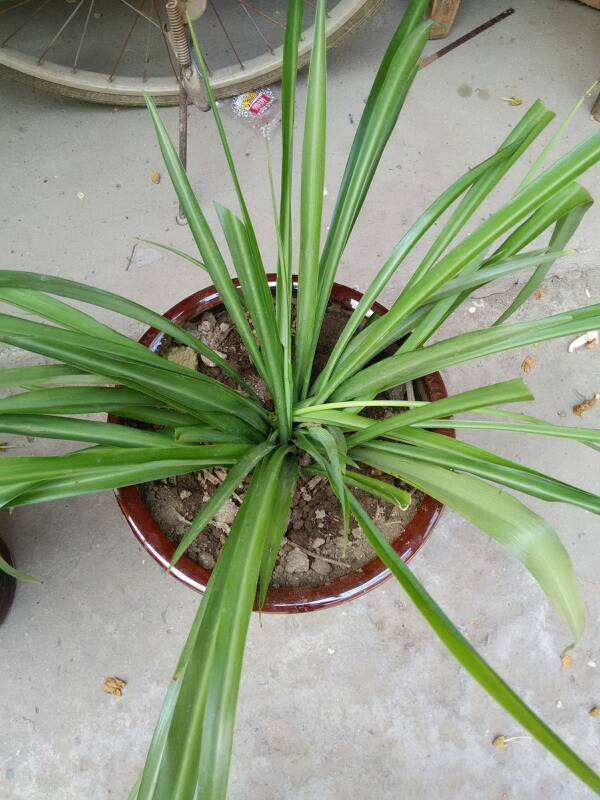
The potted spider plant (Chlorophytum comosum) is a very common foliage plant in homes. Many flower lovers keep one or two pots in the living room, mainly for two reasons: first, it can purify indoor air, since the spider plant's air-purifying ability is obvious to all; second, its leaves stay as green as oil all year round, and it is relatively easy to care for and maintain. When it comes to growing spider plants, although they are easy to keep, there are still some tricks to it. Some flower lovers are careless with their care, which often leads to yellowing leaves, dry tips and black tips on spider plants. In fact, to grow spider plants well, we only need to remember a few small tips to keep them evergreen all year round.
These 3 "Spider Plant Tips": Once You Learn Them, They Will Grow Like Crazy Starting the Very Next Day, with Baby Spider Plants Sprouting Nonstop
Before talking about spider plant care tips, we need to first roughly understand some of its growth characteristics. For example, spider plants like to grow in a spot with plenty of sunlight and good ventilation, and of course, the sunlight is best as diffused light. In addition, as for soil, it is suitable for growing in loose, fertile, slightly acidic soil containing humus. If the nutrient soil is dried out, lacking nutrients, or compacted, it is not good for the spider plant's vigor. As for watering, spider plants rather like a moist environment, so you should water them frequently, following the principle of watering thoroughly once the soil has dried out.
Spider Plant Care Tip One: Rotate the Pot
Flower lovers who have cared for spider plants for a long time must know how important this detail is for spider plants. A while ago, a flower lover left me a message asking why half of their spider plant's leaves were growing vigorously with new shoots constantly sprouting, while the other half had short, dull leaves. In fact, this is because your flower pot has not been "rotated" for a long time. We usually place spider plants not far from the balcony, in order to receive sunlight, carry out photosynthesis, and thereby synthesize chlorophyll, making the leaves green. But over the course of a day, sunlight can only reach one side of the spider plant's pot. If you rotate the pot once every week, it will receive light evenly, which will make the spider plant symmetrical all around, and its ornamental value will also be much higher.
Spider Plant Care Tip Two: Repot
Everyone who grows flowers knows that watering and light are important, but don't overlook the importance of repotting. As the saying goes, people rely on clothes and horses rely on saddles, and whether flowers are grown well is partly influenced by the flower pot. Why say this? When the nutrient soil in the pot is not changed for a long time, or when too much chemical fertilizer is used in ordinary flower growing, over time the potting soil will become compacted and block the drainage holes at the bottom of the pot. Every time you water, it easily leads to water accumulation, and the spider plant's roots will quickly rot. That is not even the main thing. The key is that if you do not repot for a long time, not only is there no aeration, but since the spider plant's root system is well developed, over time the space for root growth will be restricted, which is also bad for its vigor. So when growing spider plants, repotting is very important. You can repot now, or you can repot next spring, and be careful to check whether the roots are rotten when repotting.
Spider Plant Care Tip Three: Fertilize
Every kind of potted flower needs fertilizing. Some flower lovers might say, "What about lucky bamboo grown in water? It doesn't need it, right?" Thinking that way is wrong. Hydroponically grown flowers also need fertilizing, only liquid fertilizer can be used instead. Because spider plants have lush branches and leaves, fertilizer must be supplied in sufficient amounts. Especially now in autumn, only with sufficient fertilizing can they grow vigorously and then safely overwinter. When it comes to fertilizing spider plants, I suggest two kinds of fertilizer that must be used. First, use cooked and fully fermented soybeans as an organic nitrogen fertilizer, applying it to the spider plant once a month. Second, prepare some potassium dihydrogen phosphate powder, dissolve it in water, and then spray it on the spider plant's leaves once a month. With this kind of fertilizing, in about two months you can clearly see that the spider plant is growing more and more vigorously.
The knowledge shared above is the tips and details for caring for spider plants. These tips are not only suitable for spider plants, but also for flowers commonly kept at home such as pothos and clivia. Finally, a reminder to flower lovers: in late autumn, as the weather turns cold, the suitable growth temperature for flowers is generally below 10°C, at which point growth is hindered, so always pay attention to the temperature and move them indoors for care when it drops.
Thank you for reading! Remember to like and share.