This plant's leaves are unremarkable, but when potted it is good for both eating and viewing, and it is easy to grow and easy to care for.
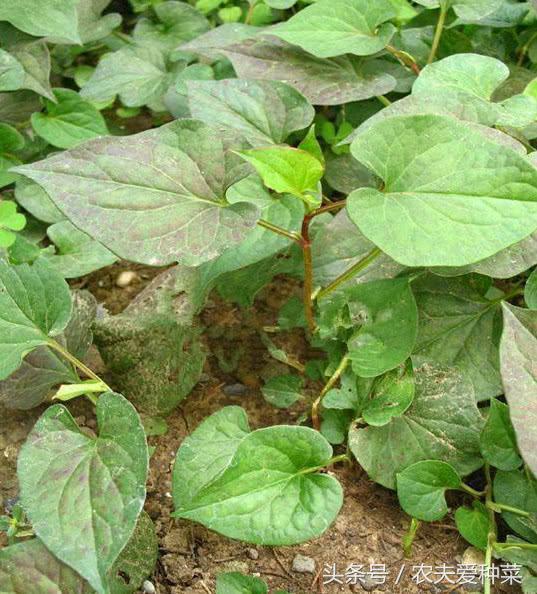
This wild vegetable that often grows in wetlands and along ditches is wild houttuynia, whose scientific name is Houttuynia cordata. Its leaves look a bit like sweet potato leaves and also a bit like pothos leaves, and growing among weeds it is quite unremarkable, yet Houttuynia cordata is a Chinese medicinal herb, and it is also a health-promoting vegetable that is both medicine and food.
As a Chinese medicine, Houttuynia cordata can clear heat and detoxify, and has a certain effect on various inflammations and infections; as a health-promoting vegetable, its fresh stems and leaves are rich in vitamins, amino acids, protein, as well as calcium, iron, phosphorus and many other nutrients essential to the human body. The roots are edible, and the stems and leaves are also edible, so it can truly be called a treasure from head to toe.
Some people like to eat the roots of Houttuynia cordata, but I prefer to eat its leaves. It is best not to heat them; just serve them cold-tossed. After tossing with various seasonings, it is sour, spicy and refreshing. Wild ones in particular have a very rich flavor, and with them you can eat one more bowl of plain white rice.
Apart from wild Houttuynia cordata, cultivated plants can be grown almost all year round. Planted in spring and early summer, they can be harvested 3 months after transplanting. Generally, the best time to plant is after the Beginning of Spring, and for potted growing, any season will do. From June to August it also produces small pale yellow or white flowers, so when planted in a flowerpot it can also be enjoyed as a foliage plant, good for both eating and viewing.
Houttuynia cordata likes warm and humid environments and grows well at 15-25°C, and it is very cold-tolerant, able to overwinter safely above -10°C in winter. For potting soil, it is not suitable to use garden soil alone, and even less suitable to use clay; it grows best in loose, breathable, fertile sandy loam.
Houttuynia cordata likes humid environments and is averse to drought. It naturally likes to grow in shady, damp places or lowland by water. When potted, be sure to keep the soil moist for a long time; especially during the growing period, water every day, watering little but often, and avoid prolonged water accumulation in the flowerpot.
If your home does not have good light, potted Houttuynia cordata is a very good choice, because it is strongly shade-tolerant and can grow with more or less light, but with enough sunlight its leaves are greener and plumper, and also taste better.