How to prune a Sageretia bonsai? Detailed pruning methods and techniques
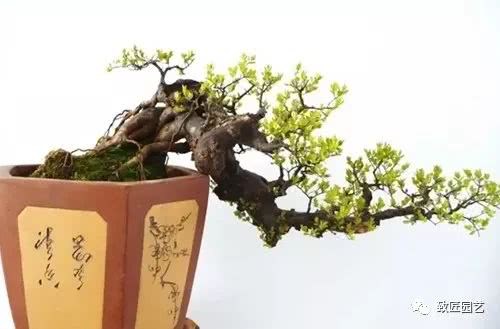
Sageretia thea (Chinese sweet plum) is a garden plant often used as a hedge, and is also commonly used in rock and landscape arrangements. It has low soil requirements and strong vitality, and can adapt to a variety of soil environments. It is drought-tolerant and moisture-tolerant, and it is also often potted and made into bonsai for appreciation. In particular, a carefully pruned Sageretia bonsai is even more appealing.So, do you know how to prune a Sageretia bonsai to make it look better?
1. Pruning of Sageretia bonsai that has been grown for many years:
For older trunks, to prevent partial dieback and aging of the branches, every 2-3 years between February and March, the pot should be repotted and the soil changed, and some old roots and branches should be cut off. The buds of the branches and the sprouting ability of the roots of Sageretia are very strong; the more the branches are pruned, the more vigorously they grow, and wherever the soil covers the roots, they will sprout from there.
2. Pruning of newly dug and planted Sageretia trunks:
The best planting season for Sageretia is from December each year to March of the following year. Once the buds and branches have grown 10-20 cm, the buds and branches that are not needed can be removed. The retained branches that grow too long should also be appropriately shortened to reduce water consumption, so that the tree's nutrients are concentrated in the trunk and at the wounds of the branches.
The branches at the wounds should not be prematurely and blindly bud-pinched or pruned; let them grow freely. In this way, the spreading and drying out at the wounds can be controlled, and the wounds on the branches can gradually heal over on the basis of their original state; only then can the restored branches be cut off.
3. The pruning time must be appropriate:
Sageretia should be pruned at the right time. Generally, it can be chosen in late spring and early autumn; in these two seasons, the sprouting ability of Sageretia trunks is the strongest and their growth is the most vigorous. Water shoots, overlapping branches, crossing branches, radiating branches, dead branches, and pest- and disease-damaged branches should be cut off at any time. But note that in hot weather, it is easy to scorch new buds, causing leaf curling. Therefore, after pruning, it is best to place it in a shady place and only expose it to strong light after it has sprouted normally.
[Tips]Sageretia has a very strong budding ability and is very tolerant of pruning, and can be shaped into bonsai of various postures. If you want it to have luxuriant branches and leaves, remember to pinch the growing tips in time. This can make the axillary buds of Sageretia sprout side branches; the more times you pinch, the denser its branches and leaves will grow.
Featured content