5 key points for getting a potted Clivia to bloom year after year
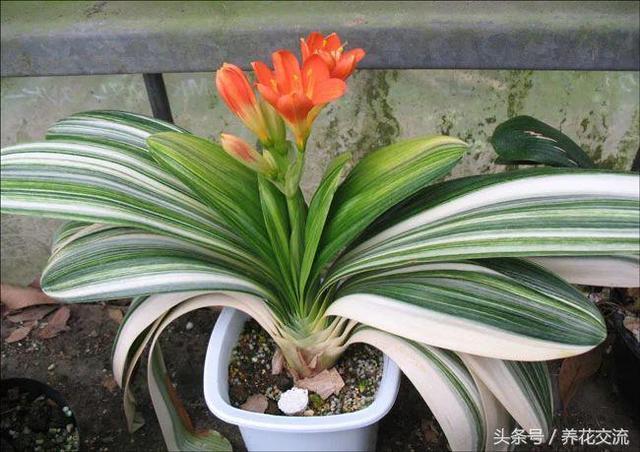
Many people like to keep a few pots of Clivia (Clivia miniata) by the windowsill at home. They are particularly fresh and natural potted plants, and both their leaves and flowers are highly ornamental, looking very elegant. Grown in a clay pot or a purple clay (zisha) pot, they appear very refined, with a sense of noble integrity, and they are relatively easy to care for, not needing frequent attention.
If you want to encourage your Clivia to bloom, you need to meet the following care conditions. It is not as simple as placing it anywhere and having it bloom year after year. You also need to be patient enough when caring for Clivia.
When Clivia is grown indoors and fails to bloom, it is usually because of insufficient light, not enough nutrients in the potting soil, or unsuitable care temperatures.
1. Placement environment
A potted Clivia must never be placed in a spot with harsh sun or too much direct sunlight. You can grow it by an east- or south-facing windowsill, where it gets about 3-8 hours of scattered light per day. If the leaves are exposed to harsh sun, they burn easily and will also wither.
The care environment should stay ventilated and well lit. Avoid growing it in an enclosed space, and also be careful to maintain a certain level of air humidity, avoiding excessive dryness.
2. Regularly add a light fertilizer
A potted Clivia does not need frequent fertilizing. When growing it in a pot, you can add a 2-3 cm thick layer of rotted organic manure at the bottom of the pot, which can continuously supply nutrients to the Clivia for a whole year.
During the peak growing seasons of spring and summer, you can give a light organic fertilizer once every 2-3 weeks, pouring it directly into the soil. The concentration should be very dilute to avoid it being too strong. Avoid getting fertilizer on the leaves, otherwise it easily burns them.
3. Regularly add water
To keep a Clivia alive, you must not water it often. It is quite sensitive to water because it has fleshy roots that are full of moisture, so watering too frequently easily causes root rot. For the soil used to grow Clivia, you should also choose a loose, well-draining sandy soil or leaf mold, with plenty of river sand or perlite added to the soil.
When caring for it, pay attention to watering and avoid water accumulating on the leaf surface or in the leaf center, otherwise it easily causes fungal infection.
4. Care temperature
To care for Clivia, maintain a warm and humid environment year-round, keeping the minimum temperature above 5 degrees. In winter, move it indoors to avoid frost damage. The winter care temperature should not be too high, otherwise it will affect flowering the following spring. Keeping the temperature between 8-15 degrees is most suitable.
5. Encouraging blooming
To encourage Clivia to bloom, you can spray a potassium dihydrogen phosphate solution once every 2-3 weeks in autumn and after the weather warms in spring, spraying it directly on the leaf surface. This helps promote flower bud formation. Avoid fertilizing in winter.
Also pay attention to turning the pot regularly, once every 2 or 3 weeks; this helps the clivia leaves receive light evenly, which helps the plant grow more symmetrically and raises its ornamental value to another level.