This wild vegetable is a treasure from head to toe, more effective than medicine; dig a bag and the whole family can eat for 2 days
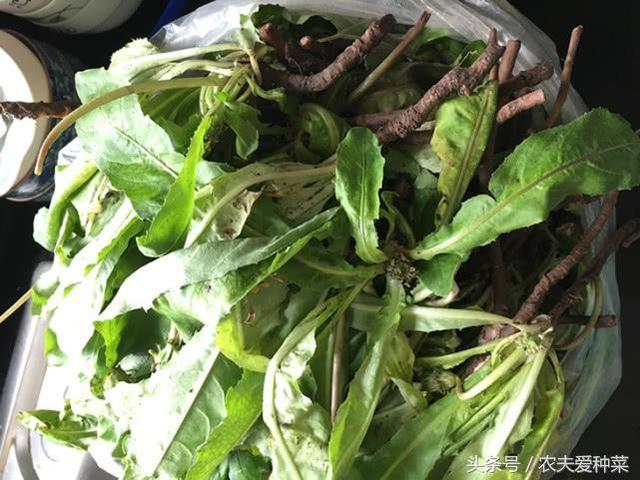
Recently relatives came over from our hometown and brought us a big bag of lantern grass. Look, this wild vegetable seems familiar, right? That's right, it's dandelion. In some places it's also called "popo ding," but in our hometown we call it "lantern grass," because when it blooms it looks like a fuzzy lantern, hence the name.
On the field ridges, hillsides and edges of courtyards in our hometown, this wild vegetable grows everywhere. Though it looks unremarkable, dandelion has been a precious Chinese herbal medicine since ancient times. It can truly be said to be a treasure from head to toe. It is rich in nutrients, full of vitamins and minerals, and mainly targets infections and heat-toxin conditions, with the effect of clearing heat and detoxifying. For example, people who often have indigestion or frequently suffer from internal heat don't need medicine; eating this is more effective than medicine.
Don't think this wild grass, dandelion, only appears in spring. In fact, in most regions of our country it grows in the wild in all three seasons of spring, summer and autumn. Dandelion's flowering period is from March to September, and its fruiting period is from April to October. It's just that by this season, it tastes a little old.
This bag that our relatives dug up for us can feed our family for 2 days. When eating it, remove the old leaves and wash it clean, blanch it in water and then serve it as a cold salad. Although it tastes a little bitter, it is still very refreshing overall.
There are quite a lot of dandelion varieties, and the appearance between some varieties differs slightly. In the past, dandelions were basically all wild, growing however they liked, and there were so many that nobody wanted them. Of course, this is also because its adaptability is very strong. Now dandelion development and utilization have increased, with broad prospects, and artificial cultivation of dandelion is gradually becoming more common.
Moreover, you can also plant it in a flowerpot; it is very easy to grow. We can dig up dandelions in the wild to transplant, taking care to bring along more soil, or we can directly collect its seeds and sow them. Ordinary garden soil is enough for it to grow. After scattering the seeds, keep the soil moist, and it will sprout in about 1 week. After that, give it plenty of sunlight and water it normally, and it will easily survive and grow.
When a potted dandelion grows to about 10 cm, you can pick it to eat. At this time it is relatively tender and fresh. Be careful not to pull it out by the whole plant, but cut it like chives, leaving 2 cm at the bottom, and it will grow again later.