Don't throw away these 3 flowers if their roots rot; pick off the leaves and they will take root and sprout after 1 month
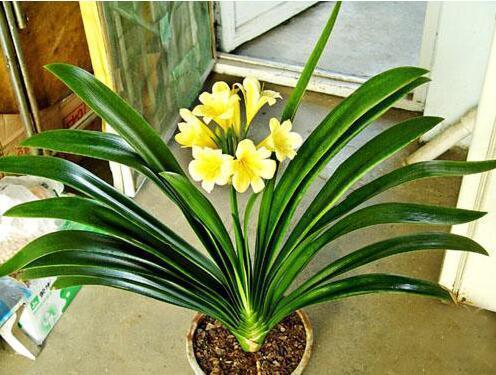
Once a clivia (Clivia miniata) in its dormant period is not cared for properly, it will develop heart rot, which gives flower lovers a real headache. In fact, there is no need to panic. Pick off all the leaves, and be sure to apply a diluted potassium permanganate solution to the cut surfaces for sterilization and disinfection. Then place the flowerpot in a ventilated spot for care. During this period, water less and follow the principle of "do not water until dry." By about the end of the month, you will be able to see the plant grow new shoots, and before long you will have a lush clivia.
What should you do if a clivia (Clivia miniata) drops its leaves? It means there is a problem with absorption, most likely poor root condition. Carefully knock the plant out of the pot, check and tidy it up, then repot it in suitable soil, do not water for the time being, and after it recovers for one month, care for it like a normal plant. The key to growing clivia well is the choice of soil and the supply of water. Clivia originates in moist forests and likes a humid environment, but the soil in forests has strong permeability, is fertile and moisture-retentive yet does not become waterlogged.
The second one is asparagus fern (Asparagus setaceus). The asparagus fern grown at home always develops root rot because of improper care, so what should you do if the asparagus fern's roots rot? After discovering root rot in asparagus fern, first take it out of the flowerpot; for hydroponically grown asparagus fern, take it out of the hydroponic bottle. Then prepare a pair of scissors and disinfect them, clean the asparagus fern's roots thoroughly, then use the disinfected scissors to cut away all the rotten roots, and apply carbendazim to the wounds.
There is another method. If there is no root rot, you can take scissors and cut off all the yellowed parts of the asparagus fern, leaving only about 3 cm above the roots. Place the potted asparagus fern in a cool, ventilated spot for care, and note that at this time you should reduce the watering frequency. You can use a spray bottle to mist around it to keep the air humid. As long as the care environment is suitable, asparagus fern is very easy to grow well, and its leaves will also be glossy green.
The third one is the money tree (Pachira aquatica). The money tree likes a warm, humid climate, and too much or too little watering can both cause the leaves to turn yellow. With too much watering, the soil in the pot stays overly wet for a long time, the money tree's roots cannot breathe properly, the roots and stems rot, then it gradually spreads to the branches and stems, and finally the leaves turn yellow, wither, and fall off, and in severe cases the whole plant dies. With too little watering, the soil in the pot is moist on top and dry below, which not only affects nutrient absorption but also causes the leaves to become dull and lusterless, and they gradually turn yellow and fall off from the bottom upward.
For the situation where the money tree's leaves turn yellow because it suddenly receives sunlight, the chance of saving it is not great. When leaves turn yellow due to excessive exposure to the sun, the leaves lose water severely and it is very hard for them to recover in a short time. It is recommended to move it to a semi-shaded spot. With proper watering, the yellowed leaves will slowly fall off, and once new shoots grow, it will be fine.
This is a gathering place for flower lovers, sharing flower care tips; you are welcome to follow and exchange ideas.