Spider plants and pothos do best with a cheap 5-yuan, 100-tablet medicine crushed up and diluted in water to make flowers explode with growth.
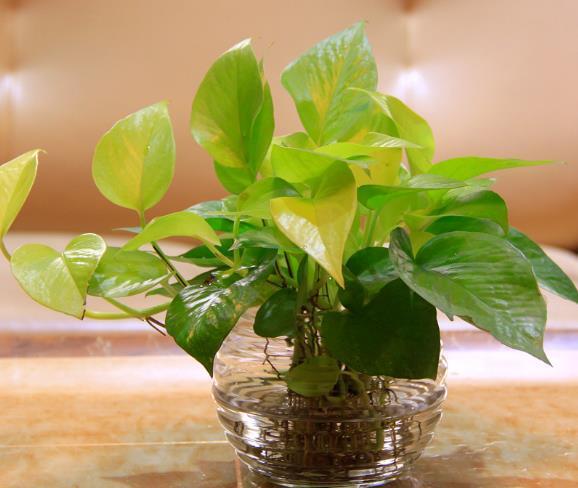
Pothos and spider plants are shade-loving plants, mostly grown in pots as climbing foliage flowers. They like warm, humid environments and require loose, fertile, well-drained soil. Because pothos can absorb benzene, formaldehyde and other substances from the air, it is widely grown indoors. In spring, summer and autumn, pothos can be placed near an east- or north-facing windowsill, while in winter it can be placed at a south-facing window. If it is kept in too dark an environment for a long time, it will not only cause the trailing stems to grow leggy with longer internodes, but also make the plant's shape sparse and scattered.
Flower lovers can choose 1 gram of ferrous sulfate tablets dissolved in 1000 ml of clean water to water the plants. Ferrous sulfate tablets contain iron, which can quickly turn the yellowed parts of plants back to a jade-green color. Besides having requirements for light, watering and soil, asparagus fern, pothos and spider plants most importantly need to be fertilized, which is the key to making plants grow well. When you pay attention to meeting your plants' watering and light needs but they still show yellowing leaves and sluggish, listless growth, the methods above are very effective.
Ordinary small aspirin generally costs 2 to 5 yuan a bottle, and a bottle usually contains 100 aspirin tablets. If you use one tablet per month for your potted flowers, 100 tablets can last 7 or 8 years. When growing pothos, do not water too much; you can spray water at the rooting spots, which reduces the rate of water evaporation. Water daily to keep the soil moist, but do not let water accumulate and breed mosquitoes. In autumn and winter, the amount of watering should be strictly controlled according to room temperature. Before heating is turned on, the temperature is lower and the soil of the plant evaporates more slowly, so watering should be reduced.
In the autumn and winter seasons in the north, most plants grow slowly or even stop growing, so fertilization should be reduced. Before winter sets in, mainly water or spray with liquid inorganic fertilizer, about once every 15 days. After winter begins, fertilization should mainly be foliar spraying, applied mainly through the stomata on the leaf surface; the fertilizer is absorbed through the stomata on the leaf surface, so the fertilizer effect can act directly on the leaves.
Midsummer is the peak growth period for pothos. Every day you can spray the aerial roots and leaf surfaces of the pothos several times, which not only washes dust off the leaves and helps the pothos breathe, but also keeps the leaf color emerald green and fresh, lowers the leaf surface temperature, increases the air humidity of the micro-environment, and helps the leaves grow better. Keep the potting soil moist; when you notice the potting soil turns white, water thoroughly. In winter, when room temperature is lower, pothos is in a dormant state, so water less and just keep the potting soil from drying out.
Newly bought pothos generally has an adaptation period of about 1 month, and yellow leaves at the bottom are normal. However, remember: do not directly peel off yellow or dead leaves; cut them off from the middle of the leaf stalk. This can avoid the yellowing of upper leaves caused by direct peeling. When growing pothos and spider plants, provide appropriate ventilation. If the leaves of the pothos are severely yellow, be sure to control watering and place the pothos in a well-ventilated, bright spot.
This is a gathering place for flower lovers, sharing flower care tips. Welcome to follow and exchange ideas.