How to water succulents? You need to know the right method
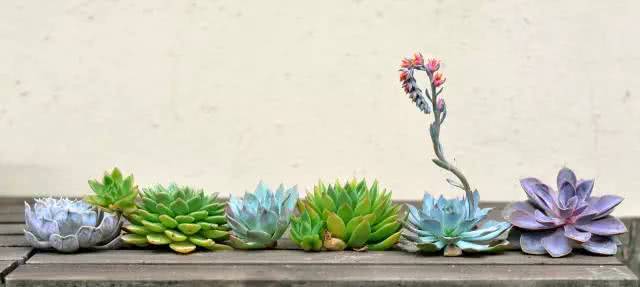
Many succulent growers always have plenty of doubts and worries when it comes to watering. Today Succulent Guy will share with you all about watering.
Growers who have been in the hobby for a while know that as long as succulents are in their growing season, you can water them freely and boldly. Of course, beginners will definitely be careful and cautious, which is safer. Many people understand the principle of "better dry than wet": succulents given little water won't die of drought, at most they'll just look poor and not plump enough; but giving too much water will very likely drown them. This idea has led growers to generally believe that succulents are by nature "drought-loving." In fact, succulents are not drought-loving but drought-tolerant, and these two meanings are far apart. Everyone has heard about the native environment of succulents: it is a region that is dry and receives little rain for most of the year. Drought tolerance is a biological mechanism they evolved out of sheer necessity. Once there is rainwater, they will immediately drink their fill, then store it in their bodies for a rainy day, which is how they developed their thick, fleshy appearance. When it is dry, they have to rely on consuming the water stored in their bodies to maintain normal physiological functions.
When succulents have no water, they can endure it; when there is water, they drink it just the same. They are simply more tolerant of water-scarce days than other plants.But if too much water is poured in, it must be drained away,this is the drainage capacity of the flowerpot - there must be no standing water at the bottom of the pot, and drainage must be smooth, the roots cannot absorb the excess water, the water content in the plant body has already reached saturation, so the excess water must flow out, otherwise it will cause the roots to suffocate from lack of oxygen, and the bottom of the pot will also become a breeding ground for bacteria.
"Don't water if not dry, water thoroughly when you do"Only in this way can you ensure that even the roots at the very bottom absorb water; on the other hand, it can verify the drainage speed of the potting mix, the drainage capacity of the flowerpot, whether the hole at the bottom of the pot is blocked, and so on.Here it should also be said: Succulent Guy does not recommend using containers without holes at the bottom, because it is impossible to assess the critical point of how much water will both reach the bottom roots and not cause standing water at the bottom of the pot, and the most troublesome thing is that the excess water cannot be drained out, so bacteria will break out in large numbers in the enclosed, humid space.
"Better dry than wet"is a safe plan,if you can't get the water amount right, it's better to water a little less to be safe; beginners can be advised to choose this plan.
"The bold watering theory"can make succulents grow vigorously, quickly, and plumply, and easily reach their best conditionthis plan. Forgrowers who want their succulents to form clusters and fill the pot, with many offspringit is undoubtedlythe most effective method.
Of course, the above-mentioned"bold watering" applies to the growing season of succulents; during the dormant period, controlling water or stopping water is the safest, andthe amount of watering must also be adjusted according to the conditions of the northern and southern regions, the weather, the temperature, and the air humidity.The northern climate is dry, with few rainy days and plenty of sunshine, and water evaporates quickly, so the watering frequency can be higher; the south has many cloudy and rainy days, high air humidity, and slow water evaporation, so the watering frequency should be lower. As for containers, plastic, resin, porcelain and similar vessels have relatively poor water and air permeability, so the watering frequency should be greatly reduced. While clay pots and tile pots allow you to increase the watering frequency. In short, you'll understand all these experiences through your own gradual practice; it's not that complicated or confusing.
Finally, there is one more misconception that needs to be explained:
Misconception: It's unclear where this came from, but many growers believe that watering too much leads to leggy growth.
Watering is not the direct cause of leggy growth; it iswhen the plant lacks light while the watering amount is still large, it will intensify the formation of leggy growth. Lack of light is the direct factor causing leggy growth.Think about it: the leggy growth is already happening, and at this time the water supply is still so abundant, wouldn't that further speed up cell division? So as long as there is plenty of sunlight, watering will not cause leggy growth at all; instead, it will make them grow plumper and rounder.
Finally, a reminder for growers:
1. When watering normally, don't let water get on the leaf surface, especially in summer!Water droplets stuck on the leaf surface with poor ventilation will cause the leaves to rot; of course, if the sun is shining brightly that day and the droplets can evaporate quickly, it doesn't matter.
2. The surface of the leaves at the very bottom that come into contact with the potting mix should be gritty soil, and it is best to use small stones as a top dressing to prop up the lowest layer of leaves.
3. Be sure to maintain ventilation, good ventilation is beneficial to plant growth, and at the same time a dry soil surface can also inhibit the outbreak of pathogens to a certain extent, reducing the chance of black rot and turning to mush.