How to care for clivia in September? 3 tricks to make the leaves thick and full and the blooms burst the pot
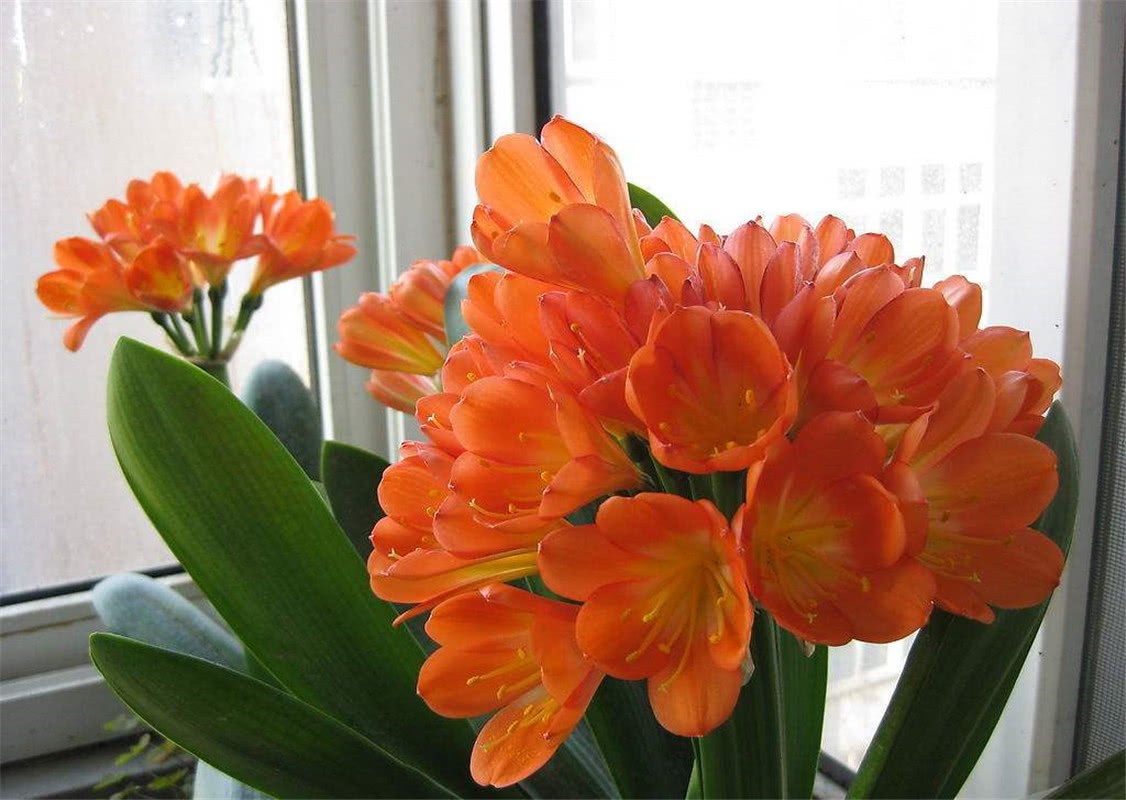
Caring for clivia in autumn, the goal is to let it "put on autumn fat", hang on rich flesh, the leaves must become thick and solid, the roots must become strong and sturdy. Once these two points are done well, then just add a tiny bit of phosphorus and potassium fertilizer, and the chance of it not bursting into bloom is almost nil. If you want it to hang on rich flesh, you cannot use muddled tricks; you need to do the following 3 basic care points well.
1. The old routine: repotting in autumn
The first thing to do in autumn is repotting; this is the old routine. After a clivia has grown for 1 year, the nutrients in the potting soil have been mostly absorbed, the soil's vitality is no longer that high, and the clivia has grown bigger, so at this point it must be repotted, just like how we need to change clothes when we get fat, the same principle. The little gardener's advice for you little masters is: if you repot once every 1 year, then just move it to a pot 5-10 cm larger in diameter than the original; if you repot once every two years, then make it a bit larger still.
To repot, you have to mix soil. For the soil mix, the little gardener uses the "old method" passed down by predecessors: 5 parts leaf mold (nutrient soil), 3 parts bark (granular soil), then mix in 2 parts fertilizer composted from peanut shells and sunflower seed shells. It must be fully decomposed, used as a base fertilizer layer at the bottom. This method not only satisfies the clivia's oil-loving "taste", but also saves the trouble of fertilizing in the early stage; in the early stage, root and leaf growth rely on the buried base fertilizer.
2. The new method: learn to do top dressing
The little gardener already said earlier that if you buried base fertilizer, there is no need to fertilize in the early stage, but if you did not bury fertilizer, then after potting and re-establishing, you must top-dress in time. Clivia is also a "fertilizer basket", with a big appetite, so after repotting we need to use a root-strengthening organic nutrient solution to top-dress it, strengthen the roots, and make the leaves dark green later. At this time do not rush to use phosphorus and potassium fertilizer; use nitrogen fertilizer first, then use phosphorus and potassium fertilizer for top dressing during the bud stage. This is what targeted top dressing means.
3. Basic lesson: control water in autumn
Many little masters, when caring for clivia, are very prone to acting on impulse. What kind of impulse? As soon as autumn comes and the temperature drops, they like to water heavily, and sometimes this can be fatal. When watering clivia at this time, you still have to control the amount of water, and water only after the soil dries out. But autumn winds are rather strong, so the watering frequency will be relatively shorter. Do not mistakenly think you can water more. Little masters, remember, impulse is the devil, and this devil can take the life of the clivia in the pot.
Actually, the little gardener knows what you new little masters are struggling with. Isn't it just not knowing how to judge when to water? Simple: prepare a disposable chopstick, insert it along the edge of the pot, pull it out to check the moisture and then water. This method can be called one of the "ancestral" methods of us flower masters. If you are a more trendy flower lover, you can try a plant and flower monitor, link it to your phone to see the data, and use the data to determine the watering time, so you can relax.
The 3 points mentioned above by the little gardener are all ways to make clivia leaves thick and green and roots sturdy in autumn, and they are not so-called "muddled tricks or clever tricks"; they are just basic, down-to-earth care techniques. Little masters, hurry up and note them down. A clivia that hangs on flesh in autumn will not only burst into bloom, but the flowers can also bloom right into your heart.