Why do eight or nine pots of orchids that have been grown for three or four years still not bloom?
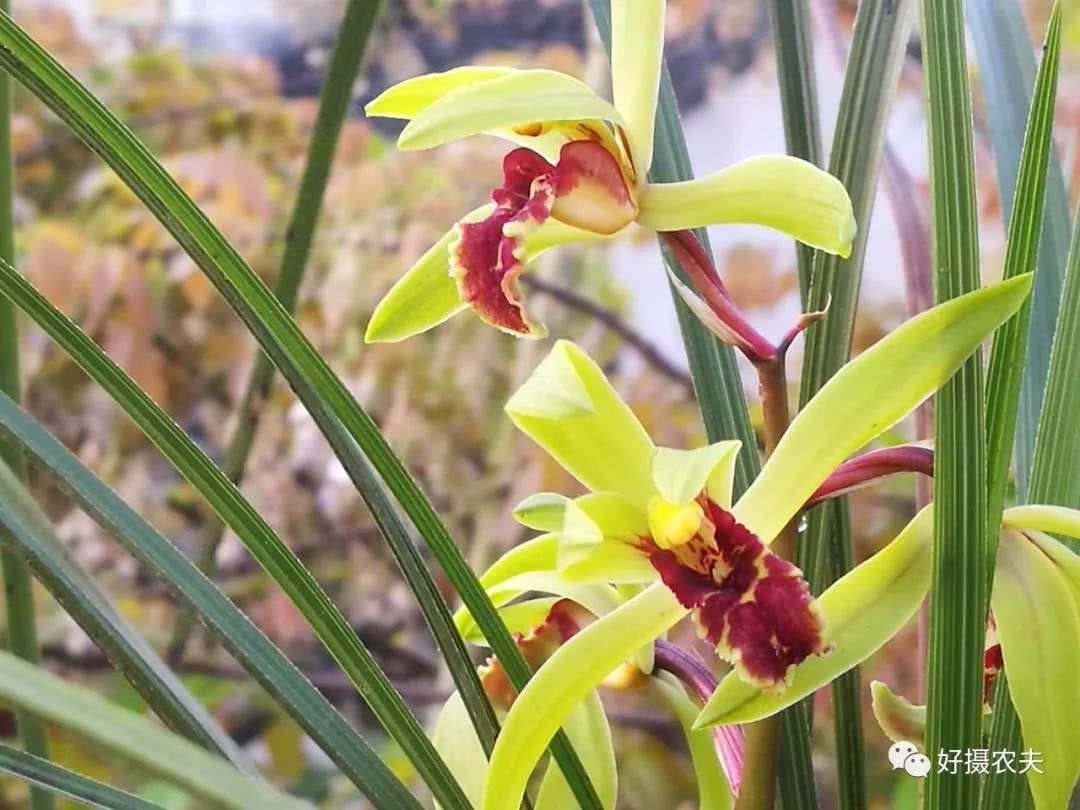
A reader left me a message on the Baijia platform, saying that more than ten pots of orchids he has grown for four years still have not bloomed. First of all, we can rule out the possibility that the orchids are not blooming because they have not reached the required age and are not yet mature. At the same time, so many pots of orchids could not possibly have been collected from the same place, so we can also rule out the example that Haoshe Nongfu mentioned before: shade-mountain seedlings.
There should be no problem with the reader's potting mix: 75% pine bark plus 15% humus soil, plus 10% volcanic rock. It has both soft and hard components, and the orchid roots should have developed quite well. So why are they not blooming?
I think he should sort things out from these aspects:
1. From the photos he sent me, the orchid leaves look a bit underfertilized, and his potting mix has not been changed for three or four years. The nutrients in the potting mix have been used up over these years. Orchids use a great deal of energy to bloom. If the nutrients in the potting mix cannot keep up, they must be supplemented manually. It is recommended to apply some organic fertilizer, and a ternary compound fertilizer can also be applied. If it is old potting mix from three or four years ago, it should be replaced. When changing the potting mix, decomposed organic fertilizer can be mixed in, along with foliar spraying of a balanced nitrogen-phosphorus-potassium foliar fertilizer.
2. The hard components in his potting mix make up a relatively high proportion, about 75% or more. The advantage of this kind of potting mix is that watering is convenient, and large orchid nurseries often use this kind of potting mix. It can be watered heavily frequently, which makes the humidity of both the environment and the potting soil very high, and too much humidity can also affect flower bud differentiation. It will only keep growing leaf buds, thereby dispersing the energy needed for bud formation, and the sprouting of flower buds is suppressed.
3. Here comes the most important point, circle it with a pen (this is the key point that will be tested). Orchids can only bloom well after a long period of low-temperature vernalization (between 2 and 10 degrees), as well as a day-night temperature difference of more than 15 degrees. If these climatic conditions are not available, a small environment can also be created artificially. Therefore, Haoshe Nongfu often says: temperature and temperature difference are the essential conditions for whether orchids can bloom and whether they can produce good flower quality.
If there are any other questions, you are welcome to leave a message in the comment section.