Growing roses in autumn: seize the change in climate to cultivate flowering branches and you can still get a full pot of blooms
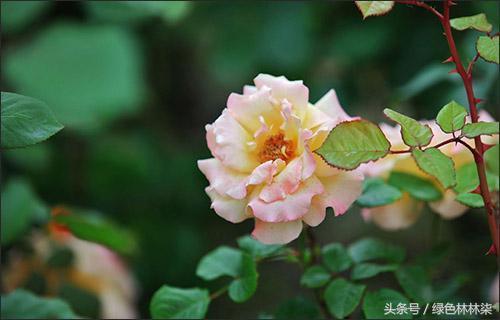
After the high temperatures of summer, roses enter an autumn blooming period, and this is the time to seize the change in climate to cultivate flowering branches. That way, your roses will bloom in wave after wave again in autumn!
Autumn fertilizing and watering of roses
1. When the climatic conditions change, roses wake from semi-dormancy (plants that did not go semi-dormant are a separate case); at this point gradually increase the amount and frequency of fertilizing.
2. First use a high-nitrogen compound fertilizer to drench the roots of the plants, about once every 5 days, used continuously, and stop after four times. After the buds break, when the stem nodes have elongated to about 4 cm, spray the branches and leaves with monopotassium phosphate, at most three times, at an interval of 5 days, and stop once the flower buds show color.
3. For plants with poor vigor or suffering from pests and diseases, with incomplete leaves and few buds breaking, you can spray the branches and leaves with a mixture of brassinolide and monopotassium phosphate, once every 15 days, at most 2 times, which can speed up the growth rate of new shoots.
4. For plants in pots that have granular slow-release fertilizer or organic fertilizer pre-buried in them, add and replenish in time according to the fertilizer's effective duration.
5. Autumn weather is generally dry with low night temperatures, so water the plants thoroughly in the morning as much as possible; watering at night is not suitable. If high temperatures combined with dry weather occur, follow the summer method of shading, misting to cool down, and adding humidity.
6. Because the air humidity in autumn is generally lower than in spring, buds break more slowly and the plants also grow more slowly, so you need to wait patiently; adjust the pace of fertilizing and watering in time according to climate changes. During hot, dry autumn weather, appropriately extend the interval between fertilizing to avoid fertilizer burn, and at the same time do not let a lack of water cause drought that leads to yellow leaves on the plants.
Autumn pruning of roses
First cut out the diseased and weak branches, dead branches, and crossing, crowded branches formed in summer.
1. Pruning of leggy shoots: for leggy basal shoots or side branches formed under the cool summer climate, do a medium prune to encourage new axillary buds (except for climbing roses).
Position: leave 5 complete leaves on the lower part of the basal shoot, leave three complete leaves on the lower part of the side branch, and cut off the rest of the upper part. If the lower part of the branch has already lost its leaves, observe the leaf scars: leave 5 plump buds on each basal shoot, leave 2-3 buds on each side branch, and after any one bud on each branch sprouts and grows into a five-leaflet leaf, cut off the branch above the reserved uppermost bud (or rub out the bud).
2. Pruning of normal branches (with leaves on the lower part): do not prune any of the main branches. Side branches: leave three buds on each secondary branch, leave 2 buds on each branch, and prune away the rest; for those without count leaves, use the observation and handling method described above.
3. Climbing roses: for plants over one year old, cut the side branches (short branches) after flowering by half their length, and for the long branches that flowered at the top, carry out training and fixing. For plants of the current year (or transplanted in the current year), a light prune is enough: for the side branches, just cut off the topmost 2 five-leaflet (or three-leaflet) leaves at their tips, and for long branches likewise carry out training and fixing.
4. For branches already pruned in summer, if growth is slow and there are few branches, there is no need to prune repeatedly.
5. Theoretical calculation of total branches and flowers for normal potted roses (floribunda roses, shrub roses): cultivate 5 primary main branches (including basal shoots), with 3 secondary branches on each main branch and 2 tertiary branches on each secondary branch; if all tertiary branches can bloom at the same time, the number of flowers on the tertiary branches is 30. Note: only the main buds are counted, not the multiple secondary buds; it is very difficult for open-air potted roses to achieve such a sufficient and precise number of flowers.
6. Pruning of miniature roses: for strong plants over one year old, a medium prune can be done, that is, cut all branches down by half their height. For plants of the current year, cut off one third of the height, and you can get a satisfactory display of autumn flowers.
Pests and diseases
1. Diseases: in the hot and humid southern regions, continue to control powdery mildew and black spot; in the cool and dry northern regions, the infection rate of rose plants is generally very low after entering autumn.
2. Pests: in autumn, whiteflies, leaf-rolling moths, and thrips cause severe damage, so continue spraying to prevent and kill them.
Other
In the south, in regions with no dormancy year-round (moderate temperature and high humidity), roses should be continuously pinched and topped and pruned to control the rate of vegetative growth and maintain plant shape; in the north, in regions where winter comes early, be careful to control the use of nitrogen fertilizer after the autumn bloom, to avoid autumn shoots sprouting after autumn and being damaged by frost, and at the same time to avoid consuming the plant's nutrients and reducing the plant's ability to resist frost damage.