Classification of Interstitial Pneumonia and Detailed Explanation of the Characteristics of Each Type
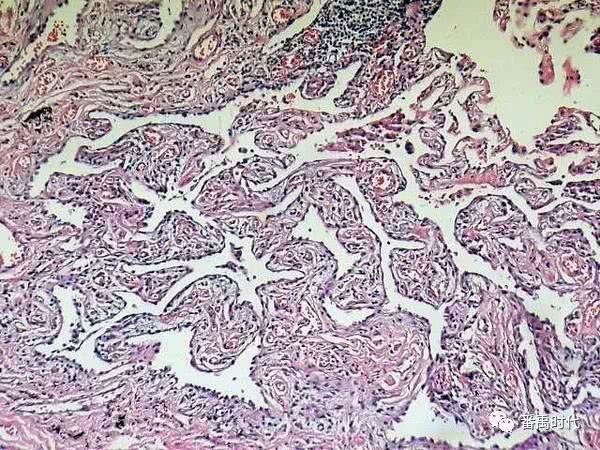
Interstitial pneumonia is a disease that has only recently become prevalent. It is a Western medicine disease name, and can also be said to be a Western medicine term. Many patients and their family members easily misunderstand it as a single disease. In fact, it is divided into four types, namely usual interstitial pneumonia (UIP), desquamative interstitial pneumonia (DIP), acute interstitial pneumonia (AIP), and nonspecific interstitial pneumonia (NSIP). Most interstitial pneumonias are the precursor to pulmonary fibrosis.
Usual interstitial pneumonia (UIP): in the recent 10 years or so, it has increased by 87%, and it readily forms more than 200 disease types, so it can be said to be a combination of a group of diseases. Overall, it is a disease group with diverse causes and diverse manifestations, but all mainly damage the respiratory membrane, causing changes such as thickening, degeneration, and impaired gas diffusion function. Yet the lesions are uneven, with both interstitial inflammation and pulmonary fibrosis and honeycomb-like changes.
Desquamative interstitial pneumonia (DIP) can be said to be respiratory bronchiolitis-interstitial lung disease (RBILD). Pathologically, it shows large numbers of macrophages uniformly distributed within the alveolar cavities, and more obviously in the air spaces around the bronchioles; nonspecific interstitial pneumonia (NSIP) is a manifestation of inflammation of the alveolar walls, with plasma cell and lymphocyte infiltration, as well as a tendency toward pulmonary fibrosis, and obvious lesions also occur around the bronchioles.
In acute interstitial pneumonia (AIP), it is a rapidly developing fulminant lung injury, showing damage to the alveolar epithelium, with proliferation of type II epithelial cells, edema of the alveolar septa, hemorrhage within the alveolar cavities, and the formation of hyaline membranes; it is an acute lung injury lesion and is very similar to acute respiratory distress syndrome (ARDS). Acute interstitial pneumonia shows no sex difference, with a case fatality rate as high as more than 60 percent, and survival is mostly 1 to 2 months.