Why does treating cold-type cough require TCM pattern differentiation?
TCM emphasizes treatment based on pattern differentiation, and many people think it is unnecessary. In everyday life, many people who have a cough or a cold just take whatever medicine treats colds or coughs. For some it works very well, while for others it never works the first time and they have to keep switching. This also happens frequently to people who take Western medicine. In fact, it is caused by not looking specifically at what is causing the problem, that is, by not carrying out TCM pattern differentiation.
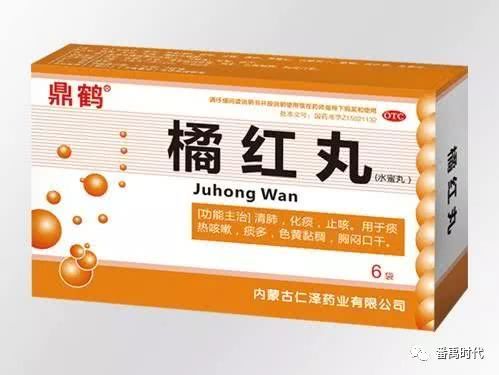
For example, cold-type cough and heat-type cough both produce a coughing reaction, but the causes are different, and there may also be further differences such as exterior or interior. Heat-type cough mostly belongs to internal damage disease, caused by internal heat, or by cold pathogen or dryness pathogen entering the interior and stagnating for a long time and transforming into heat, and is mostly an interior pattern; cold-type cough is mostly caused by externally contracted wind-cold and is mostly an exterior pattern. If cold and heat are not differentiated, and a heat-type cough is treated with Juhong Wan, which is a warm medicine, it is like adding fuel to the fire and will instead worsen the cough.
In daily life, eating too much fried, grilled and other "heat-inducing" food can also easily lead to lung heat and repeated coughing, with dry and itchy throat, dry cough, little phlegm, or coughing up yellow thick phlegm. And being exposed too much to wind-cold attack, that is, what people call catching a chill, makes it easy to develop wind-cold common cold, cough and so on, manifesting as itchy throat, frequent coughing, and thin, frothy phlegm. Only under this pattern is there a possibility of taking Juhong Wan, and the specifics still need to be combined with more clinical symptoms as well as pulse and tongue coating findings.
The relatively complete symptoms of wind-cold cough manifest as cough with thin phlegm, rapid breathing and itchy throat, accompanied by headache, nasal congestion, clear runny nose, aversion to cold, slight fever, absence of sweating, soreness and aching of the limbs, white and slippery tongue coating, and a floating relaxed or floating tight pulse, and it can be treated with the Chinese patent medicine Tongxuan Lifei Wan. There is now also Tongxuan Lifei oral liquid. During medication, avoid raw, cold and greasy foods. People with high blood pressure, heart disease and diabetes must not take Tongxuan Lifei Wan.