How to grow jasmine? Cultivation methods and precautions
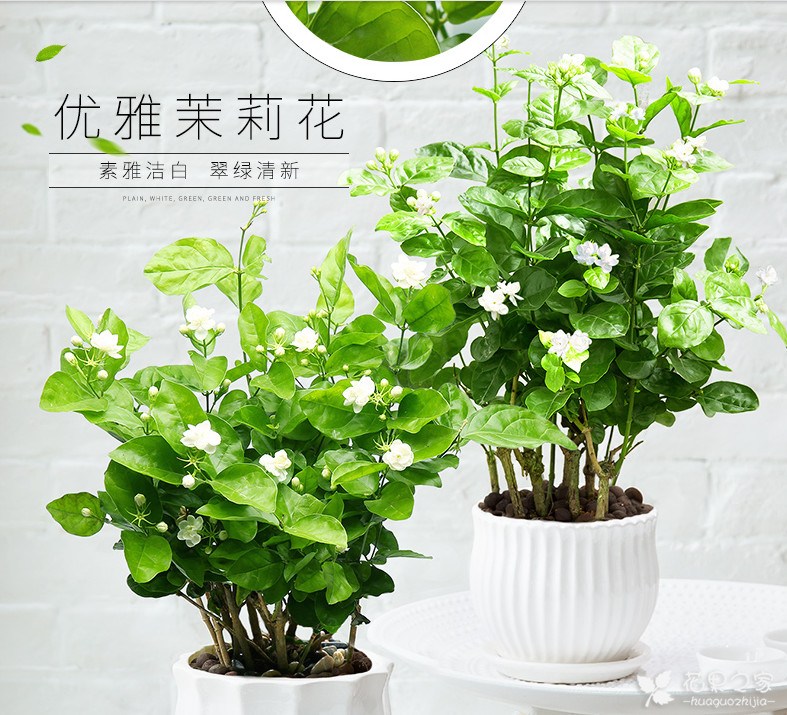
I believe everyone is familiar with jasmine: "When it blooms, the whole garden is filled, yet no fragrance can surpass it." It is the jasmine that "with a single plant can perfume a whole room." The evergreen small shrub jasmine has emerald-green leaves, pure white flowers and a rich fragrance, and is a common fragrant ornamental flower for gardens and pot cultivation. Today, the editor will learn with you the cultivation methods of jasmine, as well as the precautions to note.
Jasmine growth habits
To care for jasmine well, the first thing you need to know is its growth habits. If you do not understand jasmine's growth habits, it is very difficult to grow it well. Jasmine growth habits: jasmine likes warmth and humidity, and is best grown in a well-ventilated, semi-shaded environment. Jasmine also fears waterlogging and is not tolerant of frost. When the winter temperature is below 3°C, the branches and leaves are prone to frost damage, and if it lasts for a long time, it will die. For jasmine, the most suitable soil is fertile, well-drained, slightly acidic sandy soil containing a large amount of humus.
Jasmine flowering period:May to August.
Jasmine flower language:"Loyalty", "respect", "purity", "chastity", "simplicity".
Jasmine cultivation methods
Method 1: Soil
Jasmine is not very demanding about soil. For potted jasmine, the growing medium should be rich in organic matter and have good water permeability and aeration. Generally, you can use 4 parts garden soil, 4 parts compost, and 2 parts river sand or rice-husk ash, plus an appropriate amount of fully decomposed dry cake residue, chicken and duck manure, etc., and sift out the powder and coarse particles, using the coarse particles to line the bottom and cover the surface. You can also directly buy ready-made nutrient soil online or at a flower market to grow jasmine.
Method 2: Watering
In midsummer, jasmine should be watered every day in the morning and evening. If the air is dry, supplemental misting is needed. During the winter dormant period, watering must be controlled; if the pot soil is too wet, it will cause root rot or leaf drop. The watering methods for jasmine in the four seasons are as follows:
1) Spring: water once a day, preferably in the afternoon;
2) Summer: water twice a day, once in the morning and once in the evening. If the afternoon temperature is too high, you can observe the soil condition and add an appropriate amount of watering;
3) Autumn: water once a day, in the morning or evening;
4) Winter: water 1 to 2 times a week.
Method 3: Fertilizing
Jasmine likes fertilizer, and its flowering period is long, so it needs more fertilizer. Jasmine also likes acidic soil. Normally, you can water it once a week with 1:10 alum fertilizer water. During the growing period, apply a thin cake fertilizer once a week.
Method 4: Light
Jasmine likes light, and it is best to place it in full sun. If conditions do not permit, it should still receive no less than 4 hours of sunlight per day. Otherwise, with insufficient sunlight, the internodes will be sparse and the flowers few and not fragrant.
Method 5: Propagation
Jasmine propagation mainly includes three methods: cuttings, layering, and division. Cutting propagation is carried out from April to October each year. Select mature 1-year-old branches, cut them into cuttings with two or more nodes, remove the lower leaves, insert them into a cutting bed of half sand and half soil, cover with plastic film, and maintain relatively high air humidity. Roots will form after about 40-60 days.
Method 6: Pests and diseases
Jasmine is often harmed by pyralid moth larvae, scale insects, and red spider mites. If the number of pests found is relatively small, just pinch them to death, or spray with all-purpose powder or fenvalerate diluted with water at 200 times.
Precautions for growing jasmine
1. Prune the branches of jasmine regularly. If not pruned, jasmine will grow leggy, affecting its appearance and the quality of the flowers.
2. If jasmine does not receive sufficient light and ventilation, and sunlight is insufficient, the internodes will be sparse and the flowers few and not fragrant.
3. The potting soil for jasmine should be kept slightly moist; it must not be too wet, and especially must not become waterlogged.
Conclusion: After reading the above content of "Jasmine Cultivation Methods and Precautions," I believe everyone should have a general understanding of jasmine care. Thank you flower friends for your support. Follow us to get more jasmine care methods and tips.