5 drought-tolerant flowers that keep blooming without water for 40 days, and one pot can live for years
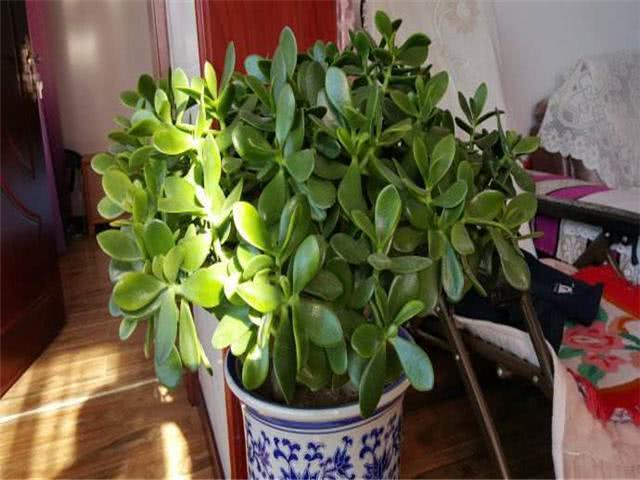
Let's start with the first potted flower, the jade plant, which is also a succulent that can become woody. Because its leaves are thick and fleshy and hold a lot of water, it is extremely drought-tolerant. Once the jade plant has become woody, it not only grows vigorously but also has stronger disease resistance. So if you want to grow a jade plant well, it is best to let it become woody, and after that you no longer need to worry about it.
The main propagation methods for the jade plant are cuttings from old leaves and young branches, and these can be done from early spring to late autumn. For leaf cuttings, choose old, mature, thick leaves with the leaf base attached; for young branch cuttings, select well-developed, sturdy top shoots. When the roots of the cuttings reach 2~3 cm in length, choose seedlings with good root growth and pot them up. For the pot, it is best to use a purple clay pot with good drainage and breathability.
The second is spider plant, which is very easy to keep alive and prefers a mild climate, meaning both warm and humid. So the temperature we generally choose is between 20°C and 24°C, and in the Guangdong area it is generally quite suitable for growing. In winter, it is best not to let it go below 5°C, as this is harmful and not beneficial to the growth of spider plant. Also note that in summer it should not be too stuffy and hot, and spider plant should generally be placed in a place with air circulation.
The third is kalanchoe, which, like other succulent flowers, contains a lot of water in its body and has strong drought resistance, so it does not need a lot of watering. In the early stage of vigorous growth, pay attention to pinching in time to encourage more branching, so as to make the plant shape full and improve the ornamental effect. After the flowers fade, promptly cut off the spent flowers to avoid consuming nutrients and affecting the number of flowers in the next bloom.
The fourth is desert rose. Pruning desert rose is also very important. If you do not pay attention to regular pruning and let it grow leggy, it can easily lose its ornamental value. After the flowering period is the best time to prune, and you can make choices according to personal preference. Note: more branches mean more flowers, so if you want more flowers, you need to find a way to keep more branches.
The suitable growth temperature for desert rose is 20~30°C, and the minimum temperature should not be lower than 5°C. When the temperature is below 10°C, it begins to drop leaves and enters a semi-dormant state. If the low temperature lasts for a long time, it enters dormancy, and at this time watering should be controlled and the soil kept dry. Desert rose branches tend to grow leggy, which affects the beauty of the plant shape. Grafting can be used to change its plant shape. Grafted plants have a beautiful plant shape, and after flowering the flowering branches are compact and highly ornamental.
This is a gathering place for flower lovers, sharing flower care tips. You are welcome to follow and exchange ideas.