To build a cultural brand, more fine works are needed
Early morning
Richard Clayderman 3
Richard Clayderman
00:00/03:56
Build a cultural brand, produce more fine works
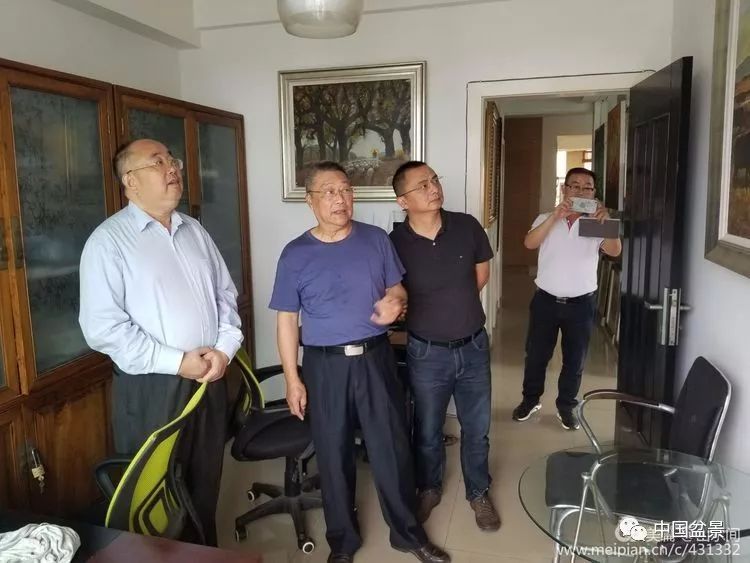
On the morning of September 25, 2018, Chairman Zheng Xiaoxing of the Sichuan Provincial Federation of Literary and Art Circles led Yang Nan, Director of the Chenghua District Culture Bureau of Chengdu, to visit the Sichuan Jiuzhai Painting Academy and the Sichuan Tianjiao Giant Panda Painting Academy. Mr. Tong Changxin, President of the academies, and Vice Presidents Xiang Yunhua and Liao Guoshan received them. Chairman Xiaoxing and Director Yang Nan carefully listened to President Changxin's work report. While viewing some of the academy's works, they fully affirmed the current "One Mountain, One River" calligraphy and painting exhibition, and highly praised Mr. Tong Changxin's 40-meter ink wash long scroll "Fushun: Ode to the Tuo River" painted for his hometown Fushun. They also instructed the academy to actively cooperate with the local area to build the giant panda cultural brand, and the Chenghua District Culture Bureau should also join with the academy to shape local cultural brands and vigorously promote the development of our province's cultural undertakings and cultural industry. The presidents of the two academies felt deeply encouraged and responded positively, expressing the proactive work style of all colleagues in the academies and their creative attitude of producing more fine works.
Sichuan Jiuzhai Painting Academy
Sichuan Tianjiao Giant Panda Painting Academy
Meipian editor: External Publicity Office of the Two Academies
Editing time: 2018.9.25
Link:
Detail of "Fushun: Ode to the Tuo River"
Preface to "Fushun: Ode to the Tuo River"
Text | Nie Zuoping
【Nie Zuoping's note:The painter Tong Changxin is my fellow townsman. He has recently completed a 48-meter long scroll, "Fushun: Ode to the Tuo River," from Shizi Shoal at the entry into the county to Changtan Dam at the exit, with 200 li of the Tuo River leaping onto the paper. The Fushun side wished to publish it grandly and asked me to write a preface, so I produced this small piece to attach myself to the tail of the steed.]
I have heard Zhuangzi say: Hills pile up from the lowly to become high, rivers gather waters to become great. In the western border of Sichuan Province, peaks stand steeply and countless trickles become water. At the southern foot of Jiuding, the Tuo River begins. The Tuo River was called Luoshui and Jianjiang in ancient times. The "Yu Gong" records: Mount Min guides the river, and eastward it branches off as the Tuo. It stretches for 1,500 li in total and ends at the Yangtze River. Its region has fertile soil and rich land, dense population and many households, famous cities scattered like stars, and important towns arranged like chess pieces; it has long been the fertile heartland of Sichuan Province.
My county, Fushun, is both the source of well salt and known as the hometown of talents. It truly relies on the Tuo River running through it, moistening ten thousand qing. Examining the Tuo River, it enters from the northwest of the county, passes Shishi, passes Donghu, encircles Fushi, connects with Dengguan, joins Anxi, winds around Zhaohua, and then exits at Changtan, winding for 200 li, accounting for more than one-eighth of the entire course.
Looking at Fushun, green river winds around the city, and blue water reflects the sky. To possess the Tuo River is to possess the convenience of boats, the ease of irrigation, and the benefits of fisheries. Clothing and feeding ten thousand mouths and sustaining a thousand households, it is the mother river of my county. As for the towns along the way arranged in rows, they are like spring orchids and autumn chrysanthemums, each excelling in its own season's flourishing.
Shishi, also called Shizi Shoal. Tile-roofed houses rise and fall, and wooden pavilions face the water. At dawn on the bluestone street, wine banners beckon the wind; after night in the green river's bend, fishing boats listen to the rain. At the water-and-land wharf, the ancient style can still faintly be seen.
Fushi, also called Fujiang. Because the river flows in twists and turns, from north to east, then from east back to west, its trace is shaped like a giant cauldron, hence the name. In this thousand-year-old county, the county seat has always been established here. Entering its city, Huqiu piles up green, and West Lake heaps up beauty; these are truly remnants of ancient landslide dams. In taste there is the sweetness of douhua, and in culture there is the honor of the Confucian Temple. Ancient streets and new city, buildings follow one after another. This is where the essence of my county lies.
Dengguan, where the Fuxi River joins the Tuo River. In former years, the salt boats of Ziliujing went along the Fuxi River into the Tuo River, and along the Tuo River into the Yangtze. Twice Sichuan salt relieved Chu, and without the Tuo River none of it could have been accomplished. Dengguan guards the meeting of the two waters, with boats and carts converging, and industry and mining gathered here in abundance.
Anxi, where Qingshan Gorge is located. Examining the Tuo River from north to south, there are three gorges. Qingshan Gorge is the lower one, about 2 li long. On both banks are steep ridges, with cold trees lingering. Morning clouds and evening mist, flying springs and birdsong. I remember when I was young, every spring and autumn, I would certainly go upstream to enjoy the misty scenery. Where my footprints passed, the plants and trees are still green.
Zhaohua, the native place of Liu Guangdi. When Guangdi went north, he bought a boat on the Tuo River and first went down to Jiangyang. Before leaving, he composed a song with fervor, singing: You cannot hold back the great river flowing east and again east; with copper pipa and iron clappers, what a hero. A hundred years have come and gone, yet Guangdi's tower still remains; may the gentleman's soul return.
……
Master Tong Changxin is a man of this county. He is skilled in calligraphy and painting and fond of chanting. He moved to Rongcheng fifty years ago, yet his attachment to his native soil is deep, and his thoughts are ever here. His parents' land lingers in his dreams. In the year of Dingyou, he traveled by boat on the Tuo River, retracing old traces. Afterward, he shut his door and bent over his desk, depicting mountains and describing waters, changing his draft three times. Completing ten months of work, he finished a 48-meter long scroll and named it "Fushun: Ode to the Tuo River."
I view this painting: now mountains, now waters, now bamboo, now trees, now mist, now clouds, now boats, now cities. Marvelous peaks and clear currents open one's eyes, and I truly know that one whose breast lacks hills and valleys cannot create it. Checking it against the painting, I feel the loftiness and remoteness of heaven and earth, recognize the winding course of the river, sigh at the charm of the scenery, and savor the majestic beauty of my old home.
Praise says: Vast are the river waters, full is the hometown feeling. The river waters do not end, and the hometown feeling is endless.
Wonderful replay:
Chinese bonsai welcomes you!
Enjoy at any timeadmire's bonsai exhibition hall
Promote bonsai culture, exchange bonsai techniques!
Appreciate bonsai art, share a happy life!