The Five Buddhist Trees Every "Buddhist Youth" Should Know
In December 2017, the term "Buddhist youth" swept through WeChat Moments and took the internet by storm. As a cultural phenomenon, "Buddhist-style" describes a state of being and an attitude toward life in which one sees through the mundane world and lives according to one's own way. Today, instead of talking about Buddhist youth, let us talk about the plants in Buddhism.
According to Buddhist rules, wherever the Buddha Shakyamuni is worshipped, plants associated with Buddhism must be planted - the Five Trees and Six Flowers. The Five Trees are the Bodhi tree, the lofty fig, the talipot palm, the areca palm and the sugar palm; the Six Flowers are the lotus, the miangui flower, the yellow ginger lily, the frangipani, the Chinese crinum and the musella lasiocarpa. Today we will focus on the Five Buddhist Trees.
1. Bodhi Tree
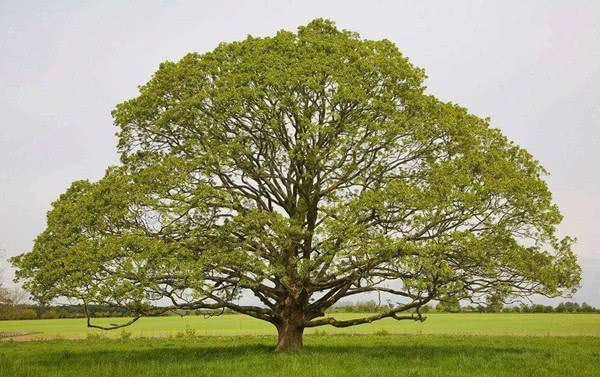
A large tree of the genus Ficus in the mulberry family, it grows as an epiphyte on other trees when young. The leaves are leathery, triangular-ovate, with three basal veins; the petioles are slender, and the figs are spherical to oblate; the style is slender and the stigma narrow; it flowers from March to April and bears fruit from May to June.
The original Sanskrit name of the Bodhi tree is "Pippala tree." It came to be called the Bodhi tree because Shakyamuni attained enlightenment beneath it - "Bodhi" means "awakening." To this day, Hindu sadhus still often meditate under Bodhi trees. Bodhi trees are widely planted in jungle temples across India, Sri Lanka and Myanmar, and India has designated it as its national tree.
2. Lofty Fig
A large tree of the mulberry family, the lofty fig is also known as the mountain fig. It is found in Guangdong, Guangxi and southern Yunnan, as well as in Vietnam, Malaysia, India and Ceylon, and mostly grows in mountain forests. Its aerial roots and prop roots are extremely vigorous, so it not only strangles its host plants but also readily forms a forest of a single tree. Although the fruits of the lofty fig are rather small, they grow in great abundance; when ripe, countless tiny fruits crowd the branches like red coral, attracting many birds and beasts to compete for them - a lively spectacle indeed.
In the long historical poem "Lifeng" of the Dai people of Xishuangbanna, it is said to be "endowed with spirits." In flowering season, several kinds of flowers often bloom on the same tree, creating a scene of luxuriant blossoms and brilliant colors.
3. Talipot Palm
A genus of the palm family, it is an evergreen tree native to tropical Asia. It usually grows about 20 m tall, tall and majestic, with a straight, round trunk and no branches; its crown is like a giant umbrella, and its leaves spread out like a hand, giving a sense of solemnity and vitality. It is an excellent tree for landscaping in tropical regions, found in Myanmar, India and Sri Lanka, and can be used for ornamental purposes.
The famous "palm-leaf manuscripts" in Buddhism are made from the leaves of the talipot palm. Some regard the talipot palm as a marker tree of geography and ethnic culture: wherever there is Buddhism in the tropics, there is the talipot palm. The Dai people of Xishuangbanna regard the palm leaf as a symbol of their cultural development and often take pride in it, even deifying the talipot palm, believing that only a devout Buddhist master can keep it alive.
4. Areca Palm
An evergreen tree of the genus Areca in the palm family, with an upright, tree-like stem over 10 m tall and up to 30 m at most; it has distinct ring-like leaf scars and is monoecious; the inflorescence is much branched and the ovary is oblong; the fruit is oblong or ovoid; the seed is ovoid, flowering and fruiting from March to April. The areca palm resembles the coconut palm in appearance, with a tall, upright trunk and leaves that flutter in the wind - elegant and lovely.
The fruit of the areca palm is edible, and people in some southern regions have the habit of chewing areca nut - the more you chew, the more fragrant it becomes, with a mellow taste that goes to the head. Areca nut is also a medicinal material, with functions such as stopping diarrhea, treating dysentery, killing parasites and removing stagnation; it is also known as "miasma-clearing pill."
5. Sugar Palm
An evergreen tree; the leaves are palmate, with most segments shallowly cleft into 2 lobes at the tip; the flowers are unisexual, with male and female flowers on separate plants, in much-branched spadix-like inflorescences; the spathes are prominent. The fruit is produced in abundance, with dozens clustered around the crown of the tree; each is the size of a ball, golden and glossy, and can be placed indoors for decoration. The sugar palm is also called the sugar coconut palm. People like to score the inflorescence with a small knife, and then the sap of the inflorescence flows along the knife into a bucket; the sap is very sweet, like granulated sugar, and one inflorescence can produce 4 small buckets of sweet sap.
The pinnate leaves of the sugar palm stay oil-green all year round, huge and dense, like a natural canopy that blocks the scorching tropical sun, and also like great green umbrellas, giving people a cool shade; it can be planted in groups in courtyards.