7 basic elements of orchid cultivation, and in three years you can grow orchids well without asking for help
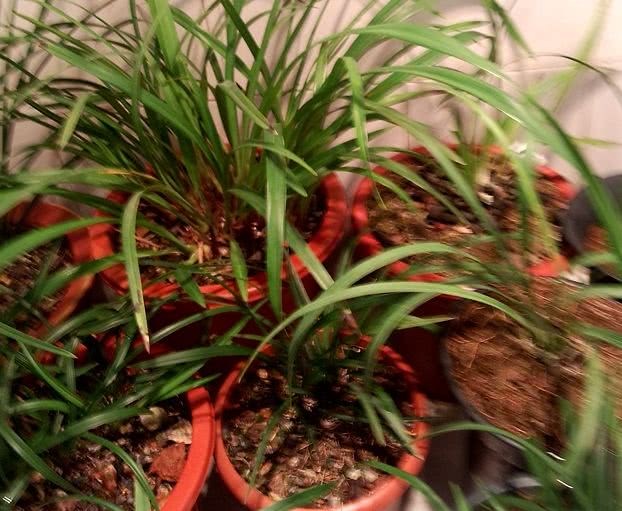
The basic 7 elements of orchid cultivation, and in three years you can grow orchids well, never needing to ask for help again!
Growing medium: every orchid grower has their own commonly used growing medium. Generally speaking, as long as it is a growing medium that can grow ordinary orchid seedlings well, such as peat soil, humus soil, Xiantu soil, brick granules, pond foundation stone, tree fern, etc., it can be used for the care of tissue-cultured seedlings. Mixed growing medium is better than a single growing medium. The growing medium generally should not be too coarse, so that the orchid roots cannot fully contact the growing medium and cause the orchid seedlings to lose water. My growing medium ratio is half fired granular soil and half black Xiantu soil, plus a little peat.
2. Temperature: 15--28 is the suitable temperature for orchid growth. Below 10 degrees or above 35 degrees, orchids grow slowly, but it will not affect the survival of tissue-cultured seedlings.
3. Light: varies by variety. Varieties such as Cymbidium goeringii 'Da Fu Gui' and Jianlan prefer sufficient light and can be kept consistent with ordinary orchids. Varieties such as Longchangsu need relatively less light. At the beginning of care, they can be placed in a shadier place in the orchid shed, and after the seedlings have recovered (generally 15 days), they can be kept consistent with ordinary orchids.
4. Humidity: 30-80% humidity is more suitable. If the humidity is insufficient, it can be improved by sprinkling water on the ground, laying bricks on the ground, or using a humidifier. If the humidity is too high, pay attention to preventing diseases.
5. Water: the timing of watering is very important. The longer the potting soil stays moist but not wet, dry but not parched, the better. Never water too frequently.
6. Fertilizer: generally, both organic fertilizers and inorganic fertilizers used for orchids can be used for tissue-cultured seedlings. Following the principle of applying thin fertilizer frequently, it can be diluted 1-2 times further on the basis of the ordinary concentration used.
7. Pest and disease control: refer to ordinary orchids.