A gorgeous plant whose flowers look like a lady's purse; you'll want to grow several pots once you see it
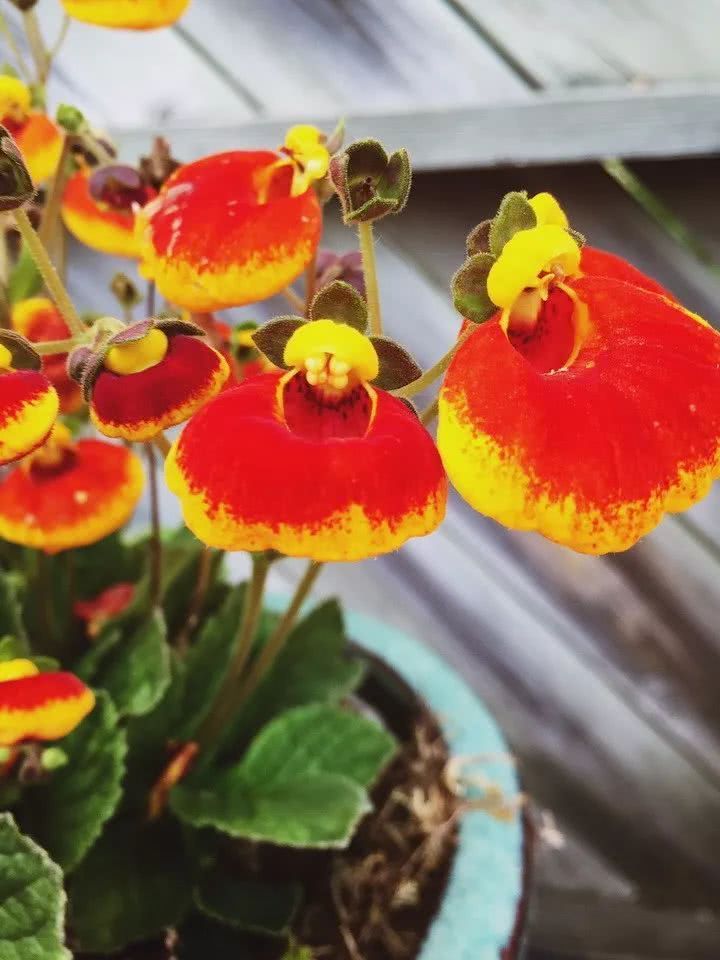
Some plants look especially unusual, or grow especially brilliantly, which makes them very popular potted ornamental plants, such as the common Calceolaria, also called the purse flower; it is a very small herbaceous plant, and its flower stalks are relatively tall, ideally growing to more than 20 cm, with very good ornamental value.
Calceolaria is generally grown as a perennial in flower pots, and can also be planted in the yard; its flowers look very much like a lady's purse, and also a bit like slippers, and it is very easy to grow; the leaves look like ordinary wild grass, but the flowers are very colorful and delicate.
1. Daily care
Calceolaria can be grown indoors or outdoors, but it is most popularly kept as a potted plant; to grow Calceolaria well, you first need to understand its growing environment; it originally grows in Central America and South America, likes cool environments, and needs regular watering when kept as a potted plant.
2. Placement
A location with appropriate scattered light is enough for care; it does not need excessive exposure to strong sun.
A potted Calceolaria can be placed directly on a bright windowsill, but avoid direct sunlight; it is suitable for a south-facing or east-facing windowsill, with about 4-8 hours of scattered light per day; in summer when the sunlight is strong, you can pull up a shade net, because too much light can easily burn the leaves and flowers.
3. Regular watering
Calceolaria does not need frequent watering; too much water or waterlogged soil can easily rot its roots, but each watering should soak it thoroughly, not just a little at a time.
You can wait until the soil 3-5 cm below the surface is completely dry, then water thoroughly until water drips from the drainage holes at the bottom.
4. Encouraging a second bloom
In a warm environment year-round, Calceolaria can keep growing for many years and can be grown well continuously; once the flowers fade, it is relatively difficult for it to produce new flowers again, and it needs proper care to bloom.
To encourage Calceolaria to bloom again, you should promptly cut off the spent flowers after they fade, and also appropriately add some decomposed organic liquid fertilizer to avoid the soil becoming too poor.
5. Outdoor care
Calceolaria is generally kept as an indoor potted plant, but it can also be cultivated outdoors; the plant is relatively short, usually only about 25 cm, and you can plant it at the edge of a flower bed, but it needs plenty of compost to grow well, and during the growing period it needs loose, well-draining soil.
6. Care temperature
The best temperature for caring for Calceolaria is 18-25 degrees, with the minimum above 7 degrees; nighttime temperatures of 13-18 degrees are best; when summer temperatures are too high, move it to a semi-shaded environment to avoid excessive exposure.
7. Propagation method
If you want to grow new Calceolaria plants, you can try sowing seeds; just prepare the seeds, and for the soil you can choose loose, well-draining peat moss mixed with perlite in a 3:2 ratio.
Calceolaria can be propagated after spring warms up or in autumn; scatter the seeds about 1-2 cm on the soil surface, keep the soil moist, and at a temperature of about 18 degrees, they will quickly take root and sprout.
Calceolaria can also be propagated by stem cuttings, that is, cut a relatively robust stem, remove the lower leaves, and to increase the success rate of cuttings, dip the cut base in a little rooting powder, insert it into the soil, and keep the soil moist; it will quickly take root; the time for propagation is generally in late summer and early autumn.