This plant can survive hanging in the air on a string with regular misting, and it even produces delicate little flowers
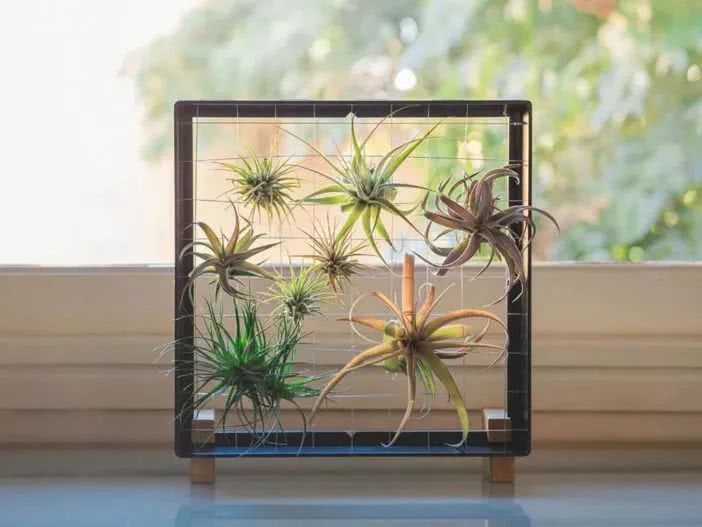
The air plant is a very unusual plant, and it is hard to find any plant quite like it. It does not need any soil to grow in, nor does it need to be soaked in water to grow. As long as it is placed in a suitable spot, caring for an air plant only requires misting it with a little water on a regular basis.
Air plants belong to the genus Tillandsia. They generally grow as epiphytes on larger trees, shrubs or rocks, and they grow well by absorbing moisture from their surroundings and nutrients from decaying leaves. They do not need any potting soil to be cultivated.
1. Growing environment
To grow air plants well, you first need to understand their natural habitat. Air plants originally grow in the tropical forests and high mountain regions of Central America and South America.
The care environment is a hot, humid tropical rainforest environment, so when caring for them you need to protect them from freezing and keep the air humidity relatively high, maintaining a minimum care temperature above 5 degrees.
2. Regular misting
The most important thing when caring for air plants is to mist them regularly, about 3 to 5 times a week. This depends on how dry the air is. If the air is dry, mist more often; if the air humidity is high, misting about 1 to 2 times a week is enough.
Besides regular misting, air plants should also be soaked in a basin of water about once a month. You can prepare a basin of water, soak the whole air plant in the water for about 5 to 10 minutes, then lift it out, let the water drain off, and hang it back up.
3. Light requirements
The best environment for air plants has appropriate indirect light. In winter, move them indoors and place them by a windowsill with fairly abundant sunlight. In summer, when temperatures are higher and the sunlight is stronger, provide some shade.
Air plants do not need much light. If the sunlight is too strong, it can easily scorch the leaves, and the plant can easily wither. Air plants can also maintain growth when kept in a bright indoor space.
Air plants can also bloom if cared for properly. Their flowers are very delicate and small, generally pink, purple or red.
4. Fertilizing notes
Air plants need very little fertilizer. In nature, they generally obtain moisture from decaying leaves and absorb nutrients through their leaves.
When grown indoors, you can regularly give them a light feed. You must never give air plants too much fertilizer. Generally, choose a low-nitrogen water-soluble fertilizer, and the concentration must not be too high. Always dilute it with water before fertilizing.
Fertilizing is usually done in spring and summer, about once every two weeks, at a concentration much lower than usual, only about 1/4 of the normal strength, sprayed directly onto the leaves.
5. Other notes
The root system of air plants is basically reduced, and there may be some small aerial roots at the base. You must never plant them in soil. You only need to fix the air plant in some kind of container, or hang it up. You can even grow it together with air grass, which is also known as Spanish moss.