Council of Agriculture joins hands with Academia Sinica, NT$300 million over five years for largest post-war rural social survey
The Council of Agriculture and Academia Sinica (abbreviated as Academia Sinica) are cooperating for the first time, combining various institutes within Academia Sinica and four domestic universities in an interdisciplinary manner, with an annual research budget of NT$60 million to NT$70 million, planning to spend five years documenting the environmental, industrial, social, and cultural current conditions as well as the historical transformation process of rural Taiwan.
This is the first time since World War II that Taiwan has conducted a survey with rural areas as the main subject. At the "Taiwan Rural Social and Cultural Survey Cooperation Press Conference" held today (the 26th), Council of Agriculture Minister Lin Tsung-hsien and Academia Sinica President James Liao signed the Taiwan Rural Social and Cultural Survey cooperation agreement, hoping to leave behind a rural memorandum for the next generation.
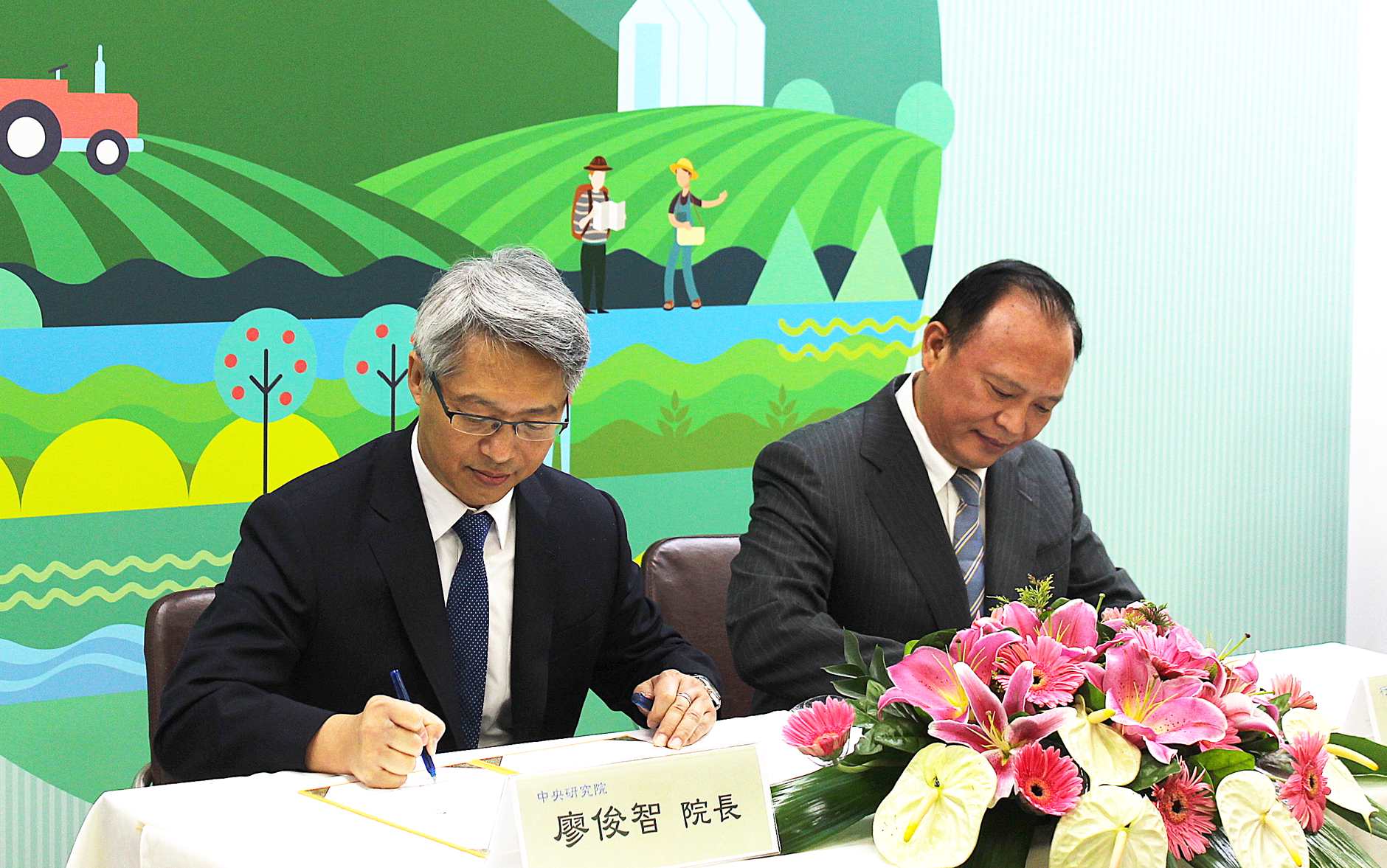
Academia Sinica: Finding a way forward for rural Taiwan through fieldwork
James Liao stated that rural areas are a very important issue; however, the public's imagination of rural areas mostly centers on problems such as flooding, population loss, labor shortages, and cultural discontinuity. But he believes that "rural areas are not just about problems" and that "the problems occurring in rural areas are not just rural problems, but social problems as well." It is just that past rural research has been relatively fragmented and lacking systematic examination.
He hopes that through this large-scale Academia Sinica research, the current conditions of rural Taiwan can be comprehensively documented, and the research results can be transformed into a knowledge foundation for the government when addressing urban problems, rural problems, and rural regeneration. He stated that understanding rural areas should not rely on imagination alone, but rather should use fieldwork to find a way forward for the sustainable development of rural Taiwan.
Academia Sinica combines four universities, over 200 people in the humanities and social sciences fields invest in research
"Taiwan Rural Social and Cultural Survey Project" principal investigator and Academia Sinica Academician Wang Ming-ke explained that the research will combine Academia Sinica's Institute of Sociology, Institute of Taiwan History, Institute of Ethnology, Institute of History and Philology, and the Digital Culture Center, as well as four domestic universities, in an interdisciplinary manner, investing over 200 people in the humanities and social sciences fields. Focusing on the current conditions of rural Taiwan, a five-year systematic survey will be conducted covering items including population, land, natural resources, environmental hazard factors, economic activities, social organization, social division of labor and hierarchy, social conflict, religion, rituals and customs, cultural assets, cultural and educational facilities and cultural participation, medical care, food and clothing culture, living environment, transportation conditions, and leisure and recreation.
The goal of this project is to comprehensively document the environmental, industrial, social, and cultural current conditions as well as the historical transformation process of rural Taiwan, and to use digital technology to preserve important rural historical materials, build a humanities and social sciences database for rural areas, and simultaneously through a master's and doctoral training program, allow young domestic scholars to join rural research teams and revitalize Taiwan's agricultural research. Wang pointed out that analyzing rural problems is also exploring the nation's urban-rural development, and all countries are paying increasing attention to rural issues. Current rural areas have risen to become a globalization issue, and he called on fellow citizens to jointly understand Taiwan's rural culture.
Unearthing grassroots wisdom and life stories, making rural areas a prominent field of study
Hsu Hsueh-chi, Director of Academia Sinica's Institute of Taiwan History, shared that through fieldwork, many first-hand rural historical materials have been unearthed, able to piece together the puzzle of traditional living culture and craftsmanship in rural Taiwan. She gave an example: local elders all have many life stories and are the soul figures of rural areas. Researchers in Anping's Yuguang Village came into contact with an old fisherman who performed the nearly lost "fish fry song." "These are all rural stories we originally did not know."
(Note: "fish fry" refers to fish fry; in earlier times fish fry was very expensive. To maintain fairness between seller and buyer, both parties would count together in a singing manner during transactions, counting fish fry while calling out prices. It was an ancient way of counting fish.)
Hsieh Kuo-hsiung, Director of Academia Sinica's Institute of Sociology, also mentioned that Taiwan has long lacked comprehensive research with rural areas as the main subject. "This rural social and cultural survey is the first rural research of the post-war era." He described how rural research has long not been a prominent field, but in recent years more and more sociology master's students have begun to take agriculture and rural areas as research topics. "This represents that our next generation is gradually paying attention to agriculture. This echoes the return of young farmers to their hometowns and young farmers starting businesses, showing that Taiwan's agricultural research is showing signs of revival."
He gave an example of Dounan Township in Yunlin County successfully cultivating black-shell green bamboo shoots and even supplying them to Din Tai Fung. Local farmers used the existing production and marketing group system, introduced more efficient organizational operations, and in addition the local farmers' association leased land and then recruited small farmers to cultivate it, paying salaries for the first three years and only requiring farmers to pay rent themselves in the fourth year, successfully achieving the goal of activating cultivated land. At the same time, it also ensured that farmers who wanted to farm were not afraid of having no cultivated land, giving play to the "small landlord, large tenant farmer strategy." "Actually, farmers are very impressive, rural Taiwan is very vibrant, rural areas are rich in strength and can also respond to the changes of the times and generate new vitality. Our survey is precisely about finding these sources of vitality."