Zinnia seed sowing and cultivation, you can keep harvesting seed pods in autumn
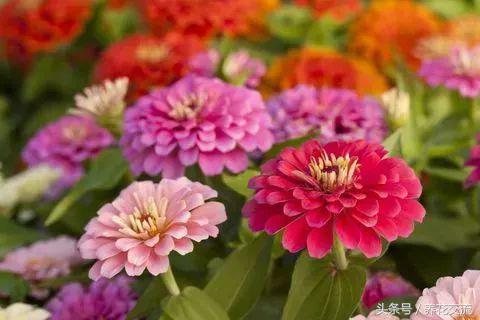
Zinnias have always been one of my favorite herbaceous flowers. They are very easy to grow and come in a huge range of colors. Planted in the yard, they bloom year-round without any care, and after the flowers fade they produce seeds that can be sown again and again.
After the spring warmth arrives, they can be replanted. They bloom easily, and after the flowers fade they produce seeds. The seeds are easy to collect, and if stored well they can be planted again after the warmth returns the following spring.
Zinnia is an especially easy-to-care-for flowering plant. It can keep blooming from after the spring warmth until the arrival of frost, with the most spectacular blooms in summer and autumn.
1. Propagation by sowing
Propagating zinnias by sowing is especially simple, and their germination rate is fairly high. You can do it after the spring warmth arrives, sowing when the temperature stays above 15°C. Bury the seeds about 1-2 cm below the soil surface, keep the soil moist, and at a temperature of about 18-20°C they generally sprout in 4-7 days. Once the seedlings reach about 5 cm, you need to thin them out, leaving each plant about 15-30 cm apart, and keep the area ventilated and exposed to light so they can grow strong and avoid fungal infections.
In cooler climates, you can wait until the temperature is stable before sowing, that is, sow 4-6 weeks after the frost ends.
You can start the seedlings indoors first, and once the seeds have sprouted, move them outdoors and gradually expose them to light.
If you choose to grow zinnias in containers, you can pinch the top once the plant reaches 15 cm tall, removing the tender growing tips at the top.
2. Choosing suitable varieties
Zinnias come in a great many varieties and colors, such as the common pink, orange, yellow, red and purple. They are perennial herbaceous flowers; as long as the environment stays warm and there is fairly ample sunlight, they can bloom year-round. They can also be planted alongside other flowers, such as the common dahlia, marigold, aster and petunia.
If you are a beginner, it is best to choose some tall varieties with stronger resistance to pests and diseases. Taller zinnia plants grow more vigorously, with strength at the base, and the lower chance of pests and diseases because of good ventilation and light. Dwarf varieties, on the other hand, need regular pinching, which controls the plant shape well and allows them to adapt to container growing.
When growing zinnias, you can plant several varieties together, which can effectively help avoid powdery mildew.
3. Care notes
To grow zinnias, choose a loose, airy, well-draining sandy soil and avoid waterlogged soil. During the growing period they do not need overly frequent watering. Apart from keeping the soil moist during seed sowing and seedling raising, in other seasons you should only water after the soil has dried out completely.
The spot where you care for zinnias must stay ventilated and exposed to light. If the environment is not ventilated, they are especially prone to powdery mildew.
If you notice fallen or yellowing leaves at the base, be sure to remove them promptly to keep the plants ventilated and exposed to light. If any zinnias are growing too densely, clear them out promptly.
Zinnias are especially easy to grow, and almost anyone can keep them alive. They have extremely strong adaptability to the environment. If planted in the yard, they can adapt to any soil, bloom especially easily, flower very abundantly, and have a very long ornamental period.
4. Dealing with common problems
Zinnias are especially easy to grow, but note that you must never water them at night. Water sitting on the leaves at night makes them very prone to powdery mildew. At night the soil also must not be too wet, let alone waterlogged, otherwise they become especially prone to fungal infections.
If you want to prevent zinnias from getting fungal infections, you must do good preventive work. The plants must have ventilation and light between them. If the environment is not ventilated, they easily get diseases.
5. Collecting seeds
Collecting zinnia seeds is especially simple. You can select some of the better-flowering blooms for pollination, and once their flowers fade, keep them. Other flowers you do not plan to save seed from should be cut off promptly after fading.
You can save some seeds from each color. The method of collecting seeds is also very simple: you can cut the seed-bearing flowers straight off, pull open the petals, and take out the seeds inside directly. The seeds can be stored in an envelope and placed in a dry, shaded and cool environment.